What 2026 will bring us
Fight against the headscarf, dampener on wages
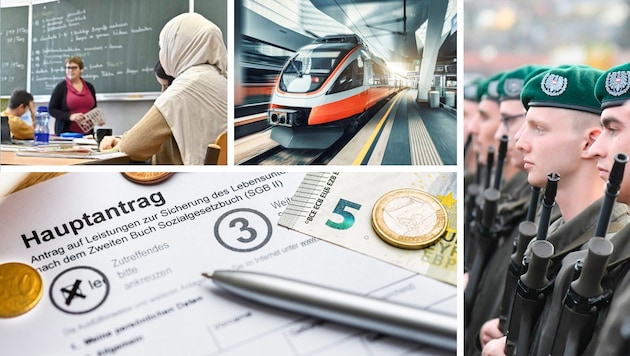

The bleak economic situation will shape the new year. It will bring muted wage settlements, fee increases, fewer subsidies, but hardship in the social sector. Public transport tickets will become more expensive, while commuting will be more strongly subsidized. There will be a new partial pension; the headscarf ban is to take effect in schools. And: the highway vignette will be available as a sticker for the last time. Here is an overview of the most important changes.
 Kronen Zeitung als bevorzugte Google-Quelle hinzufügen
 Salaries rise, but below inflation: After inflation in 2025 (around three percent) was at least slightly lower than in the previous year, wages are rising less sharply at the turn of the year than they did a year ago. Actual wages for metalworkers have already been raised by 1.41%, while minimum wages have been increased by 2%. Civil servants will receive an increase of 3.3 percent, but not until July. In the retail sector, minimum wages will rise by 2.55 percent in January.
The toughest battle was probably fought in the Chamber of Commerce: Boss Harald Mahrer wanted to increase by 4.2 percent, after an outcry he even had to take his hat off. WKO employees will now receive a 2.1 percent increase from January.
In the case of pensions, every third person pays more: up to a salary of 2500 euros, inflation is fully compensated for, which was only 2.7 percent at the time of the decision in October. For higher salaries, there is a fixed amount of 67.50 euros - so the higher the pension, the lower the adjustment. On average, every third person pays more.
Partial pension to be introduced: 2026 will also bring many changes to the pension system. Partial retirement will largely replace partial retirement: The principle is that if you reduce your working hours, you will receive part of your pension in addition to your earnings.
The retirement age for women will rise again by half a year - for those born in the first half of 1965, it will be 61.5 years. The retirement age for the corridor pension will also be raised from 62 to 63. Another new aspect is that part-time employment with other employers is no longer permitted during partial retirement. This also applies to marginal employment.
Care allowance will be routinely increased: There will be an increase of 2.7 percent for 2026 - in line with pensions. Numerous other benefits will also be adjusted, such as the relatives' bonus, funding for palliative care as well as funding for long-term care and the training allowance.
Unemployed lose additional income: Unemployed people may only supplement their unemployment benefit or unemployment assistance with additional income in exceptional cases. Most will have to give up their part-time jobs by January 31, 2026 at the latest in order not to lose their entitlements retroactively.
Tightening of social assistance: The ÖVP-SPÖ-NEOS coalition has announced a nationwide reform of social assistance by 2027, but a large proportion of the federal states have already adopted stricter rules of their own accord. Maximum amounts will be adjusted in 2026. Vienna is also taking measures that affect newcomers in many respects. You can find more information on payments and an overview of the countries here.
Longer values courses for refugees: The mandatory orientation courses will now last five days instead of three. At the end of the course, those entitled to asylum or subsidiary protection will have to sign a ten-point integration declaration, which includes a commitment to the rule of law, equal treatment between the sexes and to "living Austrian traditions".
The parent-child pass will go digital from October 1, 2026. In addition to this innovation, the upper cost limit for prescription fee exemptions will also be tweaked in the healthcare sector. The prescription fee itself will be frozen for the time being and will remain at EUR 7.55, as in 2025. However, cost shares for so-called medical aids (from 43 to 46.20 euros) and self-insurance (the monthly contribution will cost 572.74 instead of the previous 526.79 euros) will increase.
Relief for taxpayers: the commuter euro will rise from two euros per kilometer of one-way travel between home and work to six euros (see also below). From January 1, VAT on feminine hygiene products and contraceptives will no longer apply. The increase in the basic flat rate is intended to make things easier for small businesses. In addition, only two-thirds of the income tax brackets will be adjusted in line with inflation.
The EU Pay Transparency Directive must also be implemented in Austria by mid-2026 at the latest - a measure that many hope will reduce the pay gap between men and women. However, it is still unclear how it will be implemented in Austria.
Building society premium remains constant: In the new year, the building society premium will once again be 1.5 percent. The premium for future provisions will remain at 4.25 percent.

Lower electricity costs, but higher gas grid fees: Grid tariffs for electricity will rise by an average of 1.3 percent on January 1. The fact that electricity will nevertheless be cheaper for many is due to the new social tariff and the temporary reduction in the electricity levy. In the case of gas, however, grid fees will rise sharply again at the turn of the year, namely by an average of 18.2 percent. Since 2024, the additional costs have already amounted to 38% or 137 euros per household. You can only save money by switching to a cheaper gas supplier - keyword: change your tariff!
Meanwhile, Austrians' interest in reducing their energy costs with their own solar power is enormous: almost one in two took advantage of the "Made In Europe - Bonus". This will be continued in 2026.
Parking space rip-offs to be curbed: The government wants to remove the basis for intimidation lawsuits against motorists. Abusive vehicle possession disruption claims are to become unprofitable. In return, there will be reductions in lawyers' fees and court fees.
Prisoners can be released more quickly: In the penal system, the new year will bring relief for conditional releases from prison. As of January 1, so-called general preventive reasons - i.e. deterrence of the general public - are no longer sufficient to refuse them.
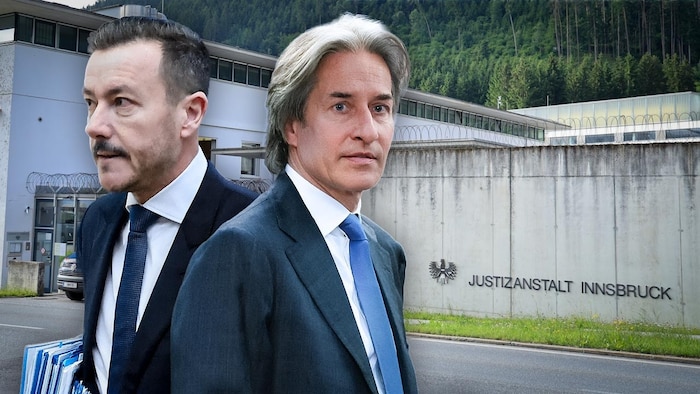
One prominent prisoner will be able to rejoice from January 2: Karl-Heinz Grasser will be given an ankle monitor and will be allowed to leave Innsbruck prison on his birthday. His fellow inmate René Benko, on the other hand, must remain in custody.
Major transport projects: In 2026, the most controversial transport project of recent years will be launched: the Vienna Lobau Tunnel. Although the tunnel itself is not yet being built (the approval procedures have not yet been completed), work is starting on other sections of the S1 north-east bypass. There is less division in the south: with the start of regular traffic on the new Koralmbahn line, things are moving closer together here - 160,000 passengers have already traveled on the new Koralmbahn in the first two weeks!
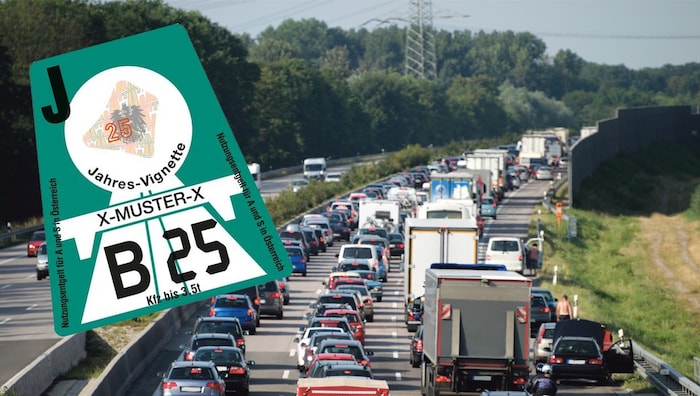
Light and shade for car drivers: A bundle of new regulations and charges awaits them in the new year. For example, there will be an increase in the motor-related insurance tax, the standard consumption tax (NoVA), the vignette and public transport tickets. But there will also be some relief - you can find a complete list of the changes for drivers here. For the nostalgic: 2026 will be the last time an adhesive vignette is offered in Austria. From 2027, there will only be digital vignettes.
Hurdles in vacation destinations: Travelers will face changes in popular vacation destinations such as Spain, Greece and Croatia, most of which will involve additional bureaucratic work. Croatia, for example, is switching to a digital highway toll from fall 2026. Things will be easier in Bulgaria, which will introduce the euro on January 1, 2026.
Climate ticket will become more expensive: Prices for the climate ticket will increase in four federal states from the turn of the year, most significantly in Upper Austria. The state ticket will be more than 100 euros more expensive. However, it is still possible to trick the system - more information can be found at Krone+.
New air defense for the Austrian Armed Forces: Minister Klaudia Tanner's (ÖVP) development plan is to be continued. One mammoth project is the procurement of air defense missiles, which could be purchased together with other countries as part of Sky Shield. Another project worth billions is the Eurofighter successor. According to reports, a commission has been set up to argue in favor of extending military service to eight months plus two months of exercises. The "Krone" lists the eight most important decisions for 2026.

Explosive innovation at schools: The year 2026 will also bring a whole series of innovations in the school sector - the most controversial of which is probably the headscarf ban for girls up to the age of 14. From the fall, head coverings that "cover the head according to Islamic traditions" will be prohibited. In the event of violations, parents may be fined up to 800 euros. An educational phase is to start at schools after the semester break.
Legally, however, such a ban is still considered shaky. It is quite possible that the Constitutional Court will soon have to deal with it again.
Pupils with a need for German language support will also have to attend summer school in future. From the fall onwards, 400 schools with a high priority will receive more staff - this is called the "opportunity bonus". Preventing extremism is also a priority at local schools; the government has also announced a package of measures in this area.
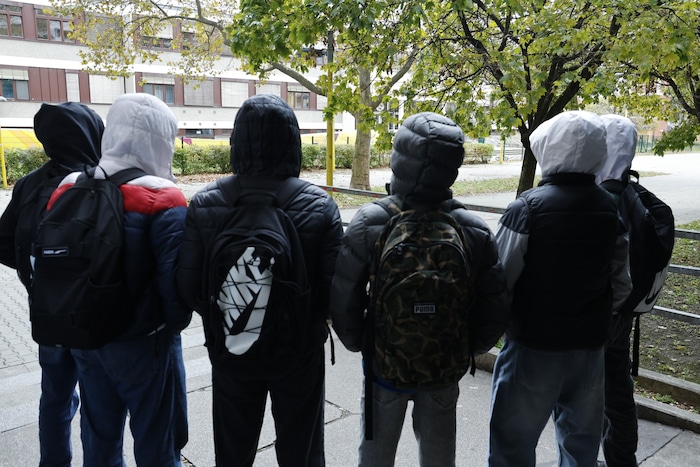
New Master's degree course coming: 2026 will see the first Master's degree course in psychotherapy at public universities. In addition, the winter semester 2026/27 (one year after the new primary school teacher training course) will also see the start of a course for secondary schools (Mittelschule, AHS, BMHS). There will be 50 additional study places at medical universities. And: there will finally be digital student ID cards (via ID Austria).
No major elections: After intense election years, the coming year offers a breather for the federal government - at least as far as the will of the voters is concerned. There are no elections at federal or state level in 2026. At municipal level, however, there are some highly charged elections in Graz, where KPÖ mayor Elke Kahr will be running again in the fall. In St. Pölten, which has been governed by the SPÖ since 1950, long-term mayor Matthias Stadler is seeking re-election on 25 January.
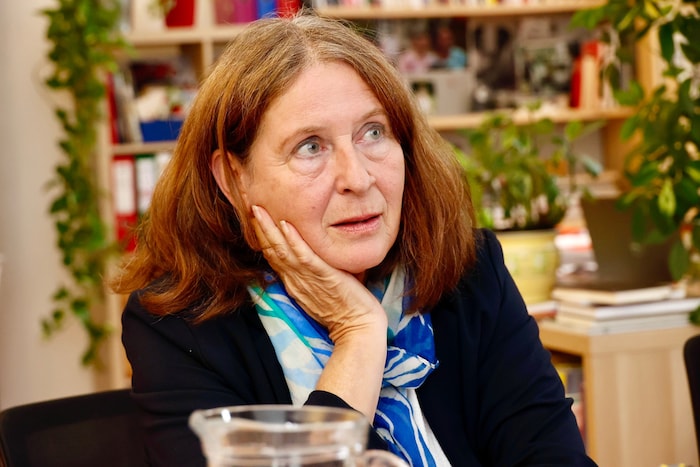
The foreign policy year 2026 will not bring any major elections either, but it will nevertheless bring possible directional decisions. This is because Americans will be able to vote on President Donald Trump's authoritarian course for the first time in the congressional elections in November. If Trump's Republicans win, the restructuring of the state will probably continue.
Viktor Orbán, who has also ruled in an authoritarian manner since 2010, will have to face the electorate in the spring - a new parliament is expected to be elected in Hungary in April.
Sources: Kronen Zeitung, APA, ministries, motorists' clubs
This article has been automatically translated,
read the original article here.











Willkommen in unserer Community! Eingehende Beiträge werden geprüft und anschließend veröffentlicht. Bitte achten Sie auf Einhaltung unserer Netiquette und AGB. Für ausführliche Diskussionen steht Ihnen ebenso das krone.at-Forum zur Verfügung. Hier können Sie das Community-Team via unserer Melde- und Abhilfestelle kontaktieren.
User-Beiträge geben nicht notwendigerweise die Meinung des Betreibers/der Redaktion bzw. von Krone Multimedia (KMM) wieder. In diesem Sinne distanziert sich die Redaktion/der Betreiber von den Inhalten in diesem Diskussionsforum. KMM behält sich insbesondere vor, gegen geltendes Recht verstoßende, den guten Sitten oder der Netiquette widersprechende bzw. dem Ansehen von KMM zuwiderlaufende Beiträge zu löschen, diesbezüglichen Schadenersatz gegenüber dem betreffenden User geltend zu machen, die Nutzer-Daten zu Zwecken der Rechtsverfolgung zu verwenden und strafrechtlich relevante Beiträge zur Anzeige zu bringen (siehe auch AGB). Hier können Sie das Community-Team via unserer Melde- und Abhilfestelle kontaktieren.