New Model
German Language Courses: Federal Government Adopts Upper Austria Model
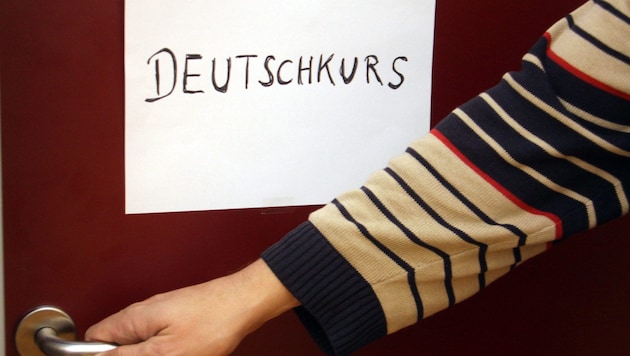

State and federal authorities are tightening the reins on German language courses for foreigners: Upper Austria is the first state to introduce stricter controls, uniform standards, and swifter sanctions. Integration Minister Claudia Bauer and State Councilor Christian Dörfel (both ÖVP) presented the new model on Friday.
 Kronen Zeitung als bevorzugte Google-Quelle hinzufügen
 “By putting the proficiency-level courses out to bid, we’re putting an end to the ‘anything goes’ approach of the past,” says State Councilor for Integration Christian Dörfel. Together with Integration Minister Claudia Bauer (both ÖVP), he presented a comprehensive overhaul of German language support programs on Friday in Linz. Upper Austria will be the first state to fully adopt the quality standards of the Austrian Integration Fund (ÖIF). This is intended to ensure uniform rules, greater oversight, and swifter sanctions for violations—and, as the minister hopes, to serve as a model for the federal government.

Successful integration rests on three clear pillars: German, work, and values.
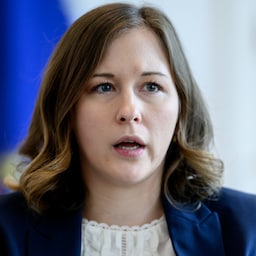
Ministerin Claudia Bauer, ÖVP
Bild: Imre Antal
Until now, individual course providers reported their needs to the state. Going forward, Upper Austria intends to manage the program itself and continuously adapt it to actual demand. In addition, all data on publicly funded German language courses will be reported to the federal government’s integration portal. This will allow social welfare authorities, the AMS, and other relevant agencies to track, on a daily basis, whether participants are meeting their obligations and to impose sanctions immediately if necessary.
By issuing a call for proposals for proficiency-level courses, we are putting an end to the previous “request-based” approach.
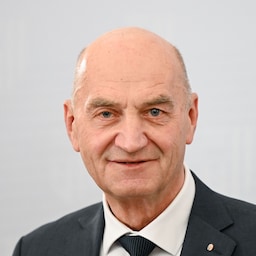
Integrationslandesrat Christian Dörfel, ÖVP
Bild: Markus Wenzel
For the State Councilor for Integration, this is more than just an organizational change. “German is our common language and the key to integration. By putting the proficiency courses out to tender, we are putting an end to the previous ‘free-for-all’ and ensuring active management. We’re ensuring regional distribution, appropriate courses, and swift consequences for violations,” says the State Councilor.
Integration Minister Claudia Bauer sees this as a flagship project with a signal effect extending beyond Upper Austria. “Successful integration rests on three clear pillars: German. Work. Values.” Upper Austria is the first state to demonstrate “how diverse course offerings can be transformed into a coordinated, transparent, and effective system. I hope this example catches on,” says the Upper Austrian.
Learning German is not an option
The Austrian Integration Fund also views this as a milestone. Director Franz Wolf emphasized that, going forward, a uniform language proficiency assessment, comparable quality standards, and complete transparency regarding all publicly funded German courses will be guaranteed. “Learning German is not an option, but one of the prerequisites for successful integration,” said Wolf. This would allow public funds to be used in a more targeted manner and make integration efforts more efficient.
This article has been automatically translated,
read the original article here.










Liebe Leserin, lieber Leser,
die Kommentarfunktion steht Ihnen ab 6 Uhr wieder wie gewohnt zur Verfügung.
Mit freundlichen Grüßen
das krone.at-Team
User-Beiträge geben nicht notwendigerweise die Meinung des Betreibers/der Redaktion bzw. von Krone Multimedia (KMM) wieder. In diesem Sinne distanziert sich die Redaktion/der Betreiber von den Inhalten in diesem Diskussionsforum. KMM behält sich insbesondere vor, gegen geltendes Recht verstoßende, den guten Sitten oder der Netiquette widersprechende bzw. dem Ansehen von KMM zuwiderlaufende Beiträge zu löschen, diesbezüglichen Schadenersatz gegenüber dem betreffenden User geltend zu machen, die Nutzer-Daten zu Zwecken der Rechtsverfolgung zu verwenden und strafrechtlich relevante Beiträge zur Anzeige zu bringen (siehe auch AGB). Hier können Sie das Community-Team via unserer Melde- und Abhilfestelle kontaktieren.