Woody, spicy, sweet
This is what ancient Egyptian mummies smell like, according to a study
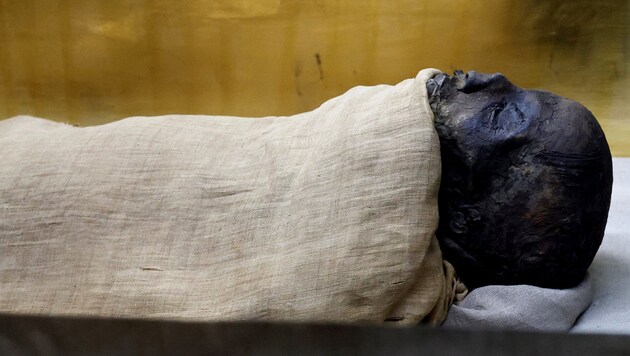

Have you ever wondered what mummies smell like? A team of researchers from England has addressed this question. The answers from specially trained human "sniffers": "woody", followed by "spicy" and "sweet", "rancid" or "rotten".
 Kronen Zeitung als bevorzugte Google-Quelle hinzufügen
 A research group led by Emma Paolin from University College London (UCL) and the University of Ljubljana has investigated the typical odors of embalmed bodies for the first time, as reported in the Journal of the American Chemical Society.
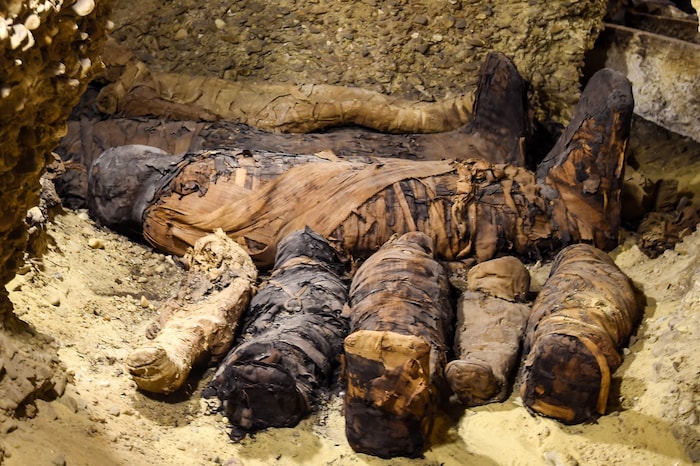
The team analyzed nine mummies from the Egyptian Museum in Cairo - most of which date back to the 1st and 2nd millennium BC - using various methods.
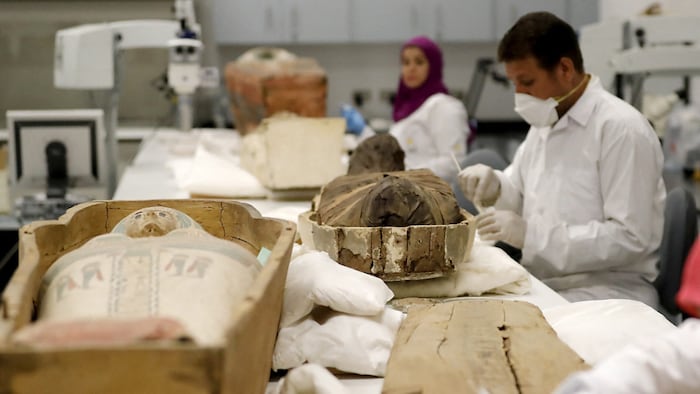
Human "snoopers" in action
Among other things, specially trained human "sniffers" described the smells in terms of how intense and pleasant they were. The most common odor notes were "woody", followed by "spicy" and "sweet", but some of the mummies' exhalations were also classified as "rancid" or "spoiled".
In addition, the molecules and compounds involved were measured using analytical techniques such as gas chromatography and mass spectrometry. This also enabled the team to determine whether these components originated from preservatives, microorganisms or pesticides.
In general, corpses in Ancient Egypt were once prepared with oils and resins from pine, cedar and juniper, among others, in order to preserve the body and soul in the afterlife.
This article has been automatically translated,
read the original article here.











Da dieser Artikel älter als 18 Monate ist, ist zum jetzigen Zeitpunkt kein Kommentieren mehr möglich.
Wir laden Sie ein, bei einer aktuelleren themenrelevanten Story mitzudiskutieren: Themenübersicht.
Bei Fragen können Sie sich gern an das Community-Team per Mail an forum@krone.at wenden.