Hammer high-tech
Porsche Taycan: Finally the way it should be?
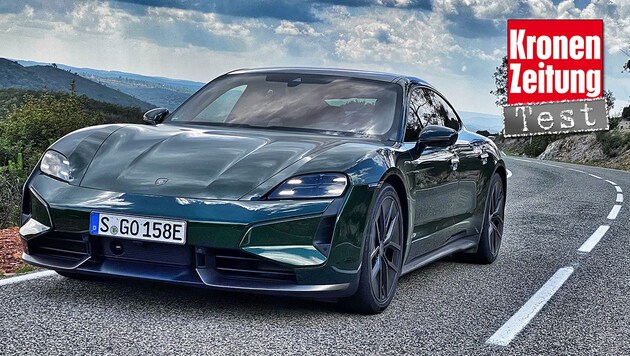

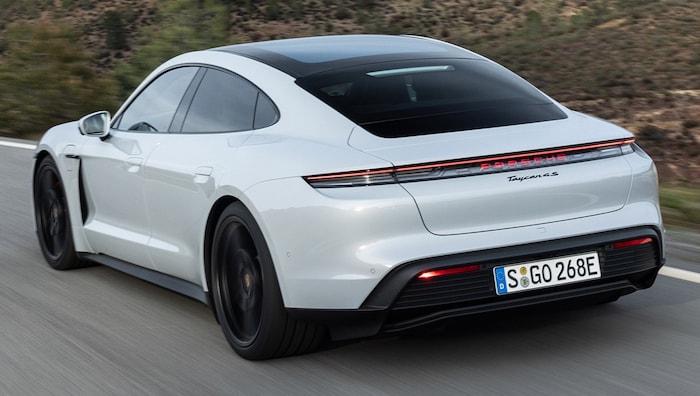
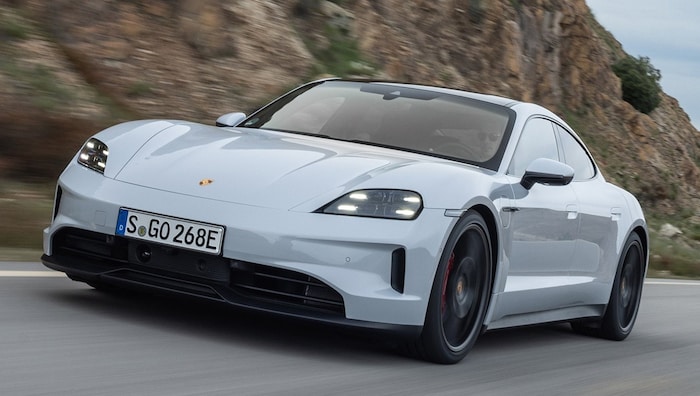
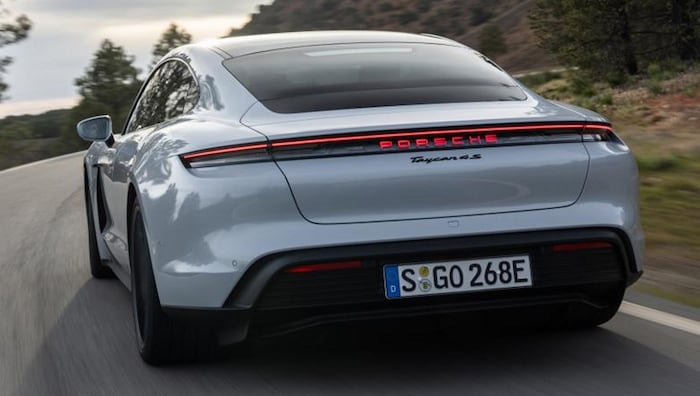
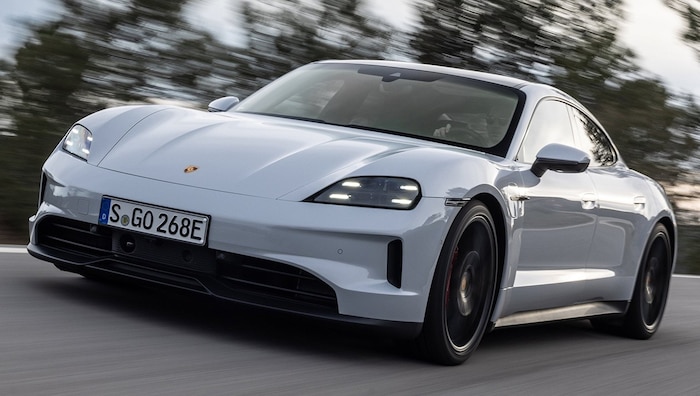
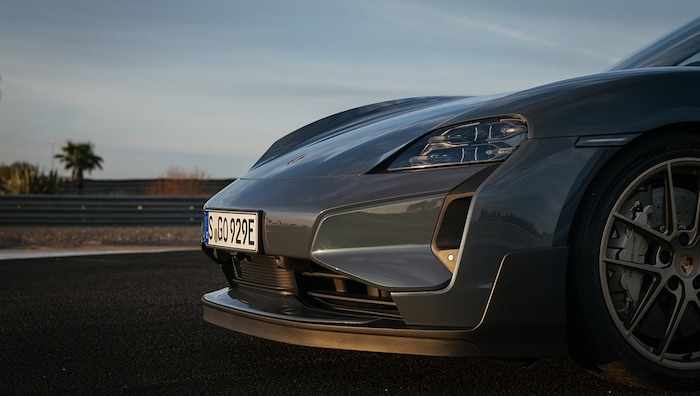
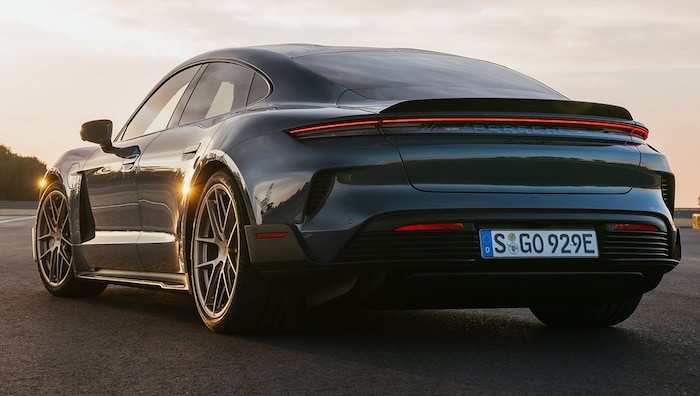
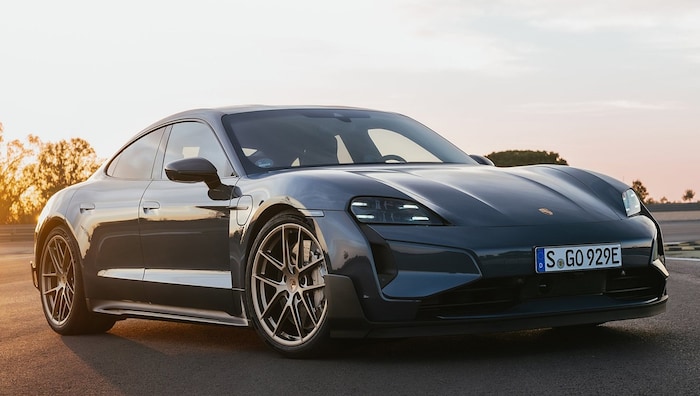
The term facelift always sounds so succinct, so inconspicuous. But what Porsche has done here with the model revision of the Taycan, an electric sports car that has been fascinating from the outset, goes much deeper than just cosmetic surgery on the surface: a more powerful drive, larger batteries, more range and better performance. There is also a new top model with well over 1000 hp.
 Kronen Zeitung als bevorzugte Google-Quelle hinzufügen
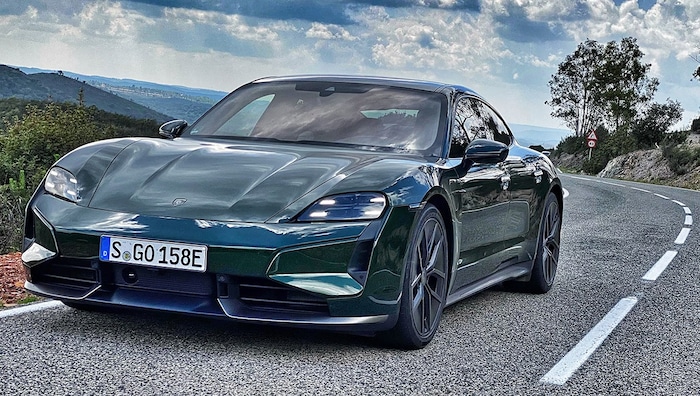
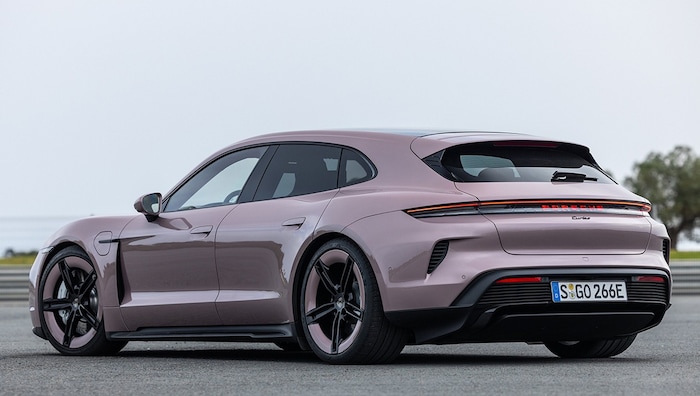
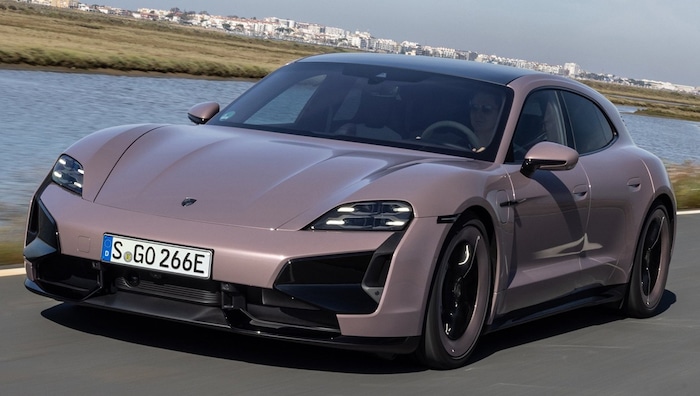
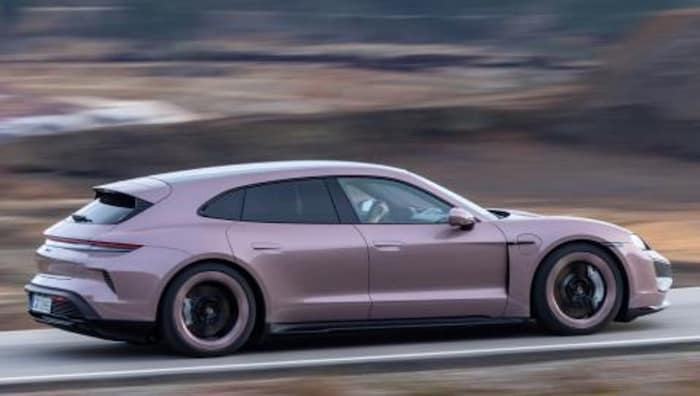
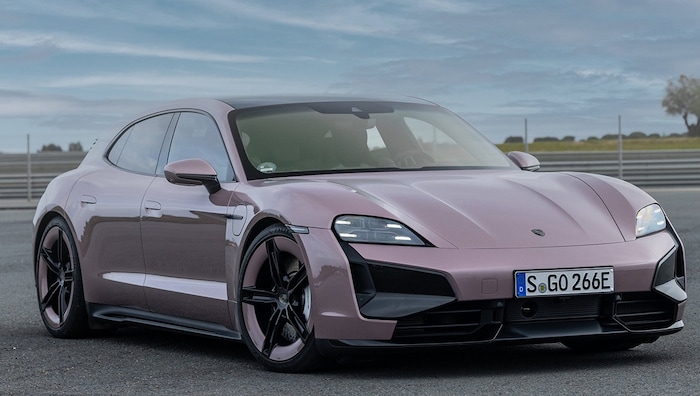
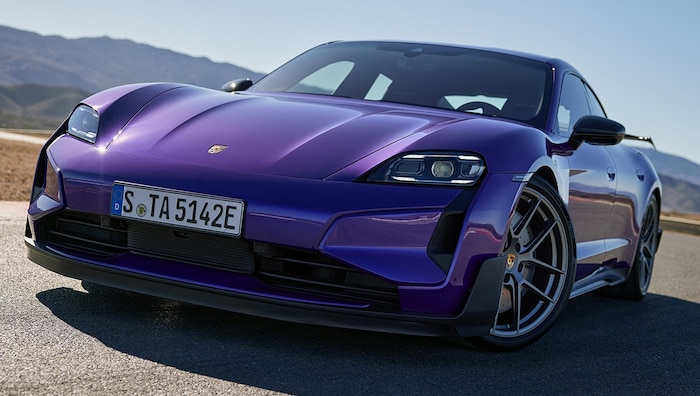
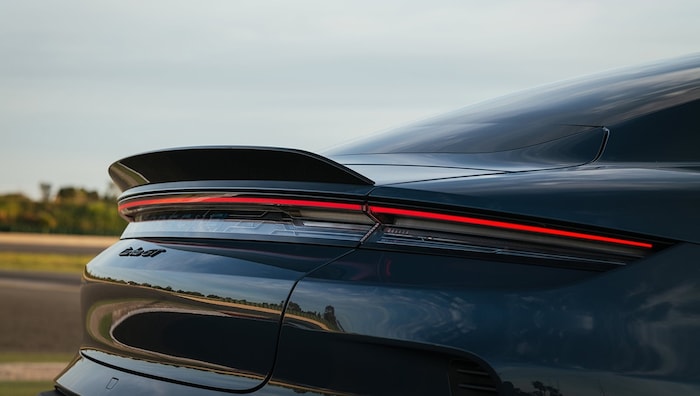
 Of course, the look has also been revised. We show this right at the beginning of the video driving report above. But the technical updates are much more important. Let's get one thing out of the way right away: The technology is the same for all three body variants - saloon, Sport Turismo and Cross Turismo - but the weights and performance differ slightly. The information given here essentially relates to the normal four-door model.
Powerful battery doesn't mind the cold - half the charging time in some cases
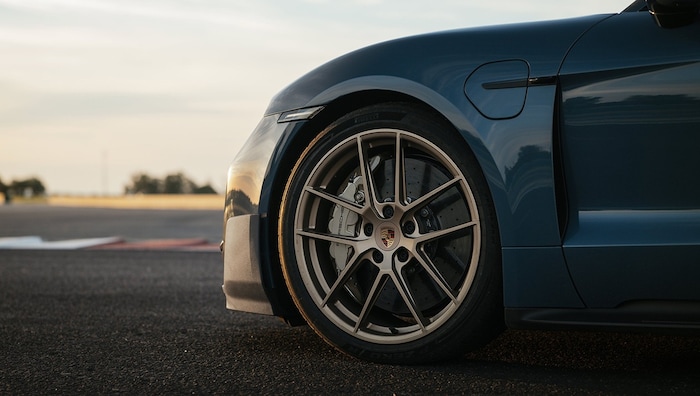
There has never been much to criticize about the Taycan's performance, but there was more potential and need for improvement in terms of range. And so the new generation now goes up to 35 percent further than its predecessor. The WLTP leader can travel up to 678 kilometers (up to 821 km in urban areas). This is the rear-wheel drive model with a performance battery, which now stores a full 105 kWh instead of 93 kWh (net: 97 kWh). Of course, this top range requires features such as the new aero rims, which alone add 40 kilometers to the range. So it always depends on the equipment. This always applies to electric cars, because the tire dimensions alone make a big difference.
The Taycan also charges faster than before when it has to go to the charging station. Although the maximum charging power for alternating current remains at 11 kW, the maximum charging power at 800 volts direct current has increased by 50 kW to 320 kW. If you plug in at 5 percent SoC (State of Charge), the charging power should be kept constantly above 300 kW for five minutes (if the charging station can cope with this). In addition, the battery is no longer as sensitive to temperature: in the first-generation Taycan, the charging time from ten to 80 percent SoC at a battery temperature of 15 degrees is 37 minutes. Under the same conditions, the updated Taycan only needs 18 minutes - despite the higher battery capacity.
Another way of charging has also been greatly improved: the maximum recuperation power when decelerating from high speeds has increased from 290 to up to 400 kW, although Porsche remains true to its strategy of controlling this mainly via the brake pedal. In the lower speed range, the maximum deceleration generated by recuperation has been increased by around 15 percent.
More power: 2.4 seconds from 0 to 100
It is much more fun to consume the charged energy, and Porsche has now also increased this fun. Despite larger batteries, all variants are lighter than their predecessors and have more engine power.
The background: a further developed drivetrain with a new rear-axle motor (up to 80 kW and 40 Nm more, but 10 kg lighter), a modified pulse inverter with optimized software, more powerful batteries, a revised thermal concept, a next-generation heat pump and an optimized recuperation and all-wheel drive strategy.
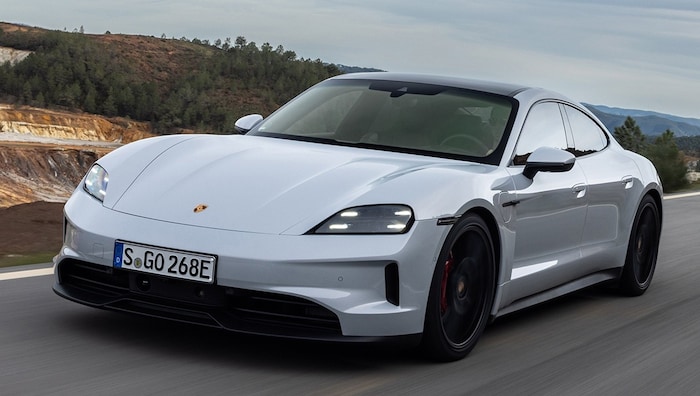
The engine in the base model now produces 300 kW/408 hp instead of 240 kW/326 hp, which leads to an improvement in the standard sprint value by six tenths to just 4.8 seconds - not bad for 2090 kg DIN weight. The 20 kW/27 hp more powerful, but also 80 kg heavier version with the larger battery achieves the same time. Both reach a top speed of 230 km/h.
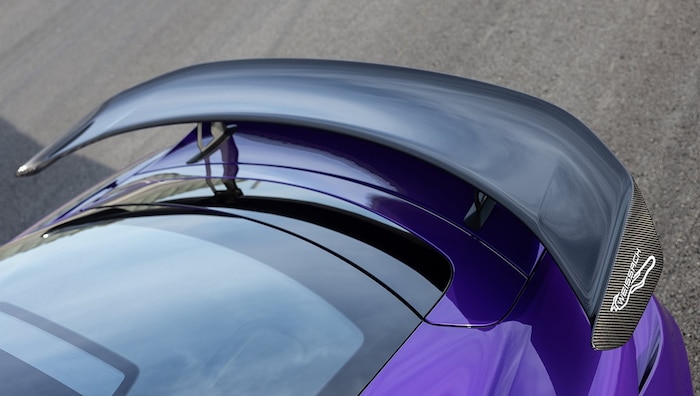
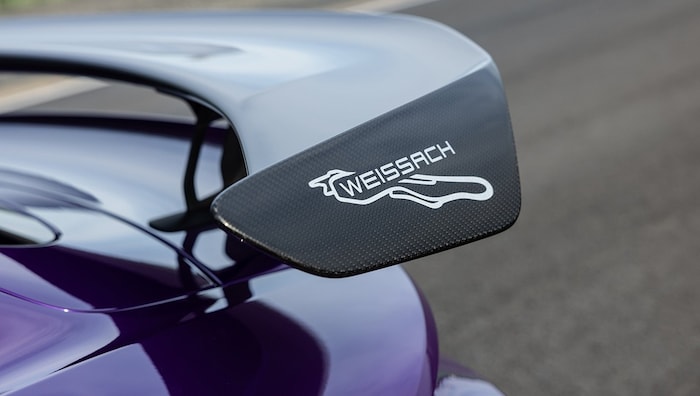
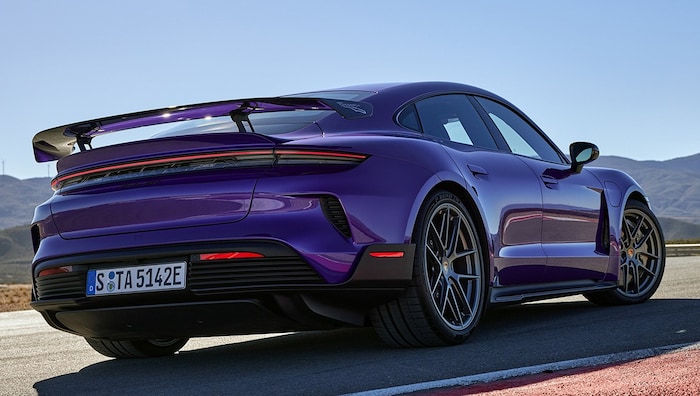
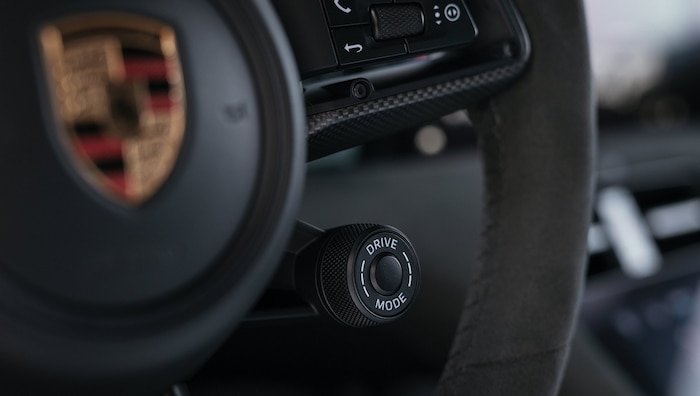
At the other end of the food chain, the Taycan Turbo S boasts a sprint time of 2.4 seconds - thanks to a significant increase in power. Its predecessor managed 2.8 seconds and achieved 560 kW with the overboost function in Launch Control. The new Turbo S delivers 570 kW even in normal mode. If you pull the new push-to-pass lever, you get 640 kW/870 hp, and with Launch Control even 700 kW/952 hp and 1110 Nm. Push to Pass remains active for ten seconds and can be reactivated four seconds later. Incidentally, the range of the Turbo and Turbo S is specified as up to 630 km according to WLTP.
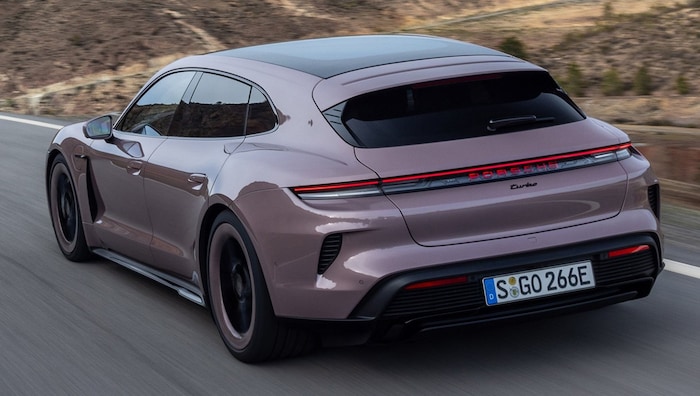
Adaptive air for all, floating suspension as an option
The adaptive dual-chamber air suspension with automatic, driving mode-dependent level control with two-valve dampers will be standard even in the base model. A special highlight can be ordered as an option - unfortunately only for the all-wheel drive versions: the new Porsche Active Ride suspension.
Its dampers actively compensate for uneven surfaces with an electrically operated hydraulic pump. As a result, the Taycan's body always remains horizontal, even during dynamic braking, steering and acceleration. And there's more: instead of swaying outwards in bends, the vehicle can actively lean into the bend.
You can see the super suspension as soon as you get in: When you open the door, the car raises by 5.5 centimeters in a flash. It then lowers back to normal level.
This is what it feels like in the Taycan Turbo
We were driving a Taycan Turbo in the southern Spanish hinterland, in a real realm of bends. You don't notice any of the high technology in the chassis. The only thing you notice is how well the Taycan sits, how flat the asphalt suddenly is, how little the body moves and that you end up understeering when turning into tight corners. The car glides around corners as if on rails, supported by the optional rear-axle steering. You don't feel anything unusual from the steering either, because it is well tuned and allows a maximum steering angle of no more than 2.8 degrees.
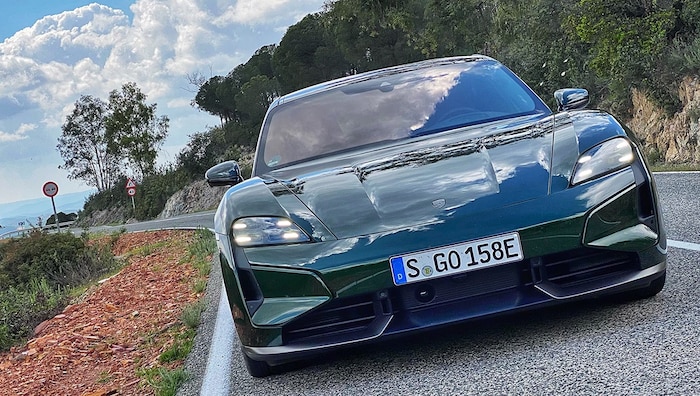
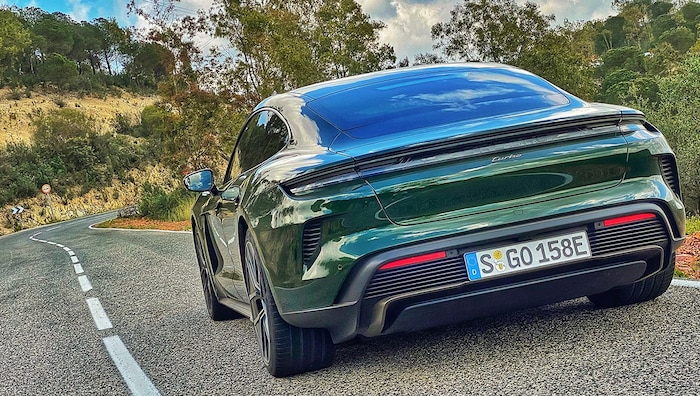
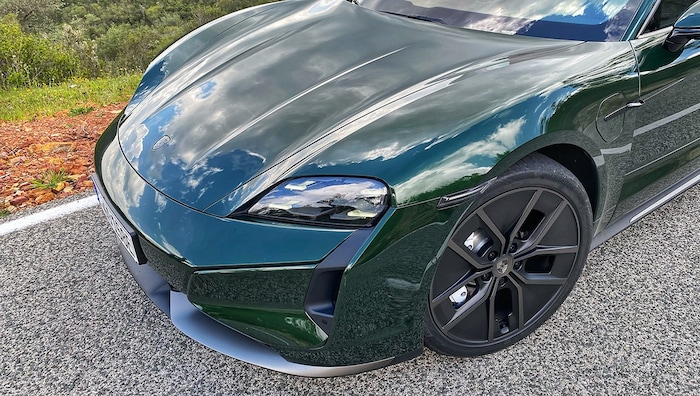
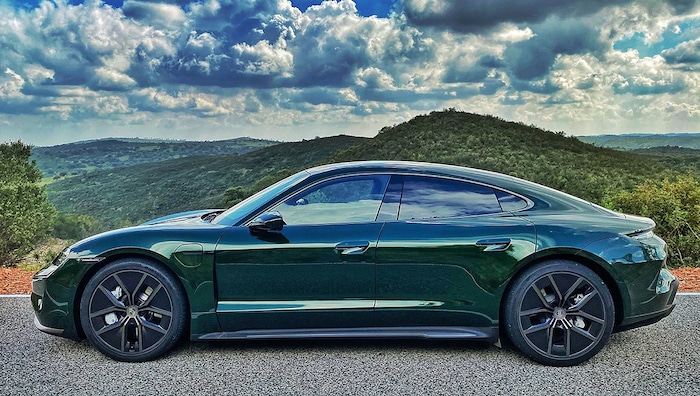
In view of the sheer mass, it is incredible how this four-door can be moved. A DIN weight of 2290 kg, plus optional equipment and driver and front passenger, makes an estimated 2.5 tons. Nevertheless, everything remains under control at all times, and the combination of regenerative braking and disc brakes (six-piston fixed callipers at the front, four-piston fixed callipers at the rear, discs 410 mm in diameter at the front, 365 mm at the rear) works flawlessly with a reasonably normal driving style. However, if you are riding extremely dynamically and putting maximum strain on the material, the brakes become a little soft and your foot comes into contact with the carpet during hard braking.
If you want more, you can order carbon-ceramic brakes (ten-piston fixed callipers at the front, four-piston fixed callipers at the rear, discs 420 mm in diameter at the front, 410 mm at the rear) - or the Turbo S or the Turbo GT, where they come as standard.
The steering feel is absolutely typical of Porsche. You can simply feel what is happening and what the car is doing at any moment.This allows the driver to react to tricky situations in a completely relaxed manner, because there is no confusion between his nervous system and the current driving situation. Comparable to an azimuth error of zero on cassette recorders, for people who are still familiar with such things.
On a straight, you almost have to force yourself not to leave your foot on the accelerator pedal for too long. In the 707 hp (884 hp with Launch Control) turbo, it takes 2.7 seconds from standstill to 100 km/h, and after just 8.2 seconds you would have 200 km/h on the speedometer. It is then not far to 260 km/h either.
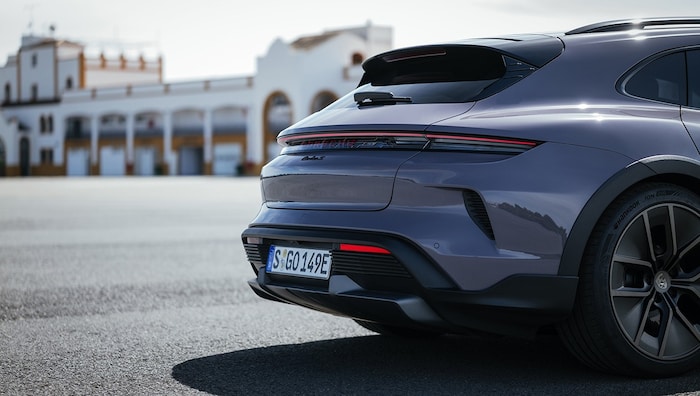
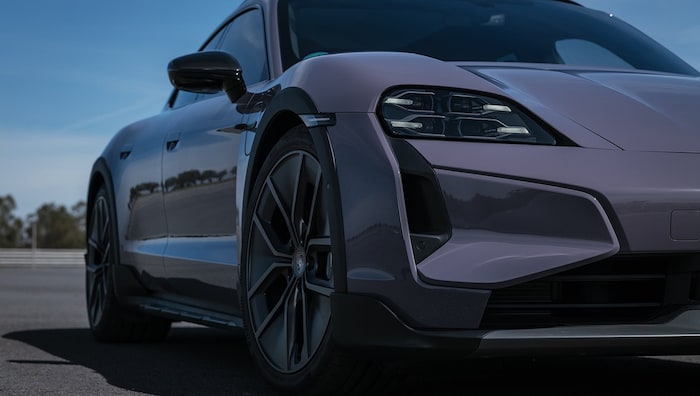
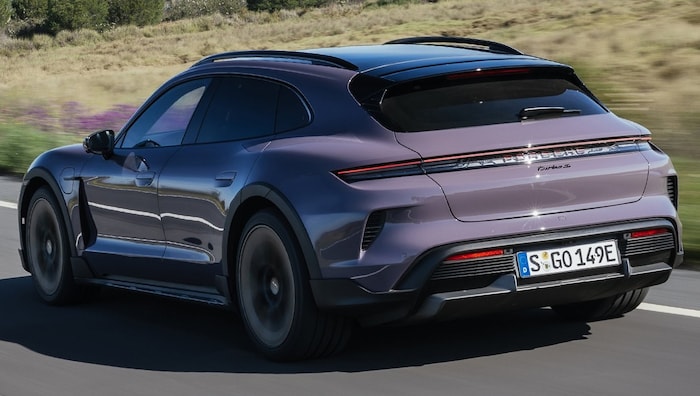
Improved soft skills
Porsche has also revised the Taycan in detail. Thanks to online calculation, the navigation system creates a charging stop route three times faster than before, the charging flap now always opens and closes electrically on site and the connection is illuminated. You can specify a desired charging status at the destination.
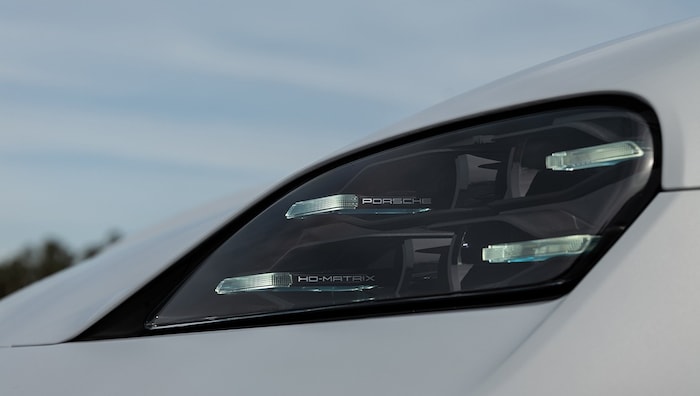
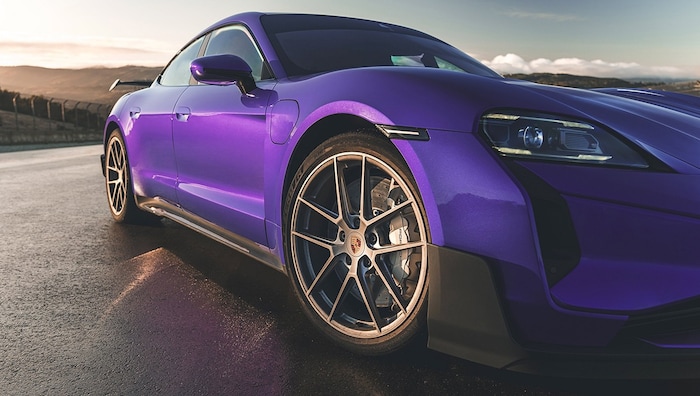
Matrix LEDs are standard; as an option, they now have 32,000 instead of 84 pixels per headlight and are capable of special functions such as carpet-like illumination of the lane to the width of the vehicle in highway construction zones, making it easier to overtake trucks. The adaptive cruise control now also has a swerve assistant.
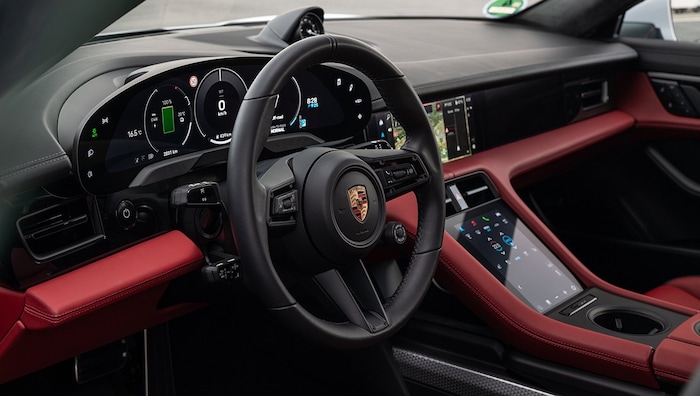
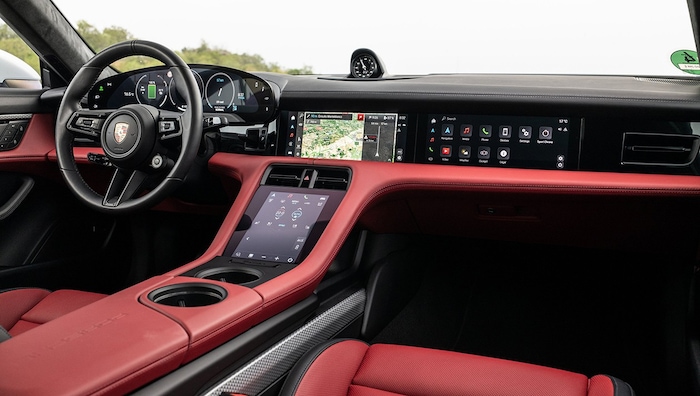
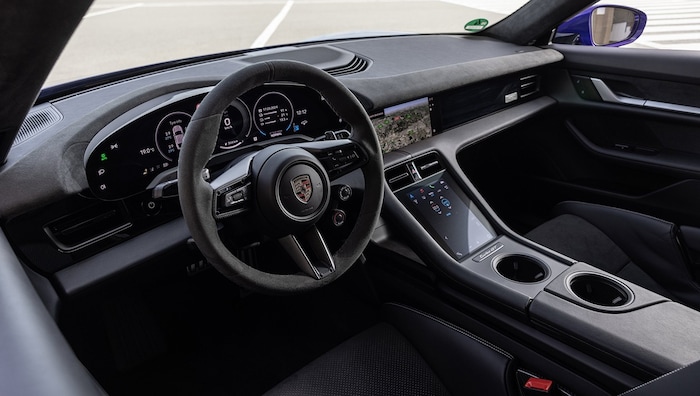
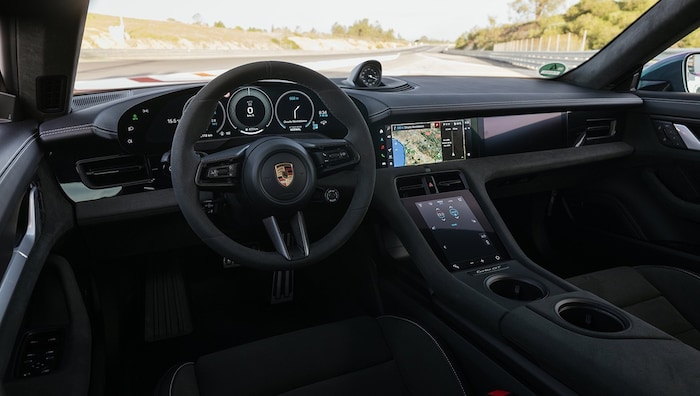
In the cockpit, the user interface has been revised, there are new displays on the speedometer display (including a separate display for battery temperature etc.) and Apple Car Play has been deeply integrated into the on-board software so that vehicle functions can be controlled from the Apple environment. Video streaming is now also possible on the central display and the optional passenger display, on the latter even while driving - foiling prevents driver distraction.
The prices
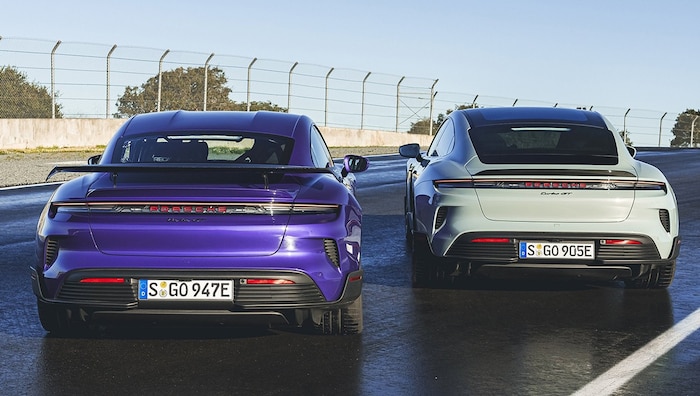
The list prices have naturally risen in line with the technical improvements and the increase in equipment. The entry-level price for the Taycan with rear-wheel drive, 300 kW and a battery with a net capacity of 82.3 kWh (previously 71 kWh) is 104,317 euros in Austria (Sport Turismo 105,200 euros, Cross Turismo 115,991 euros). 5900 euros surcharge for the performance battery. The list goes up to 213,584 euros for the Turbo S and 243,982 euros for the new Turbo GT.
Driving quote:
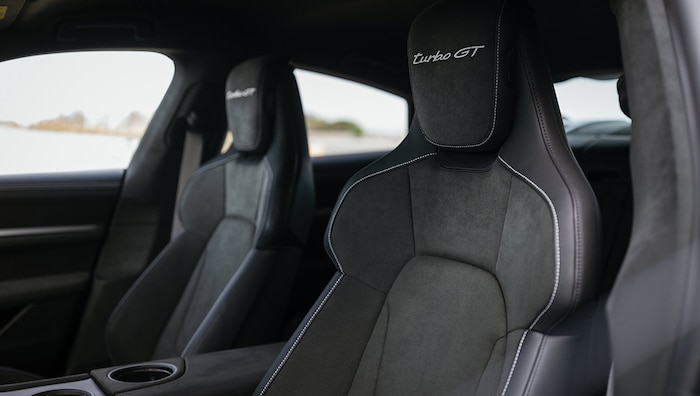
Now the Taycan is finally where it belongs. It is above all the extra range that makes it a better electric car than ever before. The extra power and the active chassis make it a significantly improved sports car. And if you treat yourself to the new top-of-the-range Turbo GT model, you really do get a record-breaking vehicle. We won't be able to report on how it drives until April 10.
If you don't need all this and can make do with the existing features instead - used Taycans should now be available relatively cheaply. But even these require a not-too-short income.
Why?
Top performance with drive and battery
Excellent riding characteristics
Why not?
Here you can only mention basic things like the price or the nature of an electric car. Or the not quite adequate durability of the brakes.
Or perhaps ...
... grab a used pre-facelift model at a reasonable price.










Da dieser Artikel älter als 18 Monate ist, ist zum jetzigen Zeitpunkt kein Kommentieren mehr möglich.
Wir laden Sie ein, bei einer aktuelleren themenrelevanten Story mitzudiskutieren: Themenübersicht.
Bei Fragen können Sie sich gern an das Community-Team per Mail an forum@krone.at wenden.