Three Times as Many Cows
Drought Is Now Pushing Slaughterhouses to Their Limits
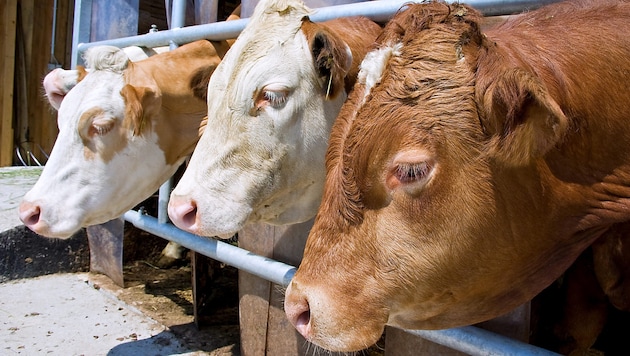

Over the past three weeks, three times (!) as much beef has come onto the market as usual. The extreme drought is forcing farmers to have their animals emergency-slaughtered. Slaughterhouses are reaching their limits, prices are coming under pressure—and there is far too much meat.
 Kronen Zeitung als bevorzugte Google-Quelle hinzufügen
 “In recent weeks, about three times as many cows for slaughter have been brought to market as usual,” reported ARGE Rind, the umbrella organization for eight cattle producers’ associations. The reason for this problematic situation is the record-breaking drought in Austria, which has set off a far-reaching chain reaction.
Due to the drought, there is far less forage and grain corn available for farmers to feed their cows. Many farmers are forced to have their cattle emergency-slaughtered because of the severe feed shortage, which in turn is pushing slaughterhouses to their limits.
Twice as Many Animals as Usual
“Currently, we’re receiving about twice as many animals daily as under normal market conditions,” reports , owner of the Handlbauer slaughterhouse in Linz, Upper Austria, to the Austria Press Agency. The problem is that Austrians aren’t suddenly eating twice as much beef as usual.
Massive crop failures
- Grain production ( excluding corn) is one-fifth lower this year than last year, as Agarmarkt Austria (AMA) warns.
- According to the Ministry of Agriculture, numerous forage fields are at risk of yield losses of up to 50 percent.
- Expert estimates also indicate massive crop losses for corn, potatoes, soybeans, sugar beets, and pumpkins.
“Significant Loss of Value”
Handlbauer is therefore having to freeze large quantities of meat. “However, frozen-food storage facilities are already operating at above-average capacity and, in some cases, at their limits,”the company warns. On top of that, the cold doesn’t necessarily improve the quality of the meat. “In addition to the extra storage and energy costs, freezing also leads to a significant loss in value of the goods,” explains the Upper Austrian slaughterhouse.
Slaughterhouses in other federal states are also grappling with the tense situation. Werner Habermann, managing director of ARGE Rind and the Gut Streitdorf producers’ association inLower Austria, reports a “massive increase in the number of cows being slaughtered.”
Enormous Price Pressure
In Carinthia, Kärntner Fleisch slaughtered seven percent more cattle from the beginning of the year through the end of June than last year. In the coming weeks, the state’s largest farmer-owned livestock marketing cooperative expects slaughter numbers to remain higher than usual.
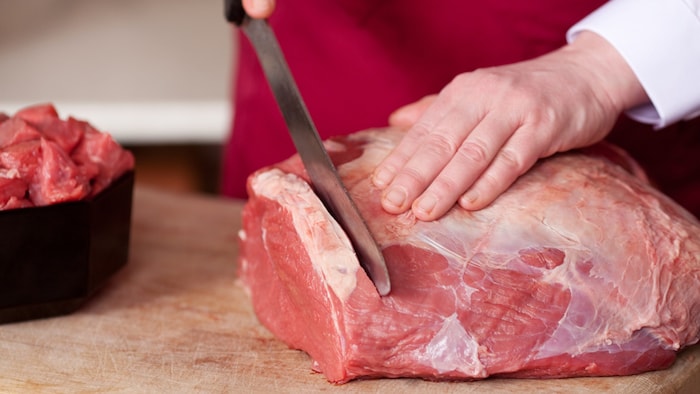
Kärntner Fleisch warns that this is already affecting prices—which are coming under pressure because significantly more cattle are being slaughtered than usual and more animals are being imported. ARGE Rind also confirms this: Compared to the week of July 6–12, prices dropped by as much as a quarter.
Cattle are coming down to the valley
The company Alpenrind in Salzburg expects that the weather and a shorter alpine grazing season for the animals will lead to more cattle being slaughtered. In Tyrol , the effects of the drought are not yet expected to be quite as severe. The Obermoser slaughterhouse in the Kufstein district is currently seeing slightly more slaughterings. However, the facility cannot say for certain whether this is related to a feed shortage.
In the coming weeks, the Obermoser slaughterhouse expects more work: the animals’ descent from the alpine pastures is imminent. Here, too, it is not yet clear whether more cattle than usual will end up at the slaughterhouse due to the feed shortage.
ARGE Rind is now calling on slaughterhouses and livestock dealers to “temporarily suspend” live imports of cattle for slaughter due to “the dramatic feed shortage.” According to the umbrella organization, up to 1,000 cows are imported live into Austria for slaughter in a typical week.
“We Stand Firmly by Our Farmers’ Side”
Chancellor Christian Stocker (ÖVP) assures that the federal government stands “firmly by the side of our farmers” in the current situation. “This ranges from maintaining liquidity to compensating for losses,” the chancellor announced. Agriculture Minister Norbert Totschnig (ÖVP) had already signaled at the beginning of the week that a package of drought relief measures was in the works.
This article has been automatically translated,
read the original article here.











Willkommen in unserer Community! Eingehende Beiträge werden geprüft und anschließend veröffentlicht. Bitte achten Sie auf Einhaltung unserer Netiquette und AGB. Für ausführliche Diskussionen steht Ihnen ebenso das krone.at-Forum zur Verfügung. Hier können Sie das Community-Team via unserer Melde- und Abhilfestelle kontaktieren.
User-Beiträge geben nicht notwendigerweise die Meinung des Betreibers/der Redaktion bzw. von Krone Multimedia (KMM) wieder. In diesem Sinne distanziert sich die Redaktion/der Betreiber von den Inhalten in diesem Diskussionsforum. KMM behält sich insbesondere vor, gegen geltendes Recht verstoßende, den guten Sitten oder der Netiquette widersprechende bzw. dem Ansehen von KMM zuwiderlaufende Beiträge zu löschen, diesbezüglichen Schadenersatz gegenüber dem betreffenden User geltend zu machen, die Nutzer-Daten zu Zwecken der Rechtsverfolgung zu verwenden und strafrechtlich relevante Beiträge zur Anzeige zu bringen (siehe auch AGB). Hier können Sie das Community-Team via unserer Melde- und Abhilfestelle kontaktieren.