Already 1300 years ago:
Living together back then worked without violence


The ancient Mödlingers were Europeans, while the ancestors of the Leobersdorfers were East Asians - yet they lived peacefully in one region.
 Kronen Zeitung als bevorzugte Google-Quelle hinzufügen
 In fact, two different communities lived in the Vienna Basin in the 8th century, whose genetic origins were as fascinating as they were contradictory: people of East Asian descent dominated in what is now Leobersdorf, while European roots predominated in Mödling.
But despite these differences, the cultural traces showed a surprisingly uniform picture. "It is remarkable that two genetically so different groups developed a common culture," explains Walter Pohl from the Austrian Academy of Sciences (ÖAW). "Grave goods and the way of life of the people are almost identical in both settlements. So there were no signs of parallel societies."
650 grave finds examined
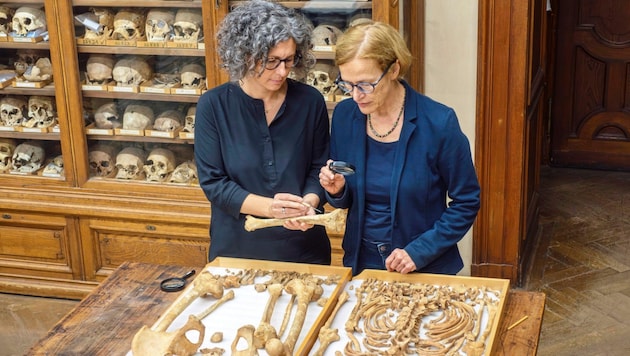
The interdisciplinary HistoGenes project, coordinated by the Austrian Academy of Sciences, examined more than 650 (!) grave finds from Mödling and Leobersdorf. The analyses of the bones revealed that the women often came from other regions - which indicates a high degree of mobility and a strict ban on incest.
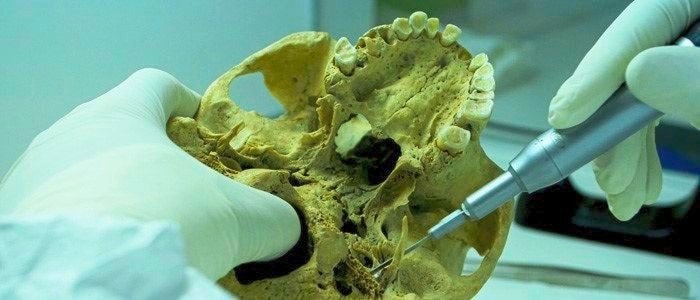
"Almost none of the mothers had local ancestors," says Pohl in amazement. His anthropologists also found hardly any evidence of violence or malnutrition. "It was one of the most peaceful eras in the Vienna Basin," the archaeologists emphasize. This picture of peaceful coexistence only came to an abrupt end around 800 AD, when the Franks under Charlemagne subjugated the Avar Empire.
This article has been automatically translated,
read the original article here.











Da dieser Artikel älter als 18 Monate ist, ist zum jetzigen Zeitpunkt kein Kommentieren mehr möglich.
Wir laden Sie ein, bei einer aktuelleren themenrelevanten Story mitzudiskutieren: Themenübersicht.
Bei Fragen können Sie sich gern an das Community-Team per Mail an forum@krone.at wenden.