New modal split
More and more public transport and fewer cars in Vienna
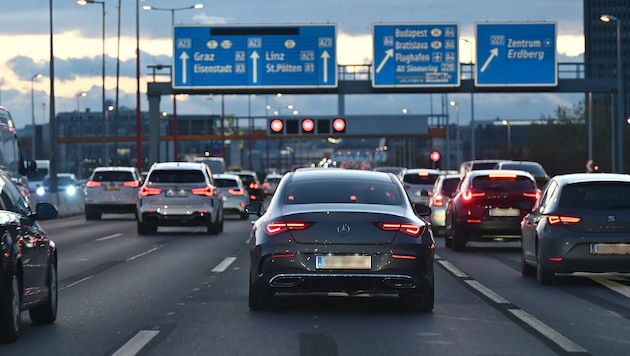

In 2024, the Viennese will increasingly rely on public transport, cycling and walking. Meanwhile, car traffic is on the decline
 Kronen Zeitung als bevorzugte Google-Quelle hinzufügen
 The latest modal split figures are out. The Viennese are becoming increasingly environmentally friendly. Car traffic has fallen to 25 percent. Only a quarter of all journeys are now made by car - the lowest figure since mobility behavior has been measured. Just for comparison: in 1993 it was still 40 percent. And: only just over half of households still have a car at all.
At 34 percent, public transport is now the most popular mode of transportation. Closely followed by walking with 30 percent. However, cycling has also increased and now accounts for 11 percent. In 2019, the proportion of everyday journeys made by bike in Vienna was still at 7 percent.
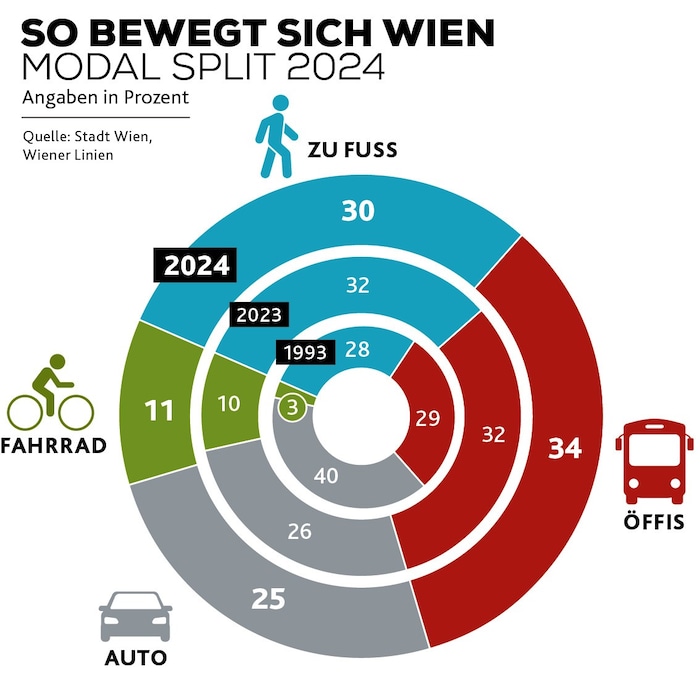
However, the city is lagging behind its self-imposed targets. According to Vienna's climate roadmap, motorized private transport should only account for 20 percent of the modal split in 2025 and 15 percent in 2030. Transport Councillor Ulli Sima (SPÖ) is nevertheless pleased: "Our efforts in recent years are paying off."
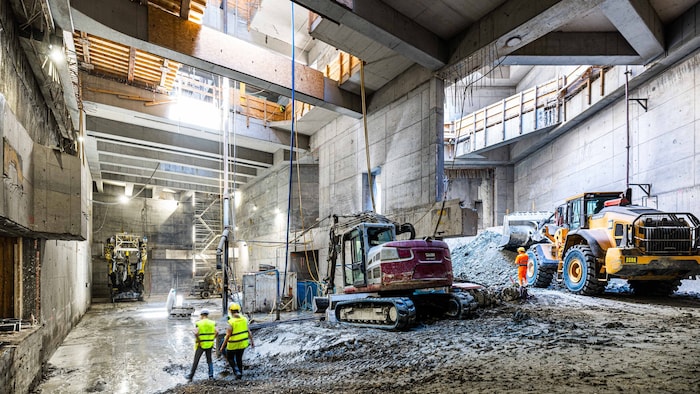
The U2xU5 extension will serve as the basis for the further expansion of public transport in Vienna. After all, this will create space for an additional 300 million passengers - per year. Compared to other European capitals, public transport in Vienna is particularly well used. Berlin, for example, has a public transport share of around 27 percent, while Vienna is significantly higher at 34 percent.
This article has been automatically translated,
read the original article here.











Da dieser Artikel älter als 18 Monate ist, ist zum jetzigen Zeitpunkt kein Kommentieren mehr möglich.
Wir laden Sie ein, bei einer aktuelleren themenrelevanten Story mitzudiskutieren: Themenübersicht.
Bei Fragen können Sie sich gern an das Community-Team per Mail an forum@krone.at wenden.