"Absolutely horrific"
Hundreds of killer whales stranded in Tasmania
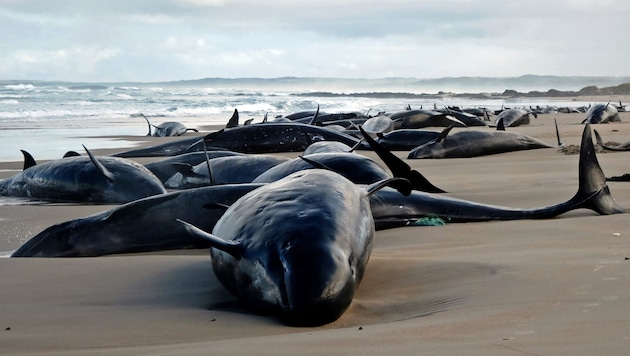

It's a race against time: in Tasmania, Australia, experts are trying to help stranded whales in a dramatic rescue operation. Around 136 of the 157 animals are still alive.
 Kronen Zeitung als bevorzugte Google-Quelle hinzufügen
 This is the first stranding of this species in Tasmania for 50 years. Marine biologists, veterinarians and helpers are feverishly trying to keep them alive - in the hope that they will make it back to deeper waters.
It is a heartbreaking sight: The whales are scattered all over the beach. The ministry said 157 marine mammals had washed up on the remote beach near the town of Arthur River in the north-west of the state for as yet unknown reasons.
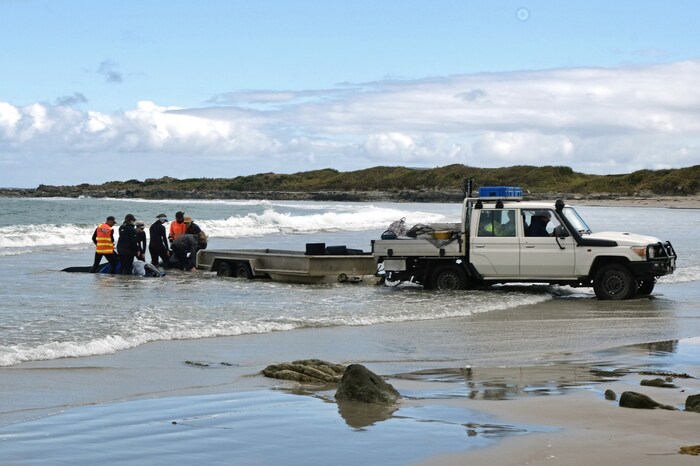
"There are babies in there too, it's absolutely horrific," one eyewitness told Australian broadcaster ABC. The animals were fighting for their survival.
"I just can't help them"
"They look at me and I just can't help them." The necessary special equipment cannot be brought in time due to the inadequate location of the beach.
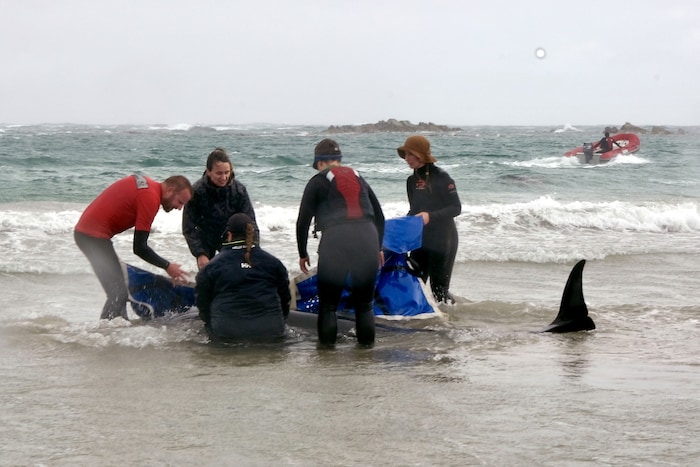
Strandings remain a mystery
Why marine mammals become stranded remains a mystery to this day. Especially in Australia, but also in New Zealand, mass strandings occur again and again, often involving pilot whales.
About killer whales
Small killer whales, scientifically known as "Pseudorca crassidens", are also known as loggerhead whales. They reach an average length of six meters, making them one of the largest dolphin species. They resemble the great killer whales or killer whales (orcas), but are solid black.
This article has been automatically translated,
read the original article here.











Da dieser Artikel älter als 18 Monate ist, ist zum jetzigen Zeitpunkt kein Kommentieren mehr möglich.
Wir laden Sie ein, bei einer aktuelleren themenrelevanten Story mitzudiskutieren: Themenübersicht.
Bei Fragen können Sie sich gern an das Community-Team per Mail an forum@krone.at wenden.