Little researched
“Pill” apparently has an influence on brain structure

A German psychologist's self-experiment may have advanced scientific research into hormonal influences on the brain. The scientist had herself examined 75 times using magnetic resonance imaging (MRI) while taking the pill.
 Kronen Zeitung als bevorzugte Google-Quelle hinzufügen
 "The influence of the contraceptive pill on the brain has been little researched, even though millions of women worldwide use it. In order to investigate how it affects neuronal patterns and the volume of certain brain regions, Carina Heller has undergone a self-experiment over the past two years.
Hormone levels were also measured
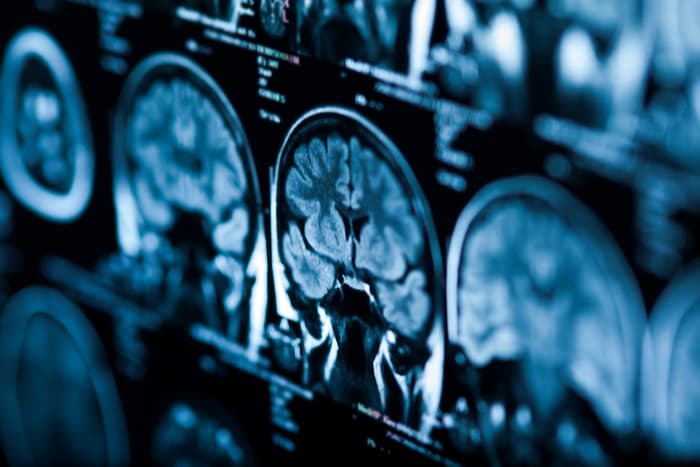
Before, during and after taking the pill for three months, the psychologist underwent MRI scans for 90 minutes from Monday to Friday for five weeks at her then place of work, the University of Jena. In addition, she had the hormone concentrations in her blood determined and filled out daily mood questionnaires," the German pharmaceutical newspaper Pharmazeutische Zeitung has now reported, citing "Nature".
Certain areas of the brain shrank with the "pill"
The psychologist recently presented the results of her self-experiment at the annual meeting of the Society for Neuroscience. The main points: For example, the volume of certain brain areas shrank slightly when using the "pill". This does not automatically mean a deterioration or improvement in brain function, the scientist emphasized. It is a complex and finely tuned reaction of the brain to hormonal fluctuations.
The brain is influenced by the menstrual cycle
The psychologist's MRI images were somewhat different in the period without the use of an oral contraceptive. "Carina Heller found that brain volume and neuronal connectivity fluctuated over the course of a natural menstrual cycle and showed rhythmic patterns. When taking the pill, both the volume and the connectivity between certain brain regions decreased slightly in comparison. After discontinuation, these parameters largely returned to normal," reported the Pharmazeutische Zeitung on Tuesday.
Researcher hopes to gain insights into endometriosis
The scientist now wants to make her MRI scans available to other researchers. She also wants to compare her data with that of an endometriosis patient, for example, to find out whether hormone fluctuations in the brain could be the cause of the disease.
This article has been automatically translated,
read the original article here.











Da dieser Artikel älter als 18 Monate ist, ist zum jetzigen Zeitpunkt kein Kommentieren mehr möglich.
Wir laden Sie ein, bei einer aktuelleren themenrelevanten Story mitzudiskutieren: Themenübersicht.
Bei Fragen können Sie sich gern an das Community-Team per Mail an forum@krone.at wenden.