"Potentially endangered"
Hedgehog on the Red List as a threatened species for the first time
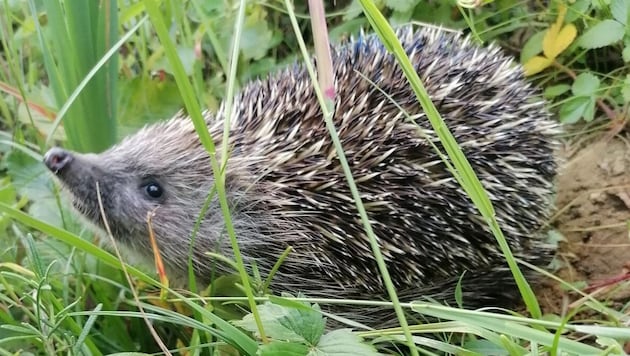

According to the International Union for Conservation of Nature (IUCN), the number of Western European hedgehogs is in sharp decline. It has therefore classified the hibernating hedgehog as "potentially endangered" for the first time in its Red List of Threatened Species.
According to the IUCN, humans are the problem: "In particular, the destruction of rural habitats through intensification of agriculture, roads and urban development is leading to a decline in the Western European hedgehog," it says. Hedgehogs need to be better protected.
Numbers down by up to 50 percent
The Western European hedgehog is found in Austria and Germany, the Benelux countries, Scandinavia and Great Britain, among other places. Over the past ten years, the number is estimated to have fallen by between 16 and 33 percent, depending on the country.
In Flanders in Belgium and in Bavaria, there has been a decline of 50 percent. There is no reliable information on the total number of hedgehogs. Hedgehogs usually only have offspring once a year.
The Red List has been in existence since 1964
"Potentially endangered" is level two of the seven-level scale used by the IUCN to assess endangerment. The scale ranges from "not endangered" to "extinct". The Red List has been in existence since 1964. It now includes more than 166,000 animal and plant species, of which a good 46,000 are endangered.
This article has been automatically translated,
read the original article here.










Da dieser Artikel älter als 18 Monate ist, ist zum jetzigen Zeitpunkt kein Kommentieren mehr möglich.
Wir laden Sie ein, bei einer aktuelleren themenrelevanten Story mitzudiskutieren: Themenübersicht.
Bei Fragen können Sie sich gern an das Community-Team per Mail an forum@krone.at wenden.