Making wooden shingles
Where an old craft can be experienced again
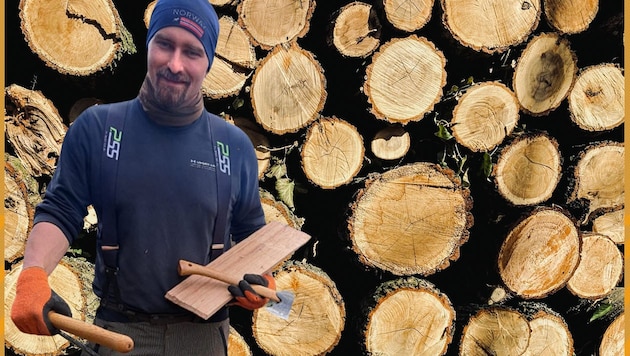

Thousands of years ago, people in our latitudes covered their dwellings with them. And in times of increased climate awareness, wooden shingles could experience a renaissance. Next weekend in the Weinviertel region, you can experience first-hand why this is the case.
 Kronen Zeitung als bevorzugte Google-Quelle hinzufügen
 Wooden shingles are a highly ecological building material. This is because they are a durable, repair-friendly natural product with a low carbon footprint. After decades, they are environmentally friendly when disposed of - after drying, they are high-quality fuel. "The shingles are a prime example of the circular economy and regionality, especially because the raw material is refined from local trees," enthuses Siegi Ellmauer, who, together with his journeymen Stefan Binder, Kevin Tenne and Mario Fordinal, is now inviting visitors to the 1st Weinviertel shingle show workshop at the Christmas market in Pulkau. What the quartet has mastered has tradition and deep roots in their homeland.
Ancient knowledge was buried for a long time
This type of roof covering has been used in Austria for more than 3000 years. However, the protection of dwellings is and was a valuable practice on all continents. In the Weinviertel region, oak shingles were naturally widespread as a raw material, but this craft has long since disappeared into the fog in north-western Lower Austria!
From log to shingle roof
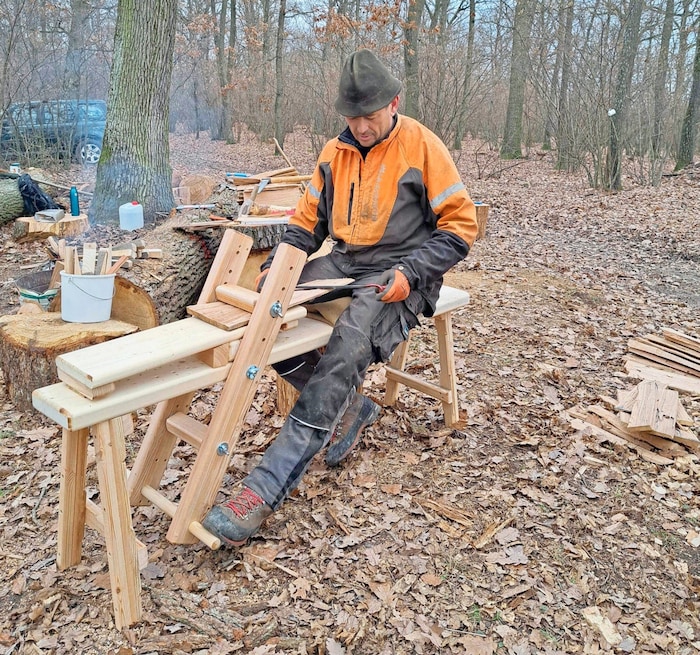
On November 30 and December 1, visitors can immerse themselves in this lost world. And in all comprehensible facets. First step: Once the pattern has been determined, the quarter and eighth blanks are split from the oak trunk using wedges. The shingles are then "beaten" by hand with an iron, cleaned with a small axe and then given their final shape on the "Hoanzlbank" with a drawknife and provided with a drip nose. The finished shingle - provided it is dry - is then nailed to the roof or wall in a triple covering.
Local raw material is refined
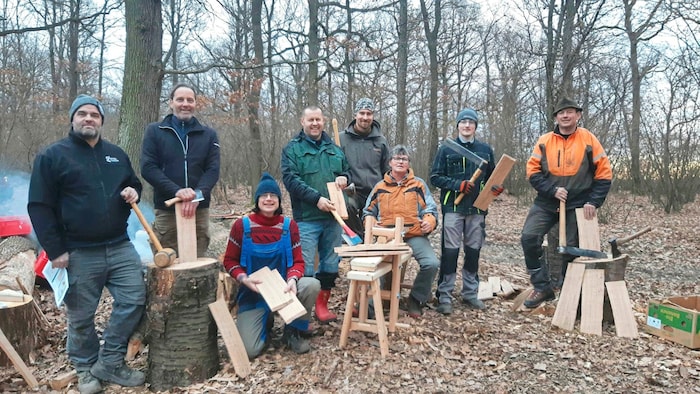
In three training courses, Ellmauer has trained his protégés so perfectly that some of them now practise this sustainable craft almost full-time. "We practiced everything from choosing the right trees in the forest to the final covering - probably for the first time in this region for many decades," beams the master craftsman. Naturally, Weinviertel oak, which has already been dried, is refined at the show workshop. An additional attraction: visitors can taste wine from the same floor. This is because the wood finishers offer wines from vineyards right next to the forest where the oak comes from.
This article has been automatically translated,
read the original article here.











Da dieser Artikel älter als 18 Monate ist, ist zum jetzigen Zeitpunkt kein Kommentieren mehr möglich.
Wir laden Sie ein, bei einer aktuelleren themenrelevanten Story mitzudiskutieren: Themenübersicht.
Bei Fragen können Sie sich gern an das Community-Team per Mail an forum@krone.at wenden.