Fraternities & Co.
Problem in Austria: politically legal right-wing extremism
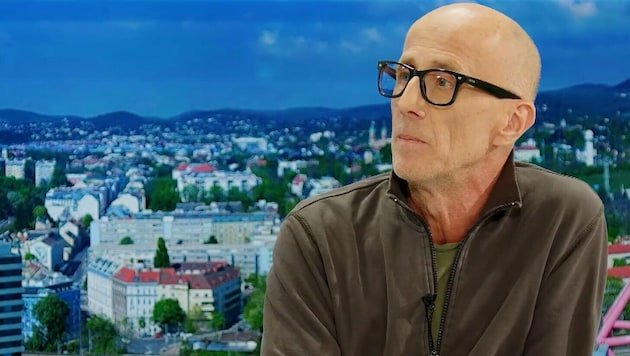

"The big problem in Austria is legal, political right-wing extremism - that which does not fall under the Prohibition Act," emphasizes Andreas Peham, right-wing extremism researcher in an interview with krone.tv. Particularly dangerous: the so-called hinge points between neo-Nazis and right-wing extremist organizations, which create a threatening link between violence and political influence.
 Kronen Zeitung als bevorzugte Google-Quelle hinzufügen
 "Compared to all our neighboring countries, we have relatively few problems with neo-Nazism here," explains Peham, drawing a clear comparison with countries such as Germany. The violent, openly neo-Nazi part is less pronounced in this country. However, there is another aspect to this supposed all-clear.
"In Vienna, for example, the Olympia and Teutonia fraternities form real links between neo-Nazism and right-wing extremism." These fraternities would give a small, radical minority a disproportionate amount of importance and influence. "This gives a very small segment a disproportionate amount of importance and influence," Peham said emphatically.
Right-wing extremist crimes: urban vs. rural
Why do right-wing extremist crimes seem to be more common in urban areas such as Vienna than in rural regions? "That's not quite the case. We have a kind of competition between Vienna and Upper Austria, for example. One year Vienna is ahead, one year Upper Austria," explains Peham. This shows that the activities are not just limited to the city centers. "I always talk about the brown belt around the cities. It starts in the suburbs. That's where we have noticeably more neo-Nazi activity," Peham continues.
Legal differences
Experts have observed a strong neo-Nazi network, particularly in border regions such as the Innviertel up to Salzburg and in Vorarlberg. "Here in southern Germany is the best organized, most brutal neo-Nazi scene in western Germany. This naturally has an impact on Austria," warns the expert. When asked why neo-Nazism is worse in Germany than in Austria, Peham answers clearly: "This is also due to the fact that there is no prohibition law in Germany. In Germany, neo-Nazis are allowed to demonstrate as neo-Nazis."
In Austria, on the other hand, they have to disguise themselves or "dress in wool". "But they are not allowed to take to the streets as neo-Nazis and carry out National Socialist propaganda," explains the expert.
Watch the entire interview in the video above!
This article has been automatically translated,
read the original article here.











Da dieser Artikel älter als 18 Monate ist, ist zum jetzigen Zeitpunkt kein Kommentieren mehr möglich.
Wir laden Sie ein, bei einer aktuelleren themenrelevanten Story mitzudiskutieren: Themenübersicht.
Bei Fragen können Sie sich gern an das Community-Team per Mail an forum@krone.at wenden.