Windshield wiper fairy
How does the rain sensor actually work?

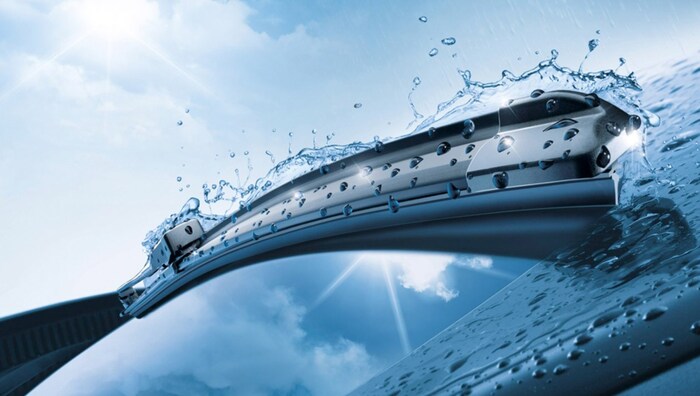
Technology is taking over more and more tasks from drivers. This is not always good or desirable for everyone, but in some cases it is really helpful. If you have a rain sensor in your vehicle, you don't have to bother readjusting the wiper speed. If it works.
 Kronen Zeitung als bevorzugte Google-Quelle hinzufügen
 When it rains, the windshield wiper should activate automatically and, depending on how wet it is from above, the intensity is regulated as if by magic. But how does it work?
The technology, which is now almost standard in new cars, was first used by the French manufacturer Peugeot in 1994 - in the mid-range model 406. The most important component of the component, which was no bigger than a matchbox, are two diodes that are fitted directly behind the windshield, usually in the base of the rear-view mirror. One of the two diodes, a light-emitting diode (LED), emits a beam of light. If this is infrared light instead of visible light, the sensor can even be mounted in the blackened area of the windshield.
Water quantity is calculated
The angle at which the light beam is sent towards the windshield is selected so that the light is reflected and reflected back at the outer windshield surface. The second diode, a receiving diode, measures how much light is returned. In dry conditions, one hundred percent of the light is reflected, but the wetter the pane gets, the more translucent the surface becomes. This enables the rain sensor to calculate the amount of precipitation and switch on the windshield wiper or adjust the intensity accordingly. It is important that the sensor is installed in the area of the wiper field so that the surface is constantly cleared of moisture. In addition, the sensor area is usually heated from the inside to prevent measurement errors caused by condensation.
There would be another way
In addition to this so-called optoelectronic measurement, the same goal can also be achieved using a capacitive sensor. For this, an antenna structure is integrated into the disk. The actual control unit, on the other hand, can be located elsewhere. A capacitor registers changes in the electrical oscillating circuit of this antenna when the windshield becomes damp. However, this variant developed by the supplier Hella never made it past the study stage, as the costs are very high and the additional benefits are minimal.
Speaking of additional benefits: In newer vehicles, the data from the rain sensor also benefits other systems. For example, the control unit can not only activate the windshield wipers, but also switch on the lights or close the sunroof and windows when it rains.
Surprisingly, although rain sensors have been around for 30 years, they are so unreliable in some - even new - cars that we wish the old intermittent switch was back. In the best case scenario, however, you will never need to touch the windshield wiper lever again - except before driving to the car wash, where it must be switched off.
This article has been automatically translated,
read the original article here.










Da dieser Artikel älter als 18 Monate ist, ist zum jetzigen Zeitpunkt kein Kommentieren mehr möglich.
Wir laden Sie ein, bei einer aktuelleren themenrelevanten Story mitzudiskutieren: Themenübersicht.
Bei Fragen können Sie sich gern an das Community-Team per Mail an forum@krone.at wenden.