Find in necropolis
Magnificent tomb of pharaoh’s personal physician uncovered
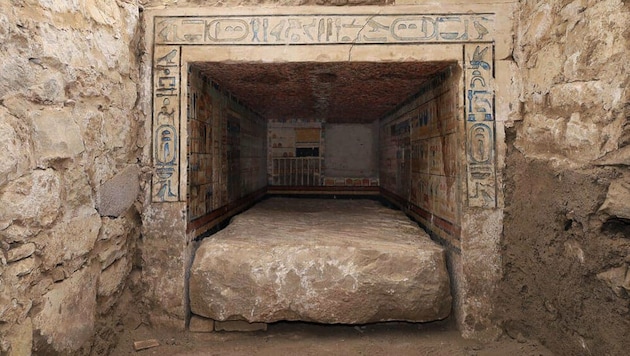

In the Egyptian necropolis of Sakkara, archaeologists have discovered a magnificently decorated mastaba tomb of a royal physician that is around 4100 years old. Although the mummy and grave goods are missing, the tomb is a significant find, according to the researchers.
 Kronen Zeitung als bevorzugte Google-Quelle hinzufügen
 "On the surface, the tomb seemed quite ordinary; we have already found several tombs of this type during our excavations," reports a team of archaeologists led by Philippe Collombert from the University of Geneva. Like other mastabas in the necropolis of Sakkara, which lies around 35 kilometers south of the Egyptian capital Cairo, this tomb was also plundered centuries ago.
Burial chamber is decorated with paintings
However, the 4,100-year-old tomb had a surprise in store for the researchers: "When we began to uncover the area above the shaft of the tomb, we discovered a beautiful false door stele with the name of a doctor called Teti Neb Fu," they report. They came across a stone entrance that also bore the name and title of Teti Neb Fu, as well as a burial chamber whose walls were decorated with colorful paintings.
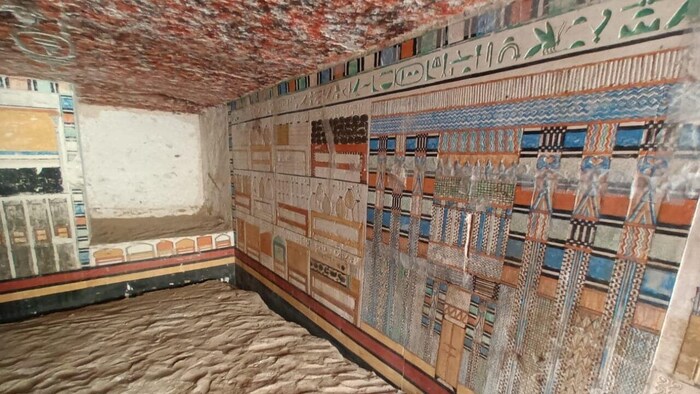
"The further we uncovered the shaft, the more the walls of the burial chamber were revealed, completely painted in bright and fresh colors. It would be easy to forget that they are more than 4000 years old," said the archaeologists. The tomb dates back to the time of the Old Kingdom under King Pepi II, they say.
What is a mastaba?
A mastaba is a type of tomb in ancient Egyptian culture named after the Egyptian-Arabic word for stone bench.
Sarcophagus with inscriptions of the titles
The researchers also discovered a stone sarcophagus with inscriptions bearing the doctor's name and prestigious titles. Teti Nee Fu was considered the chief physician of the palace, priest and invoker of the goddess Serket (which means he was an expert in poisonous bites, note), chief dentist and head of the medicinal plant department.
According to researcher Collombert, Teti Neb Fu was "certainly the most important physician at the royal court". However, it is not yet entirely clear which pharaoh he served. He could have served under Pepi II, but also under another pharaoh who ruled later, the Egyptologist from the University of Geneva suspects.
"This incredible find underlines the rich heritage of Sakkara as one of the most important archaeological sites in Egypt," writes the Egyptian Ministry of Tourism and Antiquities on its Facebook page (post above).
This article has been automatically translated,
read the original article here.











Da dieser Artikel älter als 18 Monate ist, ist zum jetzigen Zeitpunkt kein Kommentieren mehr möglich.
Wir laden Sie ein, bei einer aktuelleren themenrelevanten Story mitzudiskutieren: Themenübersicht.
Bei Fragen können Sie sich gern an das Community-Team per Mail an forum@krone.at wenden.