In Burgenland
How a village can become a desirable place to live
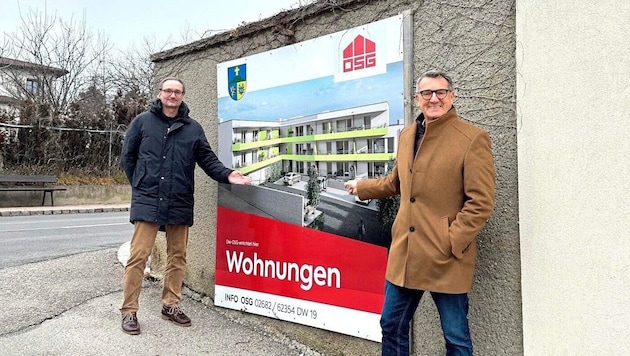

How can villages revitalize their town centers, act in an environmentally conscious manner and still grow with moderation and purpose? The Burgenland municipality of Draßburg has got the hang of it and shows how.
 Kronen Zeitung als bevorzugte Google-Quelle hinzufügen
 For a long time, the former railroad inn "Knopf" in Draßburg helped shape village life. It was closed at the end of the 1980s and the building was used as accommodation for soldiers from the Austrian army, who were stationed in Burgenland from 1990 to 2007 to assist with border area surveillance. After that, the inn stood empty and was used sporadically by the fire department as a venue for their joke cabaret. Since then, however, the inn has not found a new tenant and was left to decay.
"Fortunately, OSG has now bought the property and has just started the demolition work. Construction of 16 apartments will start before Easter. Completion is planned for summer 2026," says Mayor Christoph Haider, delighted with the revitalization of the town centre.
Changing needs
Some of the 50 m² to 80 m² units will not only be equipped with parking spaces, a PV system and a central air-heat pump, but also with private gardens. "Since the pandemic and the associated increase in home office opportunities, there has been a growing demand for attractive outdoor areas that are designed either as private gardens or as (semi-)public spaces," explains OSG CEO Alfred Kollar.
The project is also a response to the increasing number of one- and two-person households and the challenges of climate change. "Vienna commuters in particular will benefit from the location, as they have a direct connection to the city on their doorstep with the Raaberbahn and can reach the city limits in just 50 minutes. This saves fuel, time and nerves and improves quality of life," says Mayor Haider.
Even more affordable living space
Because the Vienna suburbs are booming like never before, apartments are also being built in Draßburg by the Pöttsching housing cooperative EBSG, which will be ready for occupancy this summer. The municipality has also created 65 building plots for detached houses on seven hectares of land. "Around half of these have already been sold. We will hand over part of the site to a housing cooperative, which will build affordable terraced houses with gardens there," says Haider.
He also wants to establish the tiny house trend in Burgenland. But everything in order and with moderation and purpose, because: "Every new arrival costs money because the infrastructure has to be expanded. These costs are beyond the budget of many municipalities and bring them to the brink of despair. What's more, not all sections of the population appreciate newcomers, especially if they don't want to integrate into village life."
This article has been automatically translated,
read the original article here.











Da dieser Artikel älter als 18 Monate ist, ist zum jetzigen Zeitpunkt kein Kommentieren mehr möglich.
Wir laden Sie ein, bei einer aktuelleren themenrelevanten Story mitzudiskutieren: Themenübersicht.
Bei Fragen können Sie sich gern an das Community-Team per Mail an forum@krone.at wenden.