Front instead of work
How death can lurk behind every job in Russia
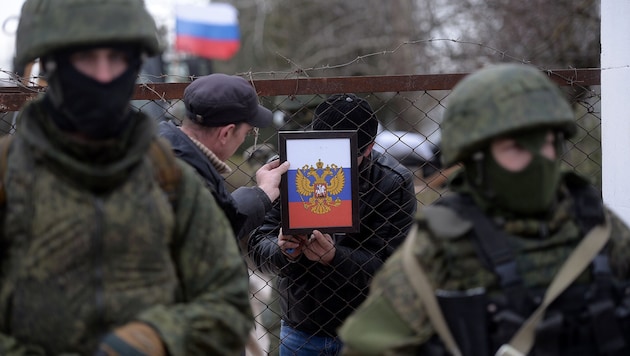

The Kremlin is deliberately luring workers to Russia so that it can exploit them for combat operations on the front line in Ukraine. One of the ways it does this is by offering them the prospect of a job as a cleaner or cook in Moscow.
 Kronen Zeitung als bevorzugte Google-Quelle hinzufügen
 In the lush greenery of the Lakshmipur administrative district in southeastern Bangladesh, almost every family has at least one member who is employed as a migrant worker abroad. Job shortages and poverty have made this essential. Fathers embark on years of travel for migrant work and return home only for short visits – just long enough to father another child whom they will probably not see again for years. Sons and daughters support entire families with income earned abroad.
An investigation by the Associated Press news agency has now revealed that Russia is exploiting the workers' hopelessness. They are lured into the country with false promises of civilian jobs, only to be thrown into the chaos of the fighting in Ukraine. Many are threatened with violence, imprisonment, or death.
Job as a cleaner
One victim of this unimaginable ruthlessness was 31-year-old Maksudur Rachman. After returning to Bangladesh from Malaysia, he desperately searched for a new job – and found one in Russia. He was promised a monthly wage of $1,000 (€825) to $1,500 (€1,250) for cleaning work in a "military camp" as well as a permanent residence permit. In order to even start the job, Rachman had to pay his agent almost $10,000 (€8,350) – an unimaginable sum for him, which meant he had to take out a loan.
Upon arriving in Moscow, he was presented with the alleged employment contract. He then completed three days of military training and was given a weapon. However, he was unable to take up the job as a cleaner. Instead, according to the information available, he ended up in the middle of the war in Ukraine.
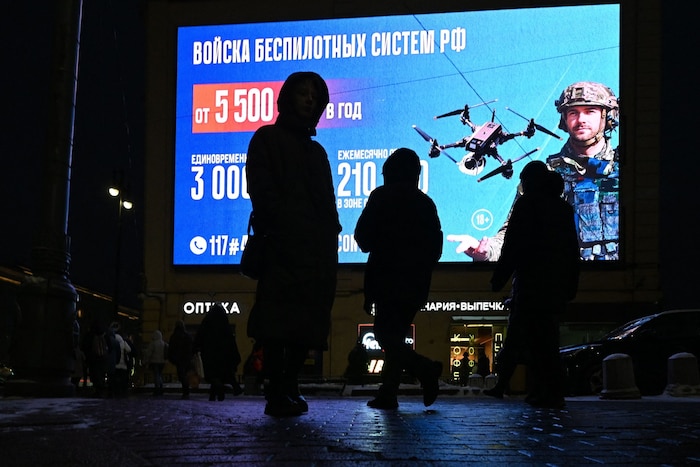
Rachman says he was forced to dig trenches together with other men from Bangladesh. When he explained to the commander that this was not the job he had agreed to, the commander replied through a translator: "Your agent sent you here. We bought you." Seven months later, he was finally taken to a hospital in the Moscow region because of a leg injury.
He fled from there and went to the Bangladeshi embassy in Moscow. As a result, he was helped to leave the country. A few months later, he helped a relative who had suffered the same fate – who then also fled from the hospital to the Bangladeshi embassy.
Job as a laundry worker
Salma Akdar has not heard from her husband since March 26. In their last conversation, he told her that he had been sold to the Russian army. The couple has two sons, aged seven and eleven. The man left the country because he believed he had been offered a job as a laundry worker in Russia. Shortly before that, he had returned from Saudi Arabia and had planned not to work abroad for the time being, his wife explained. However, as he assumed that Russia offered good opportunities to earn money, he left for there.
Applied for a job as a cook
Mohammed Siraj's 20-year-old son Sajjad moved away believing he would work as a cook in Russia. The financial pressure was great: he had to support his unemployed father and chronically ill mother. Siraj tearfully described how his son was forced into military service: they threatened him with prison and execution. In his last message, Sajjad said he was being taken to the front line, then contact ceased. In February, Siraj reportedly learned that his son had been killed in a drone strike.
Accusations of human trafficking
Last November, the non-governmental organization BRAC reported that families were trying to bring back to Bangladesh at least ten men who had traveled to Russia legally. They were supposed to have normal jobs, but ended up on the front lines. It is unknown how many citizens of this country are affected by this abuse. Sources told the Associated Press that they had seen "hundreds of Bangladeshis" on the front lines. Because of the coercion to participate in the war, allegations of human trafficking are now being investigated in Bangladesh.
According to one investigator, about 40 Bangladeshis have been killed in the war in Ukraine. However, some of them may have volunteered for the military to earn money. Incidentally, the families of the missing persons all stated that they had never received any money from Russia.
This article has been automatically translated,
read the original article here.











Willkommen in unserer Community! Eingehende Beiträge werden geprüft und anschließend veröffentlicht. Bitte achten Sie auf Einhaltung unserer Netiquette und AGB. Für ausführliche Diskussionen steht Ihnen ebenso das krone.at-Forum zur Verfügung. Hier können Sie das Community-Team via unserer Melde- und Abhilfestelle kontaktieren.
User-Beiträge geben nicht notwendigerweise die Meinung des Betreibers/der Redaktion bzw. von Krone Multimedia (KMM) wieder. In diesem Sinne distanziert sich die Redaktion/der Betreiber von den Inhalten in diesem Diskussionsforum. KMM behält sich insbesondere vor, gegen geltendes Recht verstoßende, den guten Sitten oder der Netiquette widersprechende bzw. dem Ansehen von KMM zuwiderlaufende Beiträge zu löschen, diesbezüglichen Schadenersatz gegenüber dem betreffenden User geltend zu machen, die Nutzer-Daten zu Zwecken der Rechtsverfolgung zu verwenden und strafrechtlich relevante Beiträge zur Anzeige zu bringen (siehe auch AGB). Hier können Sie das Community-Team via unserer Melde- und Abhilfestelle kontaktieren.