It's buzzing again
Bees fly around the world for sweet honey
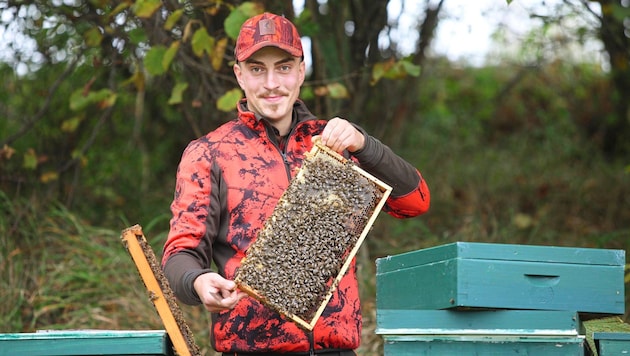

Carinthia is buzzing again. 33,000 bee colonies are awakening and Carinthia's beekeepers are looking forward to a good honey harvest. Every year, 560 tons of honey are produced.
 Kronen Zeitung als bevorzugte Google-Quelle hinzufügen
When the temperatures rise to ten degrees early in the year and the sun shines from the sky, the pollen season gets underway in the beehive. "The bee colony that has survived the winter starts its annual cleaning flight. This involves disposing of the excrement that has accumulated during the months of hibernation," explains beekeeper Friedrich Neubersch: "There are now 33,000 bee colonies in Carinthia. In summer, each colony can grow to between 50,000 and 70,000 bees. After the winter, there are 10,000 to 15,000."
Bees usually only live for eight weeks
The queen lays up to 1500 eggs a day. Males, known as drones, are only around for a few weeks a year. Neubersch: "They only have one purpose in life: to mate with the queen on her 'wedding flight'. And they die in the process."
Incidentally, a bee colony consists almost exclusively of infertile females, the workers. They perform various tasks, from caring for the brood to collecting food. A bee weighs 0.1 grams and usually lives for up to eight weeks. They are currently on their first search for pollen. When the willow and fruit blossom begins and the abundance of nectar starts, things really get going.
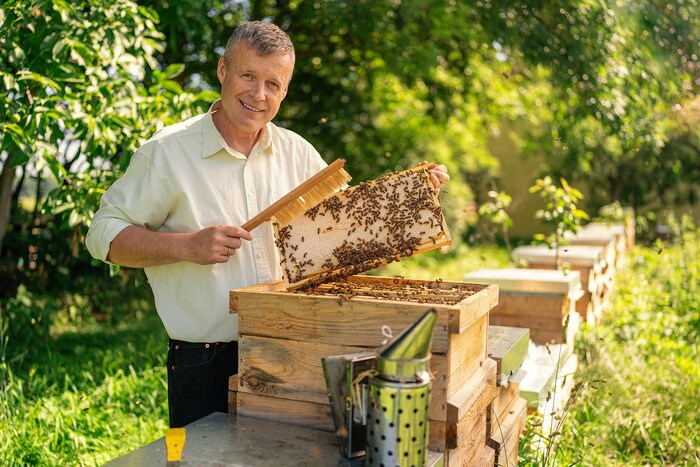
560 tons of honey a year
"In Carinthia, 560 tons of honey are produced every year," says Elisabeth Thurner, head of the Carinthian Beekeepers' Association. "Most of it is forest honey. There are now 3200 beekeepers in Carinthia, whereas years ago there were only half as many." When it gets colder, the bees need to be fed. Because nothing works without food. "That's why you should make sure there's enough food in the hive." A bee flies out seven to 15 times a day, covering a distance of one to two kilometers. They can even fly at speeds of up to 25 km/h.
"To fill the honey bladder, 15 to 100 flowers need to be visited. It takes around three kilos of nectar to produce one kilo of honey," the experts say. Incidentally, this corresponds to 60,000 honey bladder fillings and a flight distance of 40,000 kilometers - i.e. once around the world.
The Private Foundation of Kärntner Sparkasse is currently looking for outstanding projects in the field of biodiversity with its Carinthian Biodiversity Award "The Golden Apis". The prize money for submissions has been increased to 100,000 euros. Perhaps beekeepers will be happy this year.
This article has been automatically translated,
read the original article here.










Da dieser Artikel älter als 18 Monate ist, ist zum jetzigen Zeitpunkt kein Kommentieren mehr möglich.
Wir laden Sie ein, bei einer aktuelleren themenrelevanten Story mitzudiskutieren: Themenübersicht.
Bei Fragen können Sie sich gern an das Community-Team per Mail an forum@krone.at wenden.