Heating with cooling
How district cooling becomes district heating in winter
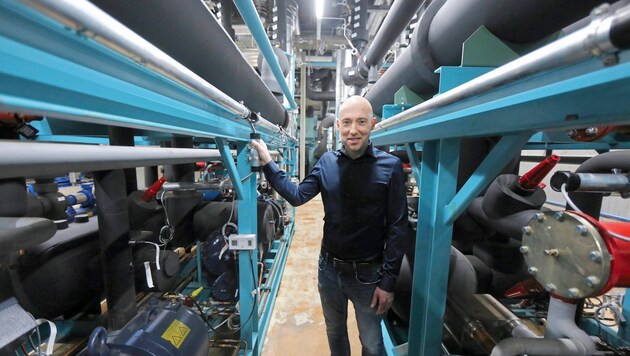

The district cooling center at the main station generates heat for 800 households from energy generated by cooling. We took a look at exactly how it works.
 Kronen Zeitung als bevorzugte Google-Quelle hinzufügen
 Those who don't have to sweat in their homes on hot summer days in the city above 30 degrees Celsius are lucky - because they are connected to Wien Energie's district cooling network. There are currently 200 buildings, and the district cooling capacity is growing by 10 to 15 percent every year.
Waste heat through cooling
Although district cooling has its peak demand in the hot season, it is used for cooling all year round, but only between 8 and 10 percent compared to summer. For example, for data centers or commercial kitchens, such as in hotels or clinics. And this waste heat generated by cooling is in turn used for district heating.
How saucepans heat bath water
This conversion takes place in the district cooling center at the main station, which is located directly under the tracks. "Put simply, you can imagine it like this: The cooking pots in the kitchen produce heat, which is cooled down by the ventilation system. This waste heat reaches us, is heated, fed into the district heating network and heats the bath water in the apartment next door," explains Wien Energie district cooling expert Burkhard Hölzl. This currently supplies 800 households in the immediate vicinity with district heating.
Efficient and climate-friendly
This process is not only efficient because the energy invested in cooling is used twice, but also contributes to the decarbonization of district heating. Incidentally, this dual use is made possible by the district heating's so-called area converter station directly in the district cooling center. Here, the district heating is transferred from the primary network - at higher temperatures and pressure - to the secondary network, which ultimately leads to the end customer.
The district cooling network is currently 30 kilometers long, while the district heating network is 1300 kilometers long and supplies 470,000 households and 8000 businesses.
This article has been automatically translated,
read the original article here.











Da dieser Artikel älter als 18 Monate ist, ist zum jetzigen Zeitpunkt kein Kommentieren mehr möglich.
Wir laden Sie ein, bei einer aktuelleren themenrelevanten Story mitzudiskutieren: Themenübersicht.
Bei Fragen können Sie sich gern an das Community-Team per Mail an forum@krone.at wenden.