In the Villach area
H2
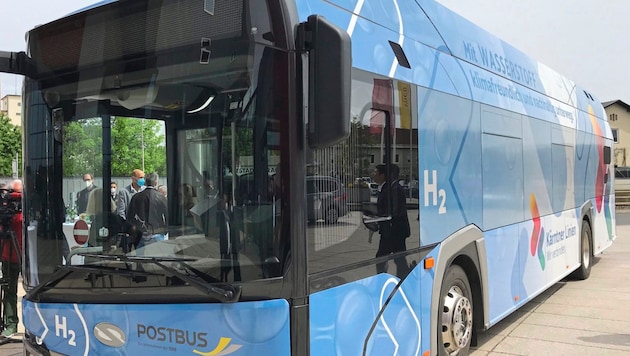

Green electricity will be used to produce green hydrogen in the future. The resulting oxygen and heat will also be used. "Nothing will be thrown away," says Provincial Councillor Sebastian Schuschnig, who is delighted about the new start for the future of hydrogen buses. 36 buses are to form the first fleet.
 Kronen Zeitung als bevorzugte Google-Quelle hinzufügen
 In Austria, two thirds of the energy required currently comes from fossil fuels. "If you were so dependent on your neighbors for your food supply, you would consider planting a bed in your garden," says Kelag CEO Danny Güthlein, drawing a comparison. Decarbonization is a goal, also in the DeCarB project: Decarbonizing Carinthian Bus. Several partners from industry and the state of Carinthia are working on this. The first goal is to have 36 hydrogen buses on the roads in the Villach area from May 2026.
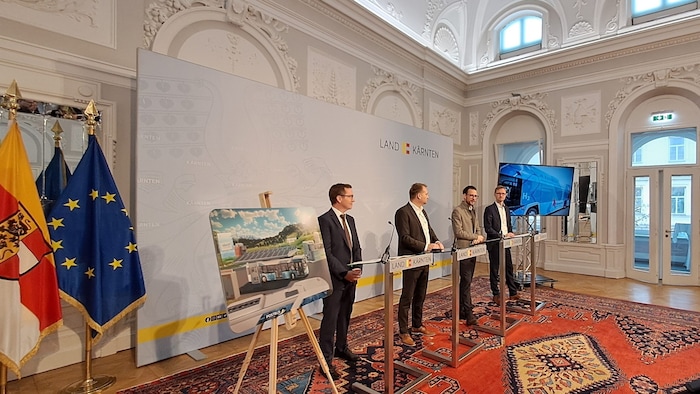
All by-products are also used
Green electricity from water, wind and photovoltaic energy will be used to produce hydrogen in two electrolysis plants at the waste incineration plant in Arnoldstein. The hydrogen is transported by three trailers to the company filling station in Villach to refuel the 35 Postbuses (and the five back-up buses). "The purpose of having two electrolysis plants is that one can be maintained and the other can still supply the buses," explains Franz Winkler, the scientific project manager at HyCentA Research. The hydrogen can be stored for several days, so the buses should always be ready to go.

The oxygen produced as a by-product is used for thermal utilization in the waste incineration plant in Arnoldstein. The heat generated during hydrogen production is fed into the district heating network.
The electrolysis plants will be built by Kelag. With an output of two megawatts of green electricity, around 700 kilograms of hydrogen can be produced every day. This hydrogen will supply the 35 hydrogen buses operated by Postbus AG for regional bus services and one bus for Villach city transport. The aim is to cover two million kilometers a year. "This will save us 700,000 liters of diesel," calculates Alfred Loidl, CEO of Postbus AG.

The two electrolysis plants will go into operation at the end of 2025, or early 2026 at the latest.
Danny Güthlein, Kelag-Vorstand
Gutmann GmbH is building the filling station on the Postbus AG site in Villach. "As soon as we get the permits, we'll get started," says Managing Director Alexander Gutmann.
"All contracts with the partners have been signed. The approval procedures with the authorities are underway," explains Albert Krainer, Head of Provincial Department 7 - Economy, Tourism and Mobility, who is overseeing this major project as the last of his 35-year career in the provincial service.
The hydrogen buses must be on the road from May 2026. Until then, the mechanics and drivers of Postbus AG will also be trained in hydrogen technology.
Subsidies collected
The total costs of 43 million euros will be covered by 28 million euros in funding - 15 million in federal funds, 2 million in EU funds, 11 million in funding from the Research Promotion Agency from the EBIN call - as well as from the project partners.
This article has been automatically translated,
read the original article here.











Da dieser Artikel älter als 18 Monate ist, ist zum jetzigen Zeitpunkt kein Kommentieren mehr möglich.
Wir laden Sie ein, bei einer aktuelleren themenrelevanten Story mitzudiskutieren: Themenübersicht.
Bei Fragen können Sie sich gern an das Community-Team per Mail an forum@krone.at wenden.