Experts explain
“AI won’t cost jobs in the healthcare sector”
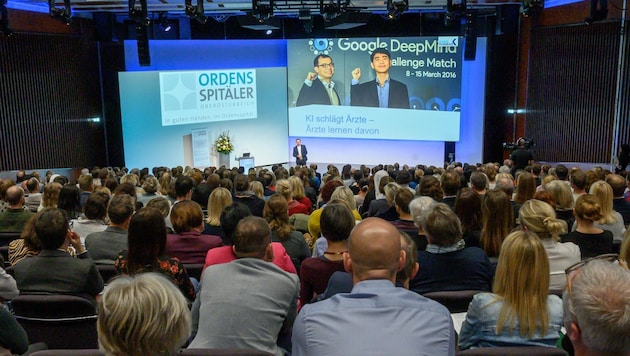

Researcher Julia Amann explains to the "Krone" newspaper where machines can help and what they will never be able to do. At the moment, the widespread use of learning machines in the healthcare sector is still a dream of the future, but an EU regulation is creating the necessary conditions.
 Kronen Zeitung als bevorzugte Google-Quelle hinzufügen
 Freeing up medical staff so that they have more time for patients - for Julia Amann, a researcher at the Careum Foundation in Zurich, this is what the ideal integration of artificial intelligence in medicine would look like. But how far do we want to go? Could the healthcare system be taken over by computers?
Computer shows no closeness
"I don't think we need to worry about this," says the 35-year-old from Graz, who gave a lecture at the 22nd International Congress of the Upper Austrian Order Hospitals at the Linz Design Center on Wednesday. "Jobs and tasks will change and certain things will be taken over by AI." However, human aspects cannot be replaced by a machine: "In the medical field, things like showing closeness or sympathy, a touch or a smile are of great importance - computers can't do that!"

Rapid development, lifelong learning
According to Amann, it is important that the use of artificial intelligence is taught at university, which is difficult due to the rapid developments. Students need to be prepared for lifelong learning, which is a good prerequisite.
Problems of AI
There is still a lot of work to be done before AI is used on a large scale in the industry. The fact that machines that detect skin cancer, for example, have mainly been trained with images of fair-skinned people also leads to discrimination against minorities in similar cases.
In the USA, for example, an artificial intelligence system did not refer coronavirus patients with a history of asthma for inpatient treatment, because The software recognized that they were mostly cured. However, the AI did not see that this was only the case because these patients were immediately taken into intensive treatment.
Regulation creates the conditions
The EU's AI Regulation is now set to put an end to this: "Medical applications of AI fall into the high-risk category," says lawyer Philipp Leitner, explaining the highly complex legal text. "A number of strict obligations apply to them - for example, they must be trained with representative data." The European Union's AI regulation came into force on August 1. However, it may be years before all undefined terms are "judged".
This article has been automatically translated,
read the original article here.










Da dieser Artikel älter als 18 Monate ist, ist zum jetzigen Zeitpunkt kein Kommentieren mehr möglich.
Wir laden Sie ein, bei einer aktuelleren themenrelevanten Story mitzudiskutieren: Themenübersicht.
Bei Fragen können Sie sich gern an das Community-Team per Mail an forum@krone.at wenden.