But still visible!
Comet Tsuchinshan-Atlas flies over Vienna here
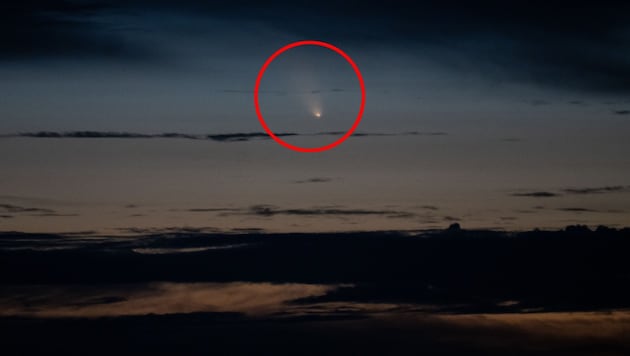

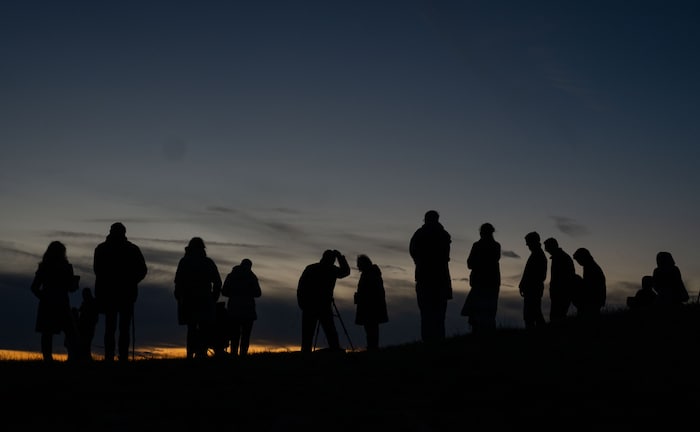
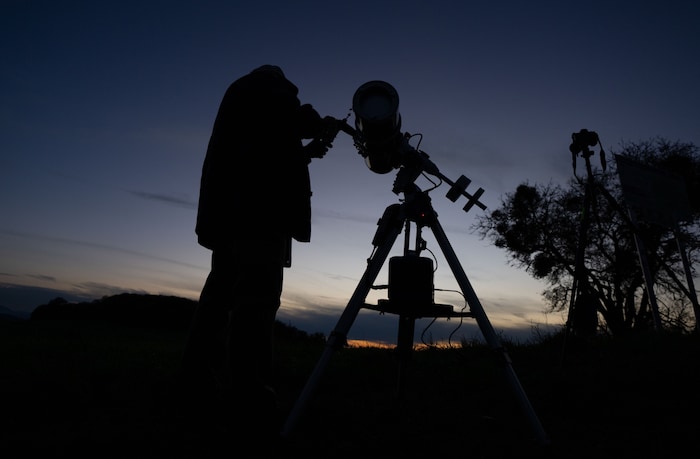
"Comet visible to the naked eye", it sounded shortly after 7.15 pm on the Sophienalpe in Vienna-Penzing. A few dozen amateur astronomers and other interested parties had gathered at the popular observation point on the outskirts of Vienna to catch a glimpse of "C/2023 A3 Tsuchinshan Atlas". For a long time, a persistent cloud bank prevented the view ...
 Kronen Zeitung als bevorzugte Google-Quelle hinzufügen
 Just to the west, at 6 p.m., a long bank of clouds lay motionless, exactly where "Tsuchinshan Atlas" should be visible at dusk. "Waiting for the Cloud Window of Opportunity" was the motto of the "comet hunters". The hope was kept alive by the broad, cloudless strip on the horizon, illuminated orange by the setting sun, where the tail star could appear shortly before setting.
"Unfortunately only one plane"
Until then, the Vienna Astronomy Association (WAA) pointed several telescopes at the moon and Saturn to shorten the waiting time for laypeople. And time and again, someone thought they saw the glowing comet's tail or the comet itself - which ultimately turned out to be just a streak of cloud or an airplane.
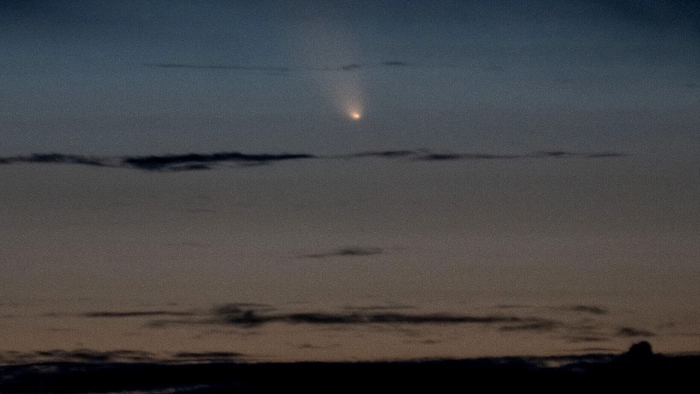
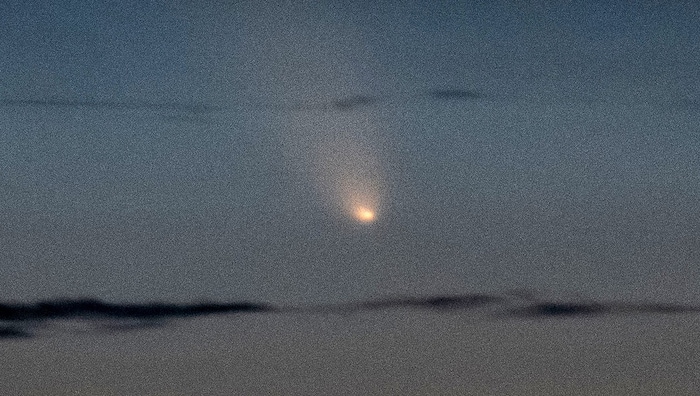
Until "Tsuchinshan-Atlas" finally showed itself - rather diffusely and not for very long. The comet's head soon disappeared again behind a band of clouds.

Possibly visible until next Friday
The comet had already been visible in the southern hemisphere for a few days and spectacular images, especially of its long tail, fueled additional interest. Amateur astronomers and all those interested can only hope for better weather conditions and images in the coming days. It is still worth taking a look towards the west at dusk until about Friday, said WAA boss Alexander Pikhard. However, the comet is losing brightness with each passing day.
"Tsuchinshan Atlas" was discovered in early 2023 by observatories in China and South Africa. The object originates from the Oort Cloud, a spherical collection of objects in the outer regions of the solar system, and orbits the sun in an extremely elongated orbit. The comet reached its closest point to the sun (perihelion) on September 27, but was not yet visible from Central Europe at this time. Now it is steadily moving away from the sun again.
The WAA is organizing observation evenings on the Sophienalpe in Vienna over the next few days - weather permitting. The Martinsberg Astronomical Center (Lower Austria) also invites people to come and observe together, weather permitting.
This article has been automatically translated,
read the original article here.











Da dieser Artikel älter als 18 Monate ist, ist zum jetzigen Zeitpunkt kein Kommentieren mehr möglich.
Wir laden Sie ein, bei einer aktuelleren themenrelevanten Story mitzudiskutieren: Themenübersicht.
Bei Fragen können Sie sich gern an das Community-Team per Mail an forum@krone.at wenden.