Exercise despite pain
Best sports for osteoarthritis of the knee and hip
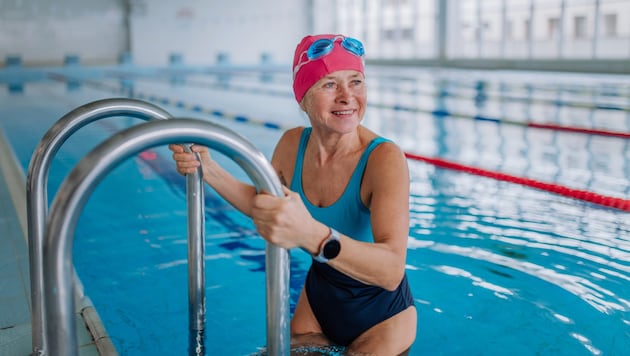

Exercise is important even if the joints are already aching due to wear and tear. People with osteoarthritis don't have to give up sport, but there are a few things to bear in mind. The following forms of exercise provide fun and fitness without putting too much strain on the knees and hips.
Avoiding sport in order to supposedly protect painful knees or hip joints is the wrong approach. However, you should avoid sudden accelerations and start-stop movements (such as in football or handball) and prefer forms of exercise that are easy on the joints. The following sports are best suited:
Swimming: A classic for joint problems
Water sports are a good way of exercising without putting too much strain on the joints - especially for people with a higher body weight. This is because the buoyancy in the water provides a pleasant sense of lightness. However, you need to choose the right swimming style and perform the movements in a controlled manner.
It is important to bear this in mind: Although breaststroke is the most popular swimming style, it is not recommended from a health point of view. This is because the neck and back muscles become tense due to the head constantly being stretched out of the water to catch your breath. Furthermore, the scissor-like movement of the leg stroke puts a lot of strain on the knee and hip joints and could even aggravate existing complaints. Backstroke or crawl swimming would therefore be ideal (with the correct technique!).
Water gymnastics and aqua jogging
If we are already moving in the wet element: With aqua jogging and water gymnastics, the natural resistance, buoyancy and pressure of the water can be used to train endurance, strength and coordination with targeted exercises. This puts minimal strain on the joints.
Cycling lubricates the joints
Cycling - whether on a bike in the countryside or on an ergometer - is also easy on the knee and hip joints. After all, 70 to 80 percent of your body weight is on the saddle. It is important to adjust the saddle and pedals correctly.
If the saddle is set too low, this increases the pressure on the kneecap, but if you sit too high and your leg is pushed all the way down when pedaling, this also puts strain on and irritates the structures of the knee and hip. Ideally, the heel should just touch the pedal at the furthest point of the pedal rotation.
Furthermore, make sure that the pedals (especially when using clipless pedals) are not set too far forward and that the knees do not tilt inwards or outwards when cycling. An upright sitting position is preferable to a low, sporty position. This protects your hips and spine.
Yoga, Pilates and Tai Chi
These sports mobilize the joints and strengthen the muscles through calm and gentle movements. Initially, it is advisable to be guided by a trainer. They can take your physical needs into account and help you choose the right exercises and perform them correctly.
Nordic walking and hiking
Walking through nature: Nordic walking and hiking are easier on the joints than jogging. The use of poles when walking also strengthens the muscles in the chest and shoulder area. Make sure you wear suitable shoes, move as evenly as possible and prefer flat areas. Walking downhill is harder on the knees.
This article has been automatically translated,
read the original article here.










Da dieser Artikel älter als 18 Monate ist, ist zum jetzigen Zeitpunkt kein Kommentieren mehr möglich.
Wir laden Sie ein, bei einer aktuelleren themenrelevanten Story mitzudiskutieren: Themenübersicht.
Bei Fragen können Sie sich gern an das Community-Team per Mail an forum@krone.at wenden.