Measures in detail
Government approves aid package for tourism


Together with the leisure industry, tourism accounts for around 14 percent of domestic economic output and thus contributes to securing over 567,000 full-time jobs. However, rising energy costs have now put the industry under pressure – the federal government is responding with an aid package.
 Kronen Zeitung als bevorzugte Google-Quelle hinzufügen
 From January to November 2025, 143.34 million overnight stays were recorded across Austria: an increase of 1.2 percent compared to the previous year – and an important factor for the domestic economy. Despite strong demand, the industry is under massive pressure due to rising energy, personnel, and financing costs, increasing challenges in terms of skilled workers and business succession, as well as challenges posed by international competitiveness and bureaucracy.
Relief for businesses
The federal government is therefore taking further steps to strengthen Austria as a tourist destination in the form of a small aid package. The aim is to keep added value in the country, secure future prospects, and further develop a modern, sustainable image of tourism.
The government's plans in detail
"Especially in economically challenging times, it is crucial to relieve the burden on businesses where bureaucracy does not add value – so that more time and resources remain for quality, guests, and employees," the government emphasizes. Specifically, a new tourism strategy is to be developed by the summer, a new image campaign is to be created, and a special budget is to be made available for Austria's bid for the Winter Olympics. On top of that, the government wants to modernize its accommodation strategy and draft a nationwide skilled labor strategy.
The measures in detail
• Vision T – Development of a new national tourism strategy with strong industry involvement - Expert summits will be followed by stakeholder dialogues in all federal states from March 2026 - New vision for tourism by summer 2026
•Special budget for the 2026Winter Olympics - €1 million for Austria's international promotion as a leading ski destination
• Modernization of accommodation statistics – More digitization and data quality as a prerequisite for the digital guest register
• New "Team Tourism" image campaign - Goal: to get more people excited about jobs in tourism - Focus on modern working environments, careers, and meaningful work
• Nationwide skilled labor strategy according to the government program – in tourism with a focus on year-round jobs and supraregional placement – focus on better working conditions, qualifications, and long-term retention
• Launch of the Tourism Employee Fund – €6.5 million annually for training and support services
• Review of inflation calculation in tourism – in collaboration with Statistics Austria to better reflect the export-oriented nature of the industry
• "NextGen4Austria" program for business succession in tourism – training opportunities for potential successors
• Simplification of price labeling at accommodation providers – clear rules for the disclosure of charges such as local taxes, modernization of the obligation to display prices in the entrance area
• Implementation of the EU regulation on short-term rentals – Federal government provides technical infrastructure for uniform data reporting
State Secretary for Tourism Elisabeth Zehetner (ÖVP) explains: "Tourism is not just a fair-weather topic, but a real location factor. That is why we are investing specifically in its future: with Vision T, we are working with the industry to create a new vision for Austrian tourism. Around the time of the Olympic Games, we will be showing what Austria has to offer as a winter sports nation, thereby bringing additional added value to the country."
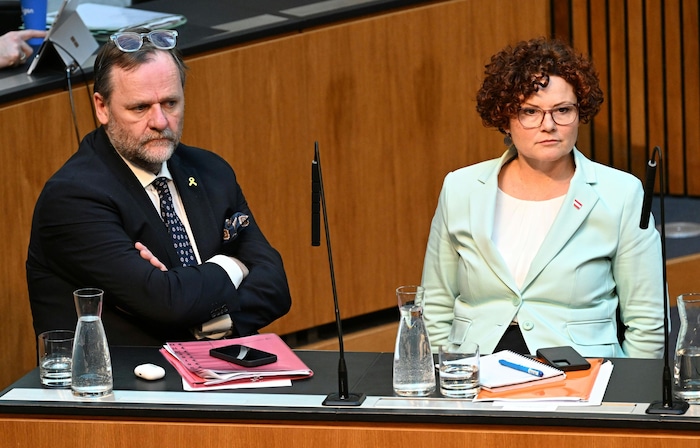
Minister of Labor and Social Affairs Korinna Schumann (SPÖ) adds: "The success of tourism in Austria is not based on numbers alone, but on the people who support this industry day after day. They work when others are on vacation; they are flexible, resilient, and highly committed."
Schellhorn sees "next step"
And the colorful former restaurateur and NEOS State Secretary for Deregulation and Debureaucratization, Josef Schellhorn, adds: "Following the tip reform, which we were instrumental in pushing through and which replaced nine different regulations with a uniform flat-rate tip across Austria, creating genuine legal certainty, we are now taking the next step in reducing bureaucracy for the tourism sector."
This article has been automatically translated,
read the original article here.











Liebe Leserin, lieber Leser,
die Kommentarfunktion steht Ihnen ab 6 Uhr wieder wie gewohnt zur Verfügung.
Mit freundlichen Grüßen
das krone.at-Team
Hinweis in eigener Sache: Das krone.at-Forum präsentiert sich ab sofort in neuem Design! Wir freuen uns über konstruktives Feedback. Damit die Diskussionen in den Kommentarbereichen beim jeweiligen Thema bleiben, können Sie uns Rückmeldungen hier hinterlassen.
User-Beiträge geben nicht notwendigerweise die Meinung des Betreibers/der Redaktion bzw. von Krone Multimedia (KMM) wieder. In diesem Sinne distanziert sich die Redaktion/der Betreiber von den Inhalten in diesem Diskussionsforum. KMM behält sich insbesondere vor, gegen geltendes Recht verstoßende, den guten Sitten oder der Netiquette widersprechende bzw. dem Ansehen von KMM zuwiderlaufende Beiträge zu löschen, diesbezüglichen Schadenersatz gegenüber dem betreffenden User geltend zu machen, die Nutzer-Daten zu Zwecken der Rechtsverfolgung zu verwenden und strafrechtlich relevante Beiträge zur Anzeige zu bringen (siehe auch AGB). Hier können Sie das Community-Team via unserer Melde- und Abhilfestelle kontaktieren.