Scathing verdict
Everything that goes wrong with Wiener Linien
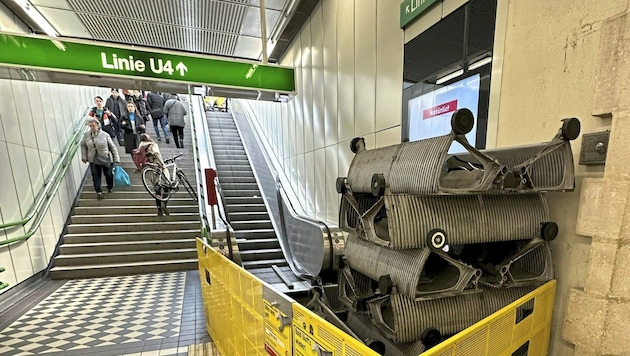

Little bad luck, but many self-inflicted failures and mishaps, according to the City Court of Audit in a massive audit report on Wiener Linien. What public transport users experience on a daily basis is now confirmed in black and white. Today's problems have been years in the making.
 Kronen Zeitung als bevorzugte Google-Quelle hinzufügen
 Rarely does the City Court of Audit deliver such comprehensive reports: The auditors' verdict covers hundreds of pages, divided into five individual reports on infrastructure, finances, bus transportation as well as the in-house sharing services and the safety of WienMobil bikes. And above all in the area of infrastructure, with its direct impact on the daily routines of the entire Viennese population, a devastating picture emerges of the rail network, the vehicle fleet and the buildings.
Problems have been building up for years
Countless key figures and tables confirm what public transport users have been thinking for a long time: Wiener Linien is visibly on the ropes. The review period did not even include the many inconveniences of recent times, but covered the period from the beginning of 2017 to the end of 2022. What is striking is that today's problems have been building up for years - and have been clearly visible in the company's internal figures for just as long.
Rail network crumbling
Wiener Linien is constantly failing to meet its own target of renewing three percent of the rail network every year - quite apart from the fact that the Court of Audit considers the target to be too low anyway. This has been reflected in the figures since 2020 in particular: in 2020 alone, there were 271 broken rails in the streetcar network, an increase of a third compared to the previous year. Looking back even further, the extent is even clearer: while there were 19 switch or crossing damages on the streetcar network in 2019, there were 151 in 2022.
"Rail grinding" discontinued in 2012
The Court of Audit points out that the tracks could be in better condition using the "rail grinding" method. However, Wiener Linien stopped this in 2012 and only recently started again. However, there were delays, as the rails first had to be prepared again by rail milling.
82 became 169 low-speed sections
The situation on the subway is no better: Here too, the number of switch and crossing damages exploded from 43 incidents to 150 incidents between 2020 and 2021 alone. All of this was predictable, as only half as much was invested in maintenance in 2020 as in 2017. This also led to an increase in the number of slow speed points: from 82 in 2019 to 169 in 2023. This was also the year from which there was no longer a target for track refurbishment in the annual safety performance report.
Three subway stations only partially safe
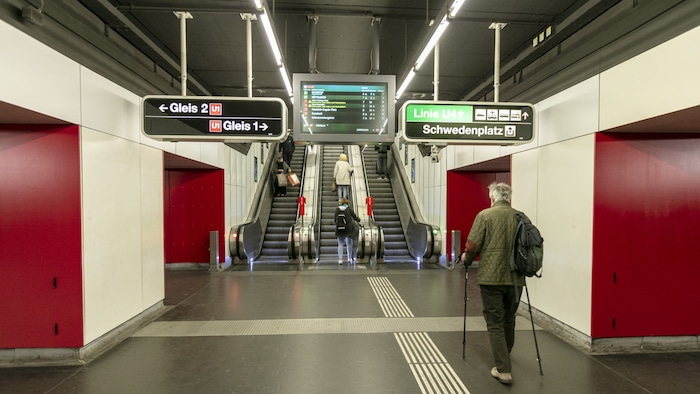
The building fabric of Wiener Linien is rated at an average of 2.41 according to the school grading system. 39 percent of the buildings, including 34 stations, are rated 3, meaning that operational safety is only promised until the next planned inspection. However, some buildings are rated 4, which means that "operational safety may no longer be guaranteed until the next planned inspection or planned maintenance measure", including the Taubstummengasse, Schwedenplatz and Michelbeuern subway stations.
In general, the question arises as to what extent Wiener Linien has an overview of the defects in its own infrastructure: Others have responsibility for 75 supporting structures and 96 buildings, including stations, mainly the municipal MA 29 - but Wiener Linien had to admit that they have no information about the condition of a fifth of the supporting structures and a third of the other buildings.
Corporate decisions with Stone Age software
The lack of information runs through all areas: Fundamental corporate planning is based on Wiener Stadtwerke software from 2014, which only allows data comparisons over the last three years, for example, but no longer. Another example: the City Court of Audit only received data from the company about whether train maintenance is carried out on time from the depots. However, there was no information on this from the main workshop in Simmering.
This is how old the fleet is
The average age of the respective vehicle types on Vienna's rails also shows the need for action here:
- High-floor streetcars: 38.8 years old
- Low-floor streetcars: 13.9 years old
- Subway: 17.9 years
- U6 trains: 20.6 years
A hidden call for help to the inspectors
As a result of all this, Wiener Linien achieved its own reliability targets for the last time in 2020. To Wiener Linien's credit, however, it must be said: Since 2021/2022, the company has been doing its best to counteract this. And its efforts are not endless: in its dealings with the City Court of Audit auditors, the company meekly states that "in contact with the owner", i.e. the city, it always points out "the necessary framework conditions (personnel resources, financing, approvals from the City of Vienna, etc.)".
This article has been automatically translated,
read the original article here.











Da dieser Artikel älter als 18 Monate ist, ist zum jetzigen Zeitpunkt kein Kommentieren mehr möglich.
Wir laden Sie ein, bei einer aktuelleren themenrelevanten Story mitzudiskutieren: Themenübersicht.
Bei Fragen können Sie sich gern an das Community-Team per Mail an forum@krone.at wenden.