To shorten detention
Honor killer now demands her own deportation
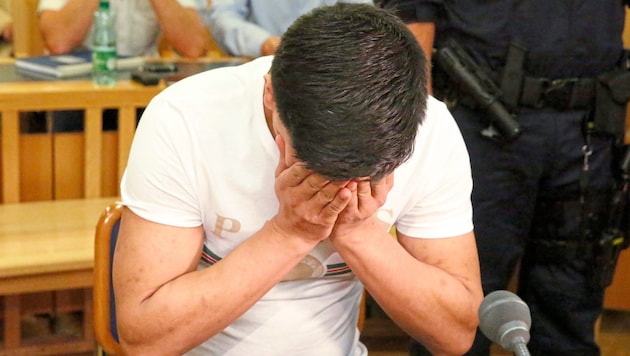

She had to wear a headscarf, she was not allowed to have girlfriends. She was to be forced into marriage. But Bakhti wanted to lead a Western life: in 2017, she was killed by her brother in Vienna with 28 stab wounds. The Afghan received a life sentence for this. He has now applied for deportation.
 Kronen Zeitung als bevorzugte Google-Quelle hinzufügen
 A persistent rumor has been circulating in the Krems-Stein prison for many weeks. About the fact that a well-known, not entirely inconspicuous prisoner could - perhaps very soon - leave the prison early.
Not because the young man - his exact age is unknown, but more on that later - has already served his sentence; he was only given a life sentence in 2018. But because he has applied to the court via a renowned lawyer to be transferred to his home country of Afghanistan.
This lawyer, the Viennese lawyer Philipp Springer, whose efforts on behalf of the convicted murderer have also not remained secret, is tight-lipped when asked about his legal steps in this regard. "Yes, it's true," he simply confirms, "I am currently in the process of requesting the transfer of one of my clients to his country of birth." However, he is not allowed to reveal the identity of the person in question for reasons of client protection.
The case once made headlines
The identity of the person in question - is now known to the "Krone". He is Hikmatullah S. who once made headlines with a horrific crime.
On September 18, 2017, he killed his sister Bakhti, who was several years younger than him, stabbing her 28 times with a Rambo knife. In Vienna-Favoriten, in the courtyard of an apartment building, just a few hundred meters from his parents' apartment.
The motive for his crime? He had to kill the girl, he once told the police, because she had "tarnished the honor of my family ..."
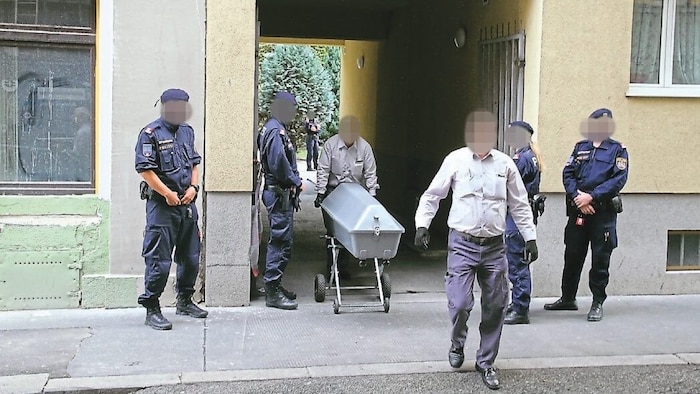
The history of the femicide? Bakhti - 14 according to her passport; forensic experts ultimately determined that she was 17 or 18 at the time of her death - had, unlike some of her siblings, her father and her mother, managed to integrate well into society here. Since the "clan" had fled to Austria with her in 2013.
The victim was a prisoner of her family
She studied well at school. She dreamed of doing an apprenticeship as a sales clerk. She just wanted to lead a "normal life". Sometimes visit an ice cream parlor or a cinema with classmates; go for walks in parks with a boy she had fallen in love with.
A - western - lifestyle that didn't suit her parents and older brothers at all. They forced the girl to wear a headscarf; they forbade her to make friends; at some point she was only allowed to go outside with an escort, apart from to school. What was particularly bad was that Bakhti, like two of her sisters before her, was soon to be forced into marriage in Pakistan.
Restrictions, plans - against which she tried to defend herself. As a result, her domestic situation became increasingly dramatic. One thing is certain: On June 30, 2017 - with injuries to her face and arms - she reported her father and Hikmatullah to the police. "They are constantly abusing me," she told the officers: "My mom never helps me, she laughs while I get beaten up. I don't want to go home because terrible things could happen to me there."
The chronicle of an announced bloody deed
The girl then spent a week in a crisis intervention center, after which she was returned to her parents' care. Once again, she was trapped in catastrophic conditions. A few days before the crime, she had therefore once again sought protection in a facility run by the youth welfare office. The problem: due to a lack of staff, it was not possible to fully guard Bakhti.
So she made her way to her school alone on September 18, 2017. As photos from surveillance cameras later showed, Hikmatullah S. had apparently been waiting for her in a subway station in Vienna-Favoriten since the early morning. And began stalking her after she got off a train there.
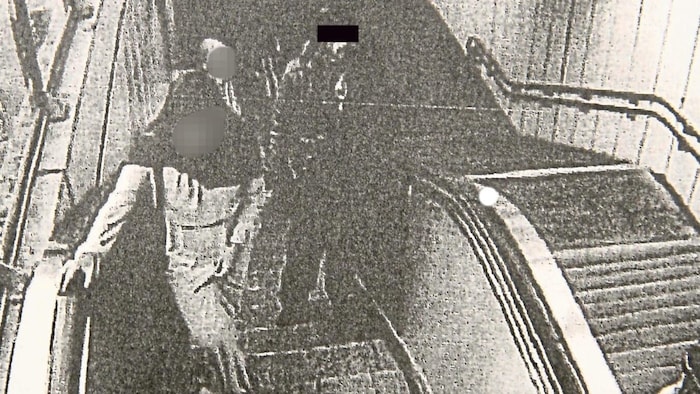
His parents would have been "incredibly sad and disappointed" about their renegade daughter's escape, the Afghan told investigators after his arrest: "That's why I saw it as my duty to bring her back to them." But during a "discussion" - on the open street and in the courtyard of a council building, where he had finally forced her into - his sister had shown herself to be "completely unreasonable".
"She had no respect for me"
"That made me realize that she had no respect for me. And I became extremely angry." And he pulled his combat knife out of his jacket pocket and attacked the girl with it - until she stopped moving.
In July 2018, the Afghan was put on trial in Vienna Regional Court. Not as a young adult, as he and his family had long thought - 15 years in prison would have been his maximum sentence in this case. Various circumstances - and his appearance - had suggested that he was not 18 at the time of the crime, as stated on his ID, but at least 21. He had refused to have a bone x-ray to determine his exact age ...
"I killed Bakhti because of our culture," explained Hikmatullah S., seemingly unmoved, at his trial - and otherwise gave hardly any answers to the questions from the prosecutor, the judge and the jury. His sentence - life imprisonment - was unanimous.
He has been in Krems-Stein ever since; he completed an apprenticeship in a skilled trade there in 2021 - and now works in a workshop at the Lower Austrian prison. He is considered "rather difficult" by the prison officers, and is said to have been irascible in disputes with other inmates - and has even struck out at times.
He now describes his crime as an "accident"
The accounts of his former fellow prisoners differ. One says that Hikmatullah S. stands out due to his "straightforwardness and coolness" and that he is therefore "a leading figure, in a positive sense" for many - especially younger - convicts. Contrary to this is the opinion of another former "cane companion". The Afghan was completely lacking in empathy, only concerned with his own advantages and behaved almost like a "mafia capo" behind bars.
He hardly ever talks about the atrocity committed against his sister; when he does, he insists that it "actually happened in the heat of the moment" and was "in truth a tragic accident". A justification that would probably be irrelevant if his case were to be transferred to his home country and he were to be deported prematurely.
Because in Afghanistan, honor killings are generally treated as minor trivial offenses. Because women have no rights there anyway.
„Krone“: Hätte Hikmatullah S. das Verbrechen an seiner Schwester in seinem Geburtsland, unter der Herrschaft des Taliban-Regimes, begangen – welche Strafe würde ihm drohen?
Petra Ramsauer: Vermutlich eine sehr geringe – oder vielleicht sogar gar keine. Denn ein Mord „aus Gründen der Familienehre“ galt sogar schon vor der Machtergreifung der Taliban als strafmildernd. Jetzt muss man davon ausgehen, dass diesbezüglich kaum noch Unrechtsbewusstsein besteht. Wir hören nun von einer großen Zunahme sogenannter Ehrenmorde in dem Land. Werden derartige Taten nicht angezeigt – vorwiegend in ländlichen Gebieten soll das so sein – dann kommt es zu keinen Ermittlungen oder gar Gerichtsprozessen.

Was würde mit Bakhtis Killer nach einer allfälligen Überstellung in seine Heimat geschehen? Müsste er da die in Österreich über ihn verhängte Strafe überhaupt weiter verbüßen?
Das ist schwer zu sagen. Die Institutionen im Taliban-Staat sind nicht mit denen in Europa zu vergleichen. Und: In diesem System ist Gewalt gegen Frauen ja geradezu Normalität. Dazu kommt, dass viele der Machthaber sehr schlecht ausgebildet sind. Ich bin mir nicht sicher, ob es ausreichend und vor allem qualifiziertes Personal gibt, um österreichische Gerichtsakten zu studieren.
Die Fakten, die Sie anführen, zeigen, wie menschenunwürdig die Situation von Frauen in Afghanistan ist. Haben diese überhaupt irgendwelche Rechte?
Nein. Mädchen ist nun bloß noch erlaubt, die Grundschule zu besuchen, weitergehende Ausbildungen bleiben ihnen verwehrt. Frauen haben in dieser schrecklichen Gesellschaftsform einfach still zu sein; sie haben das zu tun, was ihnen ihre Väter, Brüder, Ehemänner befehlen. Sie müssen Burka tragen – und seit Kurzem dürfen sie nicht mehr außerhalb ihrer Häuser sprechen. Sie sollen ergo weder zu sehen noch zu hören sein.
Zurück zu den Ermittlungsbehörden der Taliban: Welche Verbrechen werden von der afghanischen Justiz hart bestraft?
Die Strafen in diesem System können hart sein, bis zur Todesstrafe. Diese kann auch bei Mord verhängt werden, aber eben nicht, wenn es um die Ehre der Familie ging. Außerdem sind Auspeitschungen von Männern und Frauen wegen „nicht erlaubter Beziehungen“ an der Tagesordnung.
This article has been automatically translated,
read the original article here.











Willkommen in unserer Community! Eingehende Beiträge werden geprüft und anschließend veröffentlicht. Bitte achten Sie auf Einhaltung unserer Netiquette und AGB. Für ausführliche Diskussionen steht Ihnen ebenso das krone.at-Forum zur Verfügung. Hier können Sie das Community-Team via unserer Melde- und Abhilfestelle kontaktieren.
User-Beiträge geben nicht notwendigerweise die Meinung des Betreibers/der Redaktion bzw. von Krone Multimedia (KMM) wieder. In diesem Sinne distanziert sich die Redaktion/der Betreiber von den Inhalten in diesem Diskussionsforum. KMM behält sich insbesondere vor, gegen geltendes Recht verstoßende, den guten Sitten oder der Netiquette widersprechende bzw. dem Ansehen von KMM zuwiderlaufende Beiträge zu löschen, diesbezüglichen Schadenersatz gegenüber dem betreffenden User geltend zu machen, die Nutzer-Daten zu Zwecken der Rechtsverfolgung zu verwenden und strafrechtlich relevante Beiträge zur Anzeige zu bringen (siehe auch AGB). Hier können Sie das Community-Team via unserer Melde- und Abhilfestelle kontaktieren.