Start of the pollen season
Styria
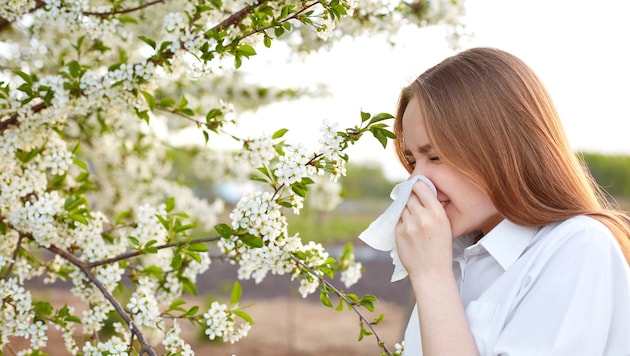

February 20 is known as "Allergy Day": around a third of Austrians react to pollen, and the season has now also started in Styria. Which parts of the country are affected, how best to protect yourself - and why olive trees may soon become a plague for allergy sufferers.
 Kronen Zeitung als bevorzugte Google-Quelle hinzufügen
 When your nose itches and your eyes water, it's that time of year again: the pollen season has arrived in Styria. "The changeable weather has somewhat weakened the start of the season at the beginning of February, and now we already have a light to moderate load," explains Markus Berger, Head of the Austrian Pollen Information Service. The start of flowering depends on the temperature: "The plants only really dust from ten degrees onwards."
And who are the culprits? "Currently it's hazel and alder, followed by birch and ash from mid-March," says Berger. Not all parts of Styria are affected to the same extent. In Upper Styria, for example, higher levels are to be expected due to the temperature, "but there is currently no pollen count above 1200 meters altitude". In addition, Graz is another hotspot due to its basin location - "and fine dust also has an impact on allergies here".

Rain, snow and low temperatures act as a damper. In the next few weeks, the season will enter its main phase.
Markus Berger, Leiter Polleninformationsdienst Österreich
However, how an allergy sufferer reacts to pollen does not always depend on the amount of pollen. In general, moderate symptoms can be expected at the moment: "From sneezing fits and watery eyes to an itchy nose." It is important to distinguish allergies from infections, which are currently in high season. Allergies usually do not cause a fever, last longer and come back every year. Around a third of Austrians struggle with these symptoms - the numbers are rising worldwide, which is also due to global warming and air pollution.
Olive trees plague allergy sufferers
By informing yourself about the pollen information service, you can adjust your daily planning according to the pollen count. Masks or pollen screens can also help. However: "To prevent the allergy from getting worse over the years or leading to asthma, it needs to be treated," explains the expert. In addition to household remedies, antihistamines provide relief, while immunotherapy, also known as hyposensitization, is available for severe cases.
Forecasts for the rest of the season are not yet possible. "But in Styria, ragweed is becoming more and more relevant alongside the early bloomers and grasses," says Berger. The weed is spreading from the east of Austria. And, most curiously: "Olive trees are now being cultivated in Burgenland, which is causing allergic reactions. This could also happen in Styria."
This article has been automatically translated,
read the original article here.










Da dieser Artikel älter als 18 Monate ist, ist zum jetzigen Zeitpunkt kein Kommentieren mehr möglich.
Wir laden Sie ein, bei einer aktuelleren themenrelevanten Story mitzudiskutieren: Themenübersicht.
Bei Fragen können Sie sich gern an das Community-Team per Mail an forum@krone.at wenden.