Ambivalent conclusion
Assessment shows whether new law is slowing down speeders

If blue-black comes, 150 km/h on the highway will follow - and yet the new speeding law only came into force eleven months ago. An initial assessment of the law is ambivalent: There are fewer deaths, but more injuries. In Upper Austria, 18 vehicles had been provisionally confiscated by the end of the year.
 Kronen Zeitung als bevorzugte Google-Quelle hinzufügen
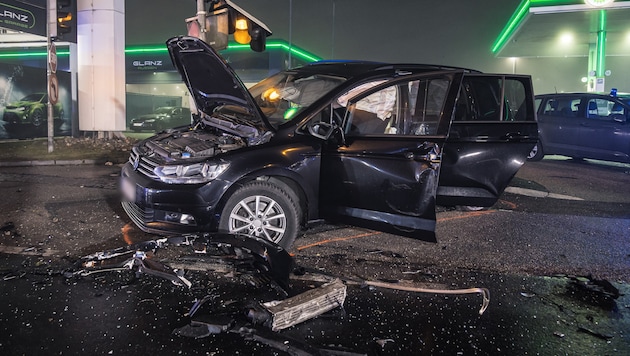
 On Friday night, a 20-year-old fled from the police at speeds of up to 250 km/h before reportedly crashing into a plainclothes patrol in Traun. This is actually a clear case for the speeding law, according to which cars can be confiscated for extreme speeding and, in extreme cases, even auctioned off.
But the Hungarian was allowed to keep his car. Reason: As the car is a total loss, the speeding driver has already been separated from his instrument of crime, so the purpose of the new law has been fulfilled.
Eleven percent fewer traffic fatalities...
In a total of 18 cases in Upper Austria last year, speeding vehicles were at least temporarily confiscated since the law came into force on March 1. An initial assessment by the Ministry of Climate Action in response to an inquiry by "Krone" is positive: "Since the speeding package came into force, the number of serious accidents caused by speeding has fallen significantly."
18 confiscations
18 vehicles of extreme speeders have been provisionally confiscated in Upper Austria for speeding since the start of the new law until the end of the year.
In the first three quarters of 2024, there were 281 road deaths nationwide - eleven percent fewer than in the previous year and the lowest figure since records began after the pandemic years of 2020 and 2021. The decline in Upper Austria was similarly sharp at 9.7 percent to 56 fatalities.
...but six percent more injuries
However, the number of people injured in accidents across Austria rose by six percent to 36,351, the highest figure since 2017.
It is also interesting to take a look at the suspected main causes of accidents recorded by Statistics Austria: a quarter (25.2 percent) of fatal accidents in the first three quarters of the previous year were due to "inappropriate speed". Although this figure was higher in 2023 (27 percent), it was significantly lower in 2022 (22.6 percent).
This article has been automatically translated,
read the original article here.











Da dieser Artikel älter als 18 Monate ist, ist zum jetzigen Zeitpunkt kein Kommentieren mehr möglich.
Wir laden Sie ein, bei einer aktuelleren themenrelevanten Story mitzudiskutieren: Themenübersicht.
Bei Fragen können Sie sich gern an das Community-Team per Mail an forum@krone.at wenden.