Oldest ice core
Researchers drilled 2.8 kilometers deep in Antarctica
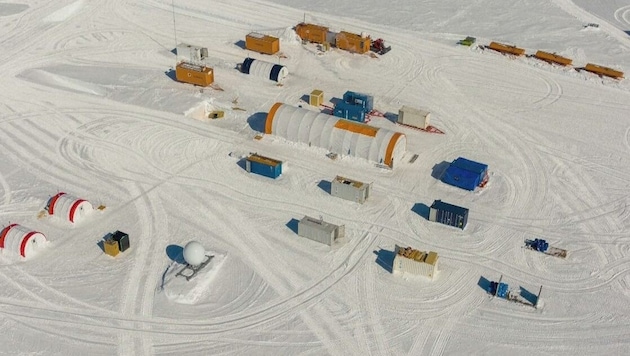

A European research team has now achieved a breakthrough in Antarctic research. The scientists drilled almost 2.8 kilometers deep and uncovered an ice core that is at least 1.2 million years old. This should provide information about the development of the Earth's atmosphere and climate.
 Kronen Zeitung als bevorzugte Google-Quelle hinzufügen
 The Alfred Wegener Institute (AWI) involved in the project is calling it a "historic milestone" for climate research. The longest continuous ice core to date, which was also recovered in the Antarctic in 2004, dated back some 800,000 years.
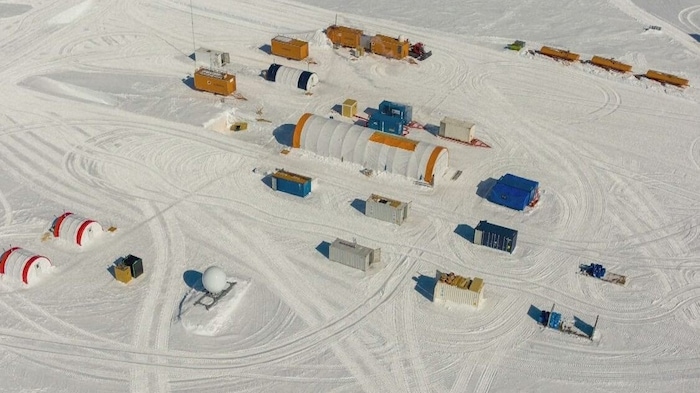
The new ice core is 2.8 kilometers long and was drilled during an EU-funded project in an ice dome on the Central Antarctic Plateau at an altitude of 3200 meters above sea level. The analysis of such old ice layers allows conclusions to be drawn about global climate history, such as the change between warm and ice ages.
Researchers hope to gain new insights
According to the AWI, the gap between recurring ice age cycles suddenly grew significantly between 800,000 and 1.2 million years ago. Why this was the case is "still one of the greatest mysteries of climate science". The analysis of the new drill core should now shed light on this. The findings are also important for understanding future developments in the Earth system.
The drill cores have now been transported to Europe in specially constructed refrigerated containers on an Italian research icebreaker. They are due to arrive at the AWI's ice laboratory in Bremerhaven in early summer, where they will be further processed and analyzed.
Drill core reaches down to the bedrock
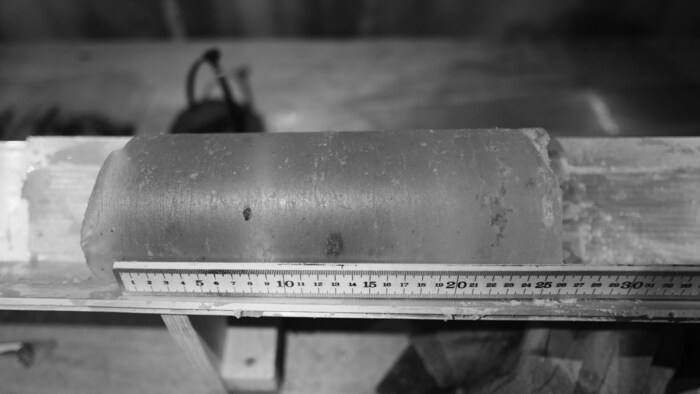
According to the AWI, preliminary analyses indicate that the upper 2480 meters of the ice core contain a "high-resolution" climate record dating back up to 1.2 million years. Up to 13,000 years are compressed into one meter of ice. Beneath this is heavily deformed, possibly mixed or refrozen ice of unknown origin that is even older. Overall, the drill core reaches down to the bedrock.
The location for the drilling into the ice dome, which took more than 200 days, was carefully chosen. The researchers modeled the glacier flow in advance and used modern radio-echo sounding technology to check the subsurface. The further handling of the drill core pieces is also challenging - they have to be permanently cooled to minus 50 degrees Celsius.
This article has been automatically translated,
read the original article here.











Da dieser Artikel älter als 18 Monate ist, ist zum jetzigen Zeitpunkt kein Kommentieren mehr möglich.
Wir laden Sie ein, bei einer aktuelleren themenrelevanten Story mitzudiskutieren: Themenübersicht.
Bei Fragen können Sie sich gern an das Community-Team per Mail an forum@krone.at wenden.