Operation "North Arrow"
Israeli army begins ground offensive in Lebanon
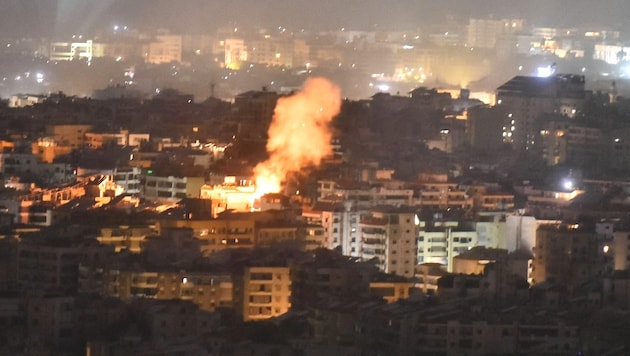

The Israeli army launched the announced ground offensive in Lebanon on Tuesday night. Operation "North Arrow" is aimed at military installations in villages near the border and is taking place in parallel to the ongoing fighting in the Gaza Strip and other areas, according to reports.
 Kronen Zeitung als bevorzugte Google-Quelle hinzufügen
 It involves limited attacks on Hezbollah targets in the southern border region of the country, which pose an immediate threat to the population in northern Israel, according to a statement. The ground forces will also receive support from the Israeli air force. Israel had previously informed Washington of the upcoming operations.
Length of the operation uncertain
A few hours ago, "limited, localized and targeted ground attacks based on precise intelligence information against Hezbollah terrorist targets and infrastructure in southern Lebanon" began, the army announced on Platform X. Military facilities of the pro-Iranian Shiite militia located in villages close to the border were named as targets of Operation "North Arrow". Israeli military circles announced that the operation would continue depending on how the situation develops.
Soldiers trained for months
The army is doing everything necessary to defend the citizens of Israel and to bring the citizens of northern Israel back to their homes. The operation will continue in parallel with the fighting in the Gaza Strip against Hamas and in other areas. The soldiers have been trained for the operation in recent months. Israel wants to enable the return of 60,000 Israelis who have been displaced from areas along the border by Hezbollah attacks for months.
Rockets were also fired at Israel early on Tuesday morning. The army announced on Telegram that around ten missiles had been intercepted in the Meron area in northern Israel. Some had crashed in open terrain. In addition, the air defense recently intercepted a drone dozens of kilometers off the coast of central Israel.
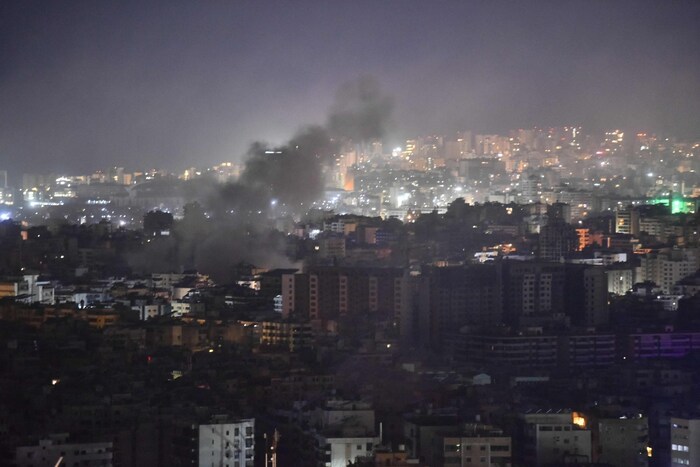
The conflict between Israel and the Shiite Hezbollah militia in Lebanon has recently escalated dramatically. For days, the Israeli military has been massively attacking targets in the neighboring country, including, according to its own account, Hezbollah weapons depots. Lebanon reported hundreds of dead and injured. On Friday, Hezbollah leader Hassan Nasrallah and other Hezbollah fighters were killed in a targeted Israeli airstrike.
Tens of thousands of Lebanese on the run
Tens of thousands of Lebanese fled their villages and towns. Many are holding out in the capital Beirut and, due to a lack of accommodation, some are sleeping on mattresses on the coastal promenade of the Mediterranean city. The latest escalation is likely to bring back memories of the last war between Israel and Hezbollah 18 years ago for many of the country's approximately nine million inhabitants.
On Tuesday night, an attack on a Palestinian refugee camp in southern Lebanon and an Israeli airstrike on the Syrian capital Damascus were reported. Three civilians were killed and nine other people were injured.
Lebanese army withdrew
According to military circles, the Lebanese army had withdrawn soldiers from the border before the start of the Israeli ground offensive. Some soldiers had been withdrawn from the so-called Blue Line, the German Press Agency was told by Lebanese army sources. Lebanon is heavily in debt, which is why the regular armed forces are also underfunded and generally weak. They lack resources, their equipment is outdated and even food is in short supply. According to some observers, the army currently only exists thanks to military aid from the USA, which has amounted to more than three billion US dollars since 2006.
This article has been automatically translated,
read the original article here.











Da dieser Artikel älter als 18 Monate ist, ist zum jetzigen Zeitpunkt kein Kommentieren mehr möglich.
Wir laden Sie ein, bei einer aktuelleren themenrelevanten Story mitzudiskutieren: Themenübersicht.
Bei Fragen können Sie sich gern an das Community-Team per Mail an forum@krone.at wenden.