Locked up in a dungeon
Kremlin fighters: “Punished because we survived”
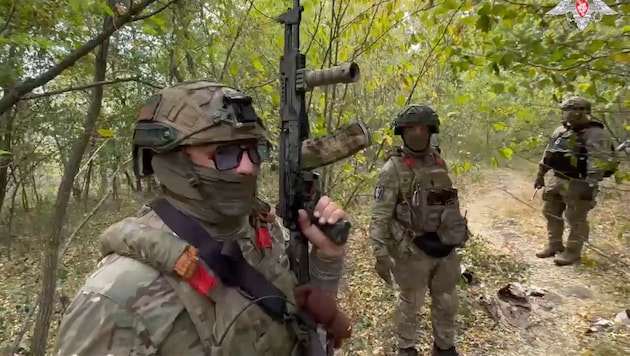
If you don't die, you obviously didn't fight hard enough: that seems to be the motto of Russian commanders towards forced recruits in Ukraine. A military blogger reports that surviving soldiers were punished harshly when they returned to base. Wounded recruits were locked in a dungeon to die.
 Kronen Zeitung als bevorzugte Google-Quelle hinzufügen
 In order to fill out its troops, the Russian military has enlisted recruits in prisons who can expect a pardon after their military service. However, the military leadership is said not to expect many of them to ever return home anyway, as US military blogger Chris Owen reports on X.
"Russian commanders reportedly assume that only two percent of soldiers with convictions survive attacks," he explains in a post. "Surviving soldiers are punished because they assume that their survival is proof that they disobeyed their orders."
The military blogger's posting on X:
Injured back on base: 'Mission not accomplished'
Two of these forced recruits who deserted recounted a horrific incident from July. 15 men from their unit had survived an attack and made it back to their base. A commander with the call sign Caspian then explained that they "had not accomplished the mission and that the survival rate of the convicts should not exceed two percent.
Locked up in dungeons with no food and little to drink
The injured soldiers had not received any medical help, but had been thrown into a kind of dungeon. There they were given neither food nor sufficient water. "Three of the wounded died immediately in the cellar. And the remaining twelve people, some wounded, some unharmed, he immediately sent to the assault, without weapons, without equipment, without anything," the deserters are quoted as saying.
"Human lives are not valuable"
It was there that the rest of the men eventually died. "In short, they kill their own men when something goes wrong ... In short, human lives are not valuable," said the fugitives. In addition, the dead were classified as deserters and not as missing persons - apparently so that their relatives would not receive any compensation.
This article has been automatically translated,
read the original article here.











Da dieser Artikel älter als 18 Monate ist, ist zum jetzigen Zeitpunkt kein Kommentieren mehr möglich.
Wir laden Sie ein, bei einer aktuelleren themenrelevanten Story mitzudiskutieren: Themenübersicht.
Bei Fragen können Sie sich gern an das Community-Team per Mail an forum@krone.at wenden.