Modern operations
No chance for presbyopia!


Presbyopia affects everyone over the years! If you can't see well, you have to accept a reduction in quality of life in many areas of your everyday life. Be it working on a PC or cell phone, reading or doing sport. However, various interventions can be used to counteract this. VR glasses then show what the "new world" will look like.
"Over the years, the lens in the eye loses its elasticity: so-called presbyopia occurs," explains Dr. Sandra Maksys, ophthalmologist at the "sehkraft Eye Center Vienna". "Hardening of the body's own eye lens begins from around the age of 40 and inevitably occurs in everyone."
Permanent correction is possible
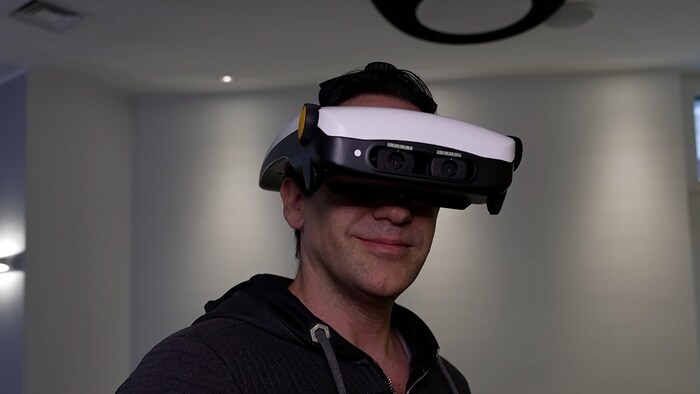
However, the good news is that permanent surgical correction of presbyopia is possible. There are two surgical options, both of which deliver good results. However, it is up to the individual patient to decide which is suitable for them. A new feature is that VR glasses simulate the visual impression after surgery. The patient can experience in advance what their "new world" will look like.
Artificial lenses
One option is the implantation of artificial multifocal premium lenses. These also correct defective vision and enable good near, intermediate and distance vision and can even compensate for astigmatism. "The lenses are inserted into the eye after the patient's own hardened lens has been gently removed. This only takes 15 minutes per side. The patient can see again straight away," explains Dr. Maksys. Which lens fits the individual is determined beforehand.
Advantages: UV light or blue light filters are built in. Cataracts in old age are prevented.
Standard lenses are usually used for patients with cataracts. The insurance companies normally cover the cost of these lenses. However, glasses are still needed afterwards. However, if a multifocal version is chosen, the patient remains largely spectacle-free.
Laser eye surgery with monovision
Another treatment is the procedure using a special form of laser eye surgery with monovision. This makes reading glasses largely superfluous. This is because the leading eye is set for distance vision and the non-dominant eye for near vision. To do this, the doctor optimizes this with slight short-sightedness of minus 0.5 to minus 1.5 diopters.
"But the eyes have to work together perfectly for this. This is exactly what is tested by simulating the result of monovision beforehand using VR glasses," says Dr. Sandra Maksys.
Patient Christian Haas is delighted: "As soon as the VR starts, you have completely different vision. At the touch of a button, you can experience how you will be able to see in the future - with or without surgery, far and near. After simulated surgery, I can definitely see much better up close."
This article has been automatically translated,
read the original article here.











Da dieser Artikel älter als 18 Monate ist, ist zum jetzigen Zeitpunkt kein Kommentieren mehr möglich.
Wir laden Sie ein, bei einer aktuelleren themenrelevanten Story mitzudiskutieren: Themenübersicht.
Bei Fragen können Sie sich gern an das Community-Team per Mail an forum@krone.at wenden.