Data analysis shows:
Austria’s senior citizens are becoming increasingly frail
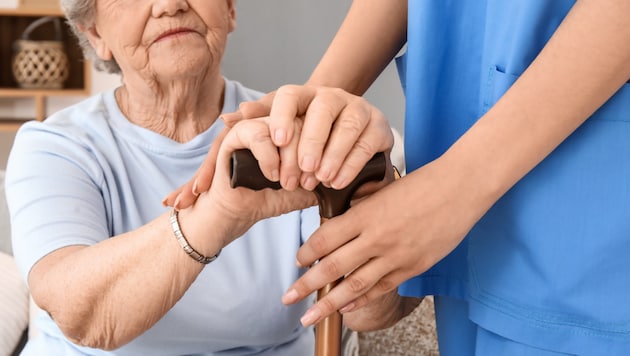

Austria's senior citizens aged 65 and over are becoming increasingly frail. This has now been revealed by an analysis of data from the health survey conducted by Statistics Austria on behalf of the Ministry of Health by Austrian scientists.
 Kronen Zeitung als bevorzugte Google-Quelle hinzufügen
 The frequency of limitations in everyday activities rose from 12.8 to 17.9 percent for men and from 19.2 to 25.7 percent for women within five years, as the study by the Karl Landsteiner Institute for Health Promotion Research with the participation of experts from the Medical University of Vienna and the Haus der Barmherzigkeit, the largest private care facility for people in need of heavy care in Austria, shows.
"Difficulties in activities of daily living (ADL) and instrumental activities of daily living (IADL) in older adults are associated with a reduced quality of life and an increased need for long-term care. This study examined the prevalence of disabilities in people aged 65 and over in Austria using data from the Austrian Health Interview Surveys (ATHIS)," the experts wrote.
Data from health survey analyzed
Data from the ATHIS surveys from 2014 and 2019 was used to determine how often the group of over-65s experience limitations in their ability to perform everyday activities (ADL, i.e. activities of daily living such as eating, bathing, personal hygiene, dressing and undressing, mobility, climbing stairs) or in the so-called IADL score (more specific activities such as telephoning, shopping, cooking, housework, transportation, medication, financial transactions).
The data from the two survey phases were compared with 5853 people over the age of 65. According to the authors, the differences over the five-year period are statistically significant.
More disabilities in daily life
In the more specific activities of daily living, the frequency of restrictions almost doubled from 18.9 to 35.1 percent among men over 65 within five years. Among women, the frequency rose from an already high initial level (2014) of 38.2 percent to 50.8 percent (2019).
In the age group over 80, the frequency of limitations in daily activities (ADL, IADL) was more than four times higher than among the younger participants in the ATHIS survey. Participants with at least one chronic illness were also four times more likely to report such disabilities.
Also dependent on social status
There was also a strong dependence on the level of education, social environment (single/married), birth in the EU or outside Europe and place of residence.
The authors of the study concluded: "Gender, age, education, country of birth, residence, partnership status, number of chronic diseases, lack of adherence to physical activity and dietary recommendations are strongly associated with increased susceptibility to disability. Public health policy must take these factors into account in disability prevention strategies."
This article has been automatically translated,
read the original article here.











Da dieser Artikel älter als 18 Monate ist, ist zum jetzigen Zeitpunkt kein Kommentieren mehr möglich.
Wir laden Sie ein, bei einer aktuelleren themenrelevanten Story mitzudiskutieren: Themenübersicht.
Bei Fragen können Sie sich gern an das Community-Team per Mail an forum@krone.at wenden.