
Corona heat
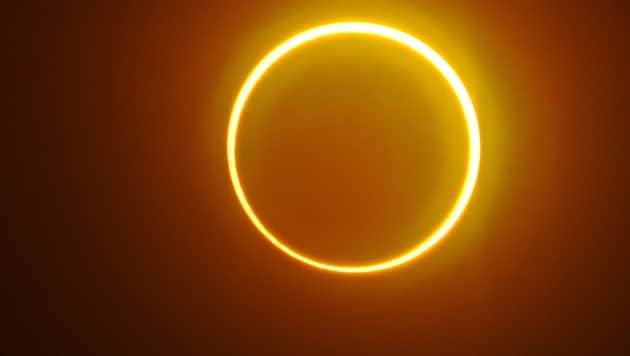

The sun is the closest star to us, the second closest is 250,000 times further away. So you would think that the sun is well researched - but far from it! Natural scientist and author Christian Mähr has tackled the so-called corona paradox - and no, it's not about vaccination.
 Kronen Zeitung als bevorzugte Google-Quelle hinzufügen
 I still remember a casual remark made by my professor in an astronomy lecture a good 40 years ago: One problem, he said, was still the paradox of the solar corona. This is the outermost part of the sun's atmosphere, which can only be seen with the naked eye during a total solar eclipse - a beautiful ring of rays, much larger than the solar disk itself.
The aforementioned paradox is its temperature, which can be measured from Earth: two million degrees. One is tempted to say: so what? Two million degrees is a common temperature for stars, and the sun has a core temperature of around ten million degrees. Yes, but the surface, the luminous part that gives us light and heat, is only about six thousand degrees. So the sun's outer atmosphere is three hundred times hotter than the surface. How can that be?




















Da dieser Artikel älter als 18 Monate ist, ist zum jetzigen Zeitpunkt kein Kommentieren mehr möglich.
Wir laden Sie ein, bei einer aktuelleren themenrelevanten Story mitzudiskutieren: Themenübersicht.
Bei Fragen können Sie sich gern an das Community-Team per Mail an forum@krone.at wenden.