Rare phenomena
Spectacle in the sky: two eclipses in March
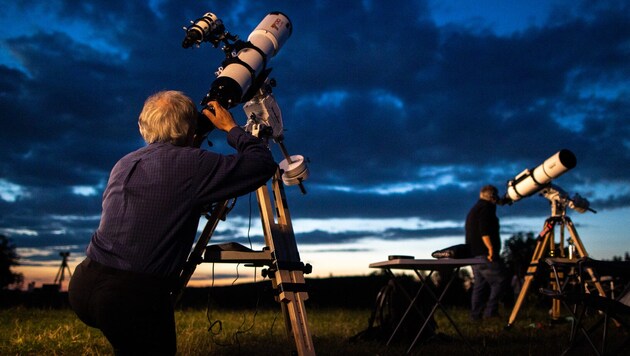

A lunar eclipse, which is only briefly visible in Austria, and a solar eclipse, in which the moon only slightly obscures the sun - both celestial events nevertheless offer exciting moments for astronomy enthusiasts. What exactly can be seen and when is it worth observing.
 Kronen Zeitung als bevorzugte Google-Quelle hinzufügen
 March has two eclipses to offer - a total lunar eclipse on March 14 and a partial solar eclipse on March 29. According to Alexander Pikhard from the Vienna Astronomy Association (WAA), both eclipses may not be very spectacular, but they are still worth watching for astronomy enthusiasts. During the lunar eclipse, the moon sets too early in this country, well before totality. The solar eclipse can be seen in full, but the moon will only cover a small part of the sun.
A lunar eclipse occurs when the sun, earth and moon are aligned and the shadow of the earth illuminated by the sun falls on the moon. If the moon enters the Earth's umbra, it is completely shielded from the direct rays of the sun. In the penumbra, some of the sunlight still reaches the moon.
Moon nine percent eclipsed
During the lunar eclipse on March 14, the moon will enter the Earth's umbra at 6.09 am (Vienna). However, the moon will set at 06:15 and will only be nine percent eclipsed. There is a better view of the celestial shadow play in North and South America.
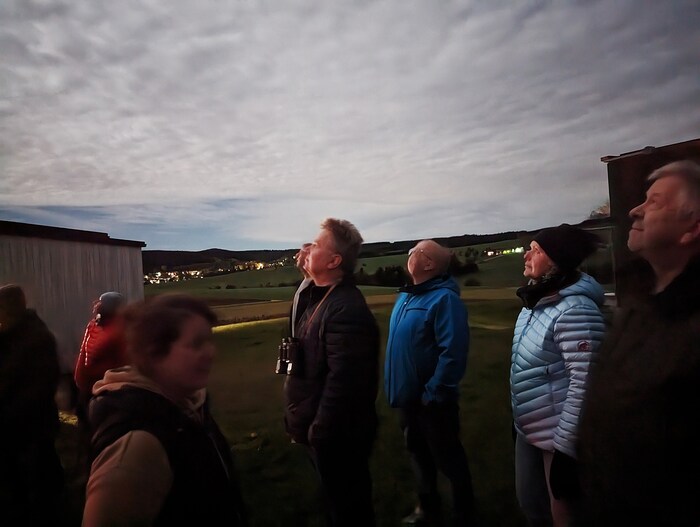
Solar eclipses only occur at new moon. This is when the moon is close to the sun as seen from the earth. On average, the Earth's satellite at least partially obscures the sun's disk twice a year.
In Austria, this spectacle can be seen in full on March 29: The partial solar eclipse begins at 11.41 am (Vienna), with the maximum occultation being reached at 12.18 pm. However, only a small part of the sun will be covered by the moon: 14 percent in relation to the diameter and six percent in relation to the area of the solar disk. In total, the partial eclipse - which, incidentally, cannot be seen anywhere in the world in an annular or total eclipse - lasts one hour and eleven minutes (Vienna).
Do not use "home remedies"
To observe a solar eclipse, it is essential to protect your eyes with the appropriate equipment. You will need eclipse glasses or solar filter film, which are available from specialist astronomy shops. Sunglasses offer too little protection, and experts also warn against using "home remedies" such as rescue blankets, soot-blackened glasses, CDs or similar.
The year 2025 has a second - more attractive - lunar eclipse to offer: On September 7, the moon will already be 86 percent in the Earth's umbra when it rises at 7.21 p.m. (Vienna). The total eclipse begins at 7.30 pm and lasts until 8.53 pm.
This article has been automatically translated,
read the original article here.









Da dieser Artikel älter als 18 Monate ist, ist zum jetzigen Zeitpunkt kein Kommentieren mehr möglich.
Wir laden Sie ein, bei einer aktuelleren themenrelevanten Story mitzudiskutieren: Themenübersicht.
Bei Fragen können Sie sich gern an das Community-Team per Mail an forum@krone.at wenden.