Russia not mentioned
G20: Minimum consensus on Ukraine and the Middle East
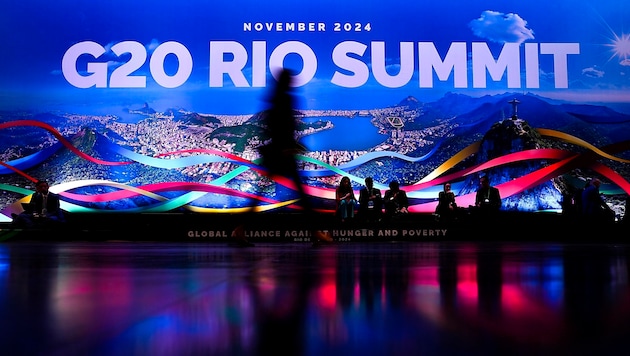

With a minimal consensus on the wars in Ukraine and the Middle East, the Group of 20 leading economic powers (G20) in Rio de Janeiro has just about managed to reach a joint summit declaration. As at last year's summit in India, the Russian war of aggression against Ukraine is no longer explicitly condemned by a majority of countries. Russia - itself a G20 member - is not even mentioned in the passage on the war in Ukraine.
 Kronen Zeitung als bevorzugte Google-Quelle hinzufügen
 Only a general reference is made to "the human suffering and the negative additional effects of the war", for example on food and energy security. The Hamas terrorist attack on Israel on October 7, 2023 is also not mentioned in the document. In the declaration, the "Group of 20" now expresses concern about the humanitarian situation in the Gaza Strip and the escalation in Lebanon. Humanitarian aid must be urgently expanded and the protection of the civilian population strengthened - a clear message to Israel. The G20 also reaffirmed the Palestinians' right to self-determination and an "unwavering commitment" to a two-state solution.
The two conflicts in Ukraine and the Middle East are the biggest rifts between the states. The G20 includes the major Western democracies such as the USA, Germany, the US and the UK, but also authoritarian states such as Russia and China. Host Brazil, as well as countries such as India and South Africa, stand between the two camps.
Ukraine war and Middle East conflict not on the agenda
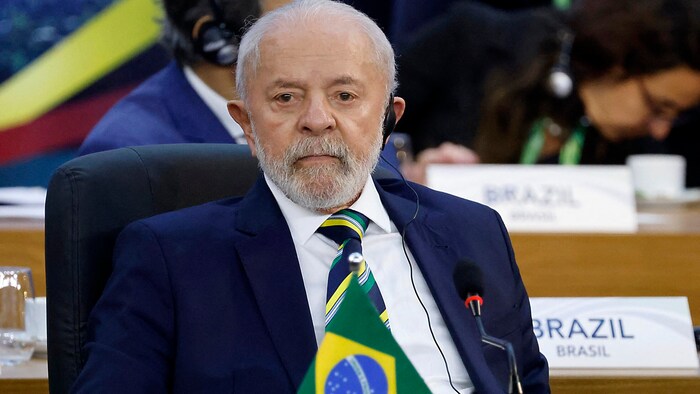
The host, Brazil's President Luiz Inácio Lula da Silva, did not even put the two wars on the agenda. And he did not invite Ukrainian President Volodymyr Zelenskyi, much to the annoyance of Germany and other Western countries. Lula pursued an agenda that primarily emphasized the issues of the so-called "global South", i.e. the emerging countries of Latin America, Africa and Asia. He was able to include important points in the final document: the fight against hunger and global warming as well as a reform of international organizations.
The G20 states also want to campaign for effective taxation of the super-rich in future. Without interfering in the tax sovereignty of the states, they will work together to effectively tax very wealthy individuals, according to the declaration. This reaffirms a minimum consensus reached by the G20 finance ministers in July. The participants in Rio also reaffirm the internationally agreed goal of limiting global warming to 1.5 degrees. With regard to the issue of climate financing, they look forward to a successful outcome of the World Climate Conference in Baku.
Reform of the UN Security Council as a goal
In the final declaration, the G20 states also state that they want to work towards a reform of the UN Security Council. The most important industrialized and emerging countries are calling for better representation of the previously underrepresented regions of Africa, Asia, Latin America and the Caribbean.
The Global Alliance against Hunger and Poverty was also launched in Rio. According to the final declaration, which was published on the first day of the summit, there is no lack of knowledge or resources, but rather a lack of political will to provide people with access to food.
This article has been automatically translated,
read the original article here.











Da dieser Artikel älter als 18 Monate ist, ist zum jetzigen Zeitpunkt kein Kommentieren mehr möglich.
Wir laden Sie ein, bei einer aktuelleren themenrelevanten Story mitzudiskutieren: Themenübersicht.
Bei Fragen können Sie sich gern an das Community-Team per Mail an forum@krone.at wenden.