Two aortic ruptures
No other hospital would take them: Lives saved at Vienna General Hospital
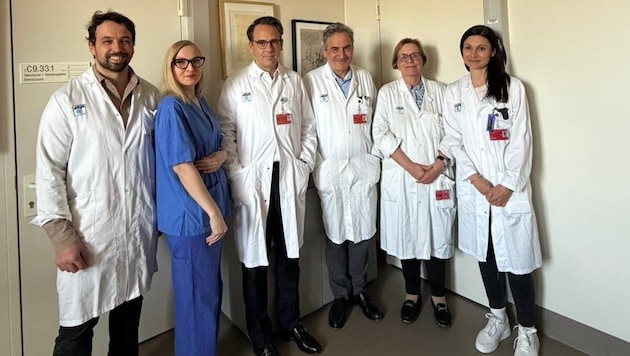

On Good Friday evening, Vienna General Hospital saved two patients with aortic tears—at the same time. A man from Upper Austria had previously been turned away by other hospitals. Specialists from MedUni Vienna then voluntarily came in during their off-duty hours. A medical feat of the highest order—one that could easily have ended in disaster.
 Kronen Zeitung als bevorzugte Google-Quelle hinzufügen
 Good Friday evening, Upper Austria. A man in his mid-50s: aortic dissection—a tear in the aorta, the largest artery in the human body. Every hour without surgery significantly increases the risk of death. The attending emergency physicians made desperate calls all over Austria. No one could treat the man. Rejections poured in.
At the AKH, a woman in her sixties from Vienna was already on the operating table with exactly the same diagnosis. In many other cities, it would be impossible for a hospital to perform two of these critical emergency surgeries simultaneously. Yet here, the answer was: Yes.
Volunteering from their free time to the operating room
An additional problem: Many members of the specialized teams were ontheirwell-deserved time off—and yet they stepped in. Dr. Daniel Zimpfer, Head of Cardiac Surgery at the AKH: “In addition to the staff on duty, people came in voluntarily to make this possible.” Two procedures at the same time, each lasting until midnight.
The patient from Vöcklabruck had previously been flown to Vienna by helicopter—the fastest mode of transport for such emergencies.

Cancel emergencies? That’s not how we operate. When the team volunteers to come in during their time off, it speaks to the spirit of this extraordinary team.
Dr. Daniel Zimpfer, Leiter der Herzchirurgie am AKH
Highly complex surgery
During these highly complex surgeries, the patients’ body temperature is drastically lowered, a heart-lung machine takes over organ functions, and the brain receives barely any blood flow at times. Each procedure brought together around ten specialists: three surgeons, two anesthesiologists, surgical nursing staff, a heart-lung machine operator, and a surgical technician. And yet: “Of the patients who make it to the hospital alive, eight to nine out of ten survive with us,” says Zimpfer.
An 85 to 90 percent survival rate—an exception internationally. The motto of the MedUni Vienna department: “We always accept emergencies and manage to handle them.”
Memories of the Rohrbach scandal
The current emergencies inevitably bring back memories of the Rohrbach case in Upper Austria. The tragic death of a woman in the hospital, who could not find an ICU bed despite a correct diagnosis, had shaken the state. An aortic dissection—that is, the tearing of the aorta—is a diagnosis no one wants to experience, neither as a doctor nor as a patient. This time, too, the case could have ended in tragedy. But both patients survived—because Vienna said yes.
This article has been automatically translated,
read the original article here.









Liebe Leserin, lieber Leser,
die Kommentarfunktion steht Ihnen ab 6 Uhr wieder wie gewohnt zur Verfügung.
Mit freundlichen Grüßen
das krone.at-Team
User-Beiträge geben nicht notwendigerweise die Meinung des Betreibers/der Redaktion bzw. von Krone Multimedia (KMM) wieder. In diesem Sinne distanziert sich die Redaktion/der Betreiber von den Inhalten in diesem Diskussionsforum. KMM behält sich insbesondere vor, gegen geltendes Recht verstoßende, den guten Sitten oder der Netiquette widersprechende bzw. dem Ansehen von KMM zuwiderlaufende Beiträge zu löschen, diesbezüglichen Schadenersatz gegenüber dem betreffenden User geltend zu machen, die Nutzer-Daten zu Zwecken der Rechtsverfolgung zu verwenden und strafrechtlich relevante Beiträge zur Anzeige zu bringen (siehe auch AGB). Hier können Sie das Community-Team via unserer Melde- und Abhilfestelle kontaktieren.