
Researcher explains
Near-death experience: how the brain plays with us
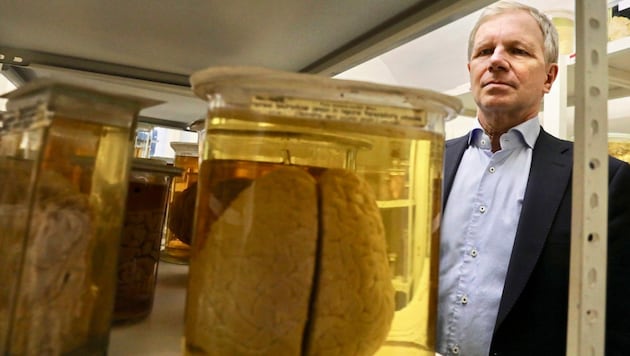

In the past, death was clearly defined as cardiac arrest, but today - thanks to intensive care medicine - it can be delayed for months. In an interview with Krone+, brain researcher Jürgen Sandkühler explains when exactly we die, why movement does not also mean life, what we experience on the threshold of death - and what stress and near-death experiences have in common.
 Kronen Zeitung als bevorzugte Google-Quelle hinzufügen
 We meet Prof. Dr. Jürgen Sandkühler at the Vienna Narrentum. There could hardly be a more fitting place for an interview with a brain researcher: It was the first psychiatric hospital in continental Europe, built in 1784 under Emperor Joseph II - and structurally striking in its round shape.
Nowadays, the pathological anatomy collection is housed here - including a large number of pickled brains with various diseases that could not yet be cured. So it's no wonder that the university professor first has to be found among the packed shelves.
Suddenly, however, his head appears among the jars of brains: "Here!" he calls out - and we get started right away.
"Krone": Prof. Dr. Sandkühler, what about death - then and now?



















Da dieser Artikel älter als 18 Monate ist, ist zum jetzigen Zeitpunkt kein Kommentieren mehr möglich.
Wir laden Sie ein, bei einer aktuelleren themenrelevanten Story mitzudiskutieren: Themenübersicht.
Bei Fragen können Sie sich gern an das Community-Team per Mail an forum@krone.at wenden.