
AI against garbage islands
Biochemists on the hunt for the “plastic eater”
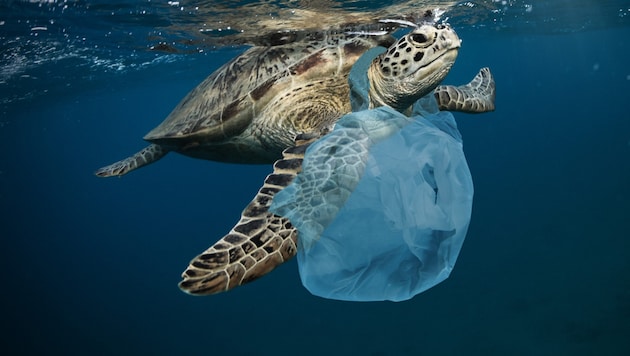

Over 300 million tons of plastic are produced worldwide every year, and the UN Environment Programme estimates that ten million of these end up in the oceans. Plastic bags, fishing nets, cigarette butts and other man-made pollutants then drift around in gigantic islands of garbage that are getting bigger and bigger because plastic does not decompose.
 Kronen Zeitung als bevorzugte Google-Quelle hinzufügen
 The deadly consequences of the plastic carpet are well documented - animals such as sea turtles die from eating plastic, aquatic animals and seabirds become entangled in orphaned fishing nets. The human preference for plastic is fatal for marine ecosystems and a reduction in the mountains of plastic waste is essential - for example through savings, bans (e.g. on straws) or bioplastics, which do decompose over time. However, researchers are also looking for new weapons against the non-biodegradable plastic that is already out there. Artificial intelligence and genetic engineering could provide a solution.





















Da dieser Artikel älter als 18 Monate ist, ist zum jetzigen Zeitpunkt kein Kommentieren mehr möglich.
Wir laden Sie ein, bei einer aktuelleren themenrelevanten Story mitzudiskutieren: Themenübersicht.
Bei Fragen können Sie sich gern an das Community-Team per Mail an forum@krone.at wenden.