"Shame" on the judiciary
US Supreme Court overturns Trump’s global tariffs
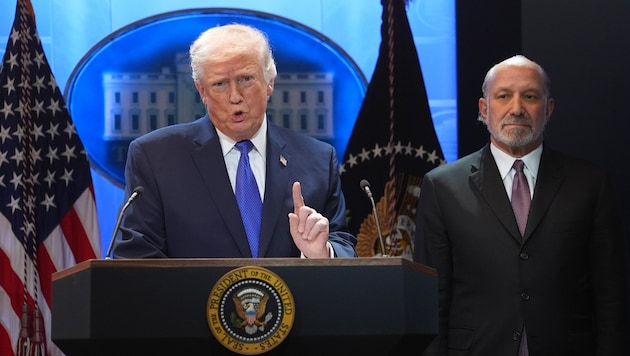

In a historic decision on Friday, the US Supreme Court declared most of President Donald Trump's emergency tariffs illegal. The ruling is a major setback for Trump's central economic and trade policy – and the US president responded shortly afterwards with further tariffs.
 Kronen Zeitung als bevorzugte Google-Quelle hinzufügen
 The president had unilaterally imposed import tariffs on nearly all of the US's trading partners, based on a 1977 law on emergency powers in the economy. However, the judges unanimously ruled that the president's authority is not sufficient to impose tariffs of unlimited amount, duration, and scope.
Break with previous rulings
Chief Justice John Roberts wrote the opinion for the court. The court ruled 6-3 that the president did not have the authority to impose the tariffs unilaterally. It stated, "The president must demonstrate clear congressional authorization."
The ruling marks a break with a series of previous decisions in which the conservative court often ruled in Trump's favor – for example, on temporary measures relating to military policy, access to sensitive data by federal authorities, and deep cuts in the Department of Education.
Trump: "Revenues will increase"
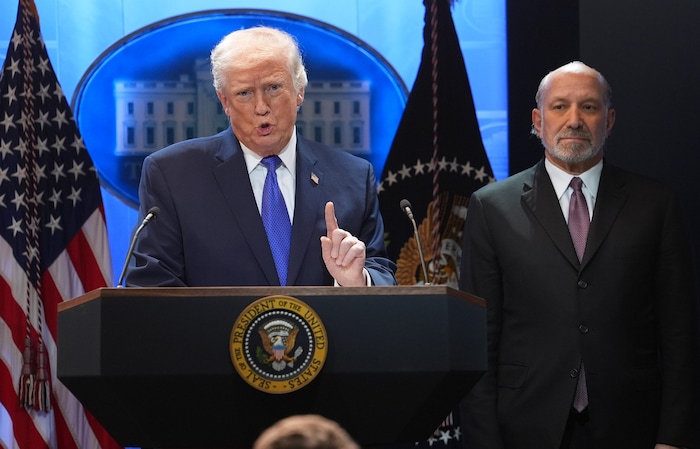
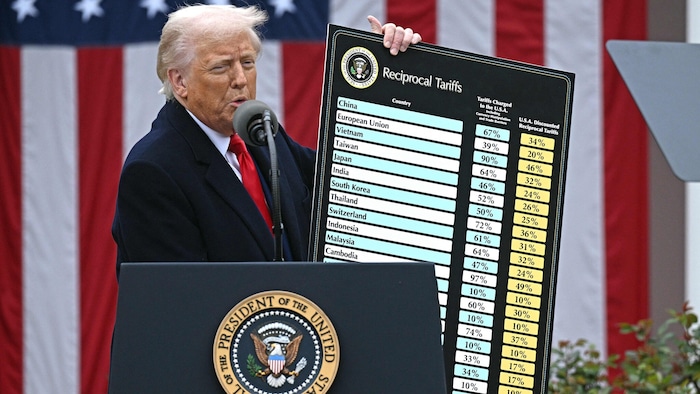
In an angry speech, the US president called the court's decision a "disgrace." And he immediately followed up by saying that, based on a different legal basis, he now wants to increase global tariffs on imports into the US by ten percent – in addition to the existing import duties.
Thousands of companies want refunds
The economic consequences of the ruling are enormous: by December 14, 2025, the government had collected almost $134 billion under Trump's emergency tariffs – equivalent to around €125 billion. According to estimates by the Tax Foundation, the trade conflicts cost American households around $1,100 per household (approximately €1,030). The decision affects global trade, consumers, businesses, inflation, and the wallets of all US citizens.
Thousands of US companies that had already paid tariffs want to apply for refunds. The "We Pay the Tariffs" coalition is calling for a quick and automatic refund, but so far importers have had to file individual lawsuits. European companies are also awaiting the ruling and are facing the possibility of continued trade uncertainty.
Which tariffs are involved
Among other things, the US president invoked the Emergency Act when he announced country-specific tariffs at the beginning of April, affecting dozens of US trading partners. His administration then granted deadlines so that the countries could continue to negotiate with the United States. As a result, some of the tariff rates changed, and an agreement was reached in the case of the EU, among others. Since the beginning of August, a tariff rate of 15 percent has been in effect on imports of most EU products into the US.
Trump's key tool now toothless
For Trump, emergency tariffs were a key tool in his second term: they were intended to encourage companies to manufacture in the US, force access to foreign markets, influence foreign policy conflicts, and generate additional revenue for the treasury.
According to its own statements, the government is preparing to reimpose tariffs on other legal grounds, but it remains unclear how quickly and to what extent this will be possible.
How are trading partners reacting?
Economic experts emphasize that the decision increases uncertainty but hardly limits the government's ability to use tariffs as an economic and geopolitical tool. Analysts expect trading partners such as the European Union to wait and see how things develop.
This article has been automatically translated,
read the original article here.











Willkommen in unserer Community! Eingehende Beiträge werden geprüft und anschließend veröffentlicht. Bitte achten Sie auf Einhaltung unserer Netiquette und AGB. Für ausführliche Diskussionen steht Ihnen ebenso das krone.at-Forum zur Verfügung. Hier können Sie das Community-Team via unserer Melde- und Abhilfestelle kontaktieren.
Hinweis in eigener Sache: Das krone.at-Forum präsentiert sich ab sofort in neuem Design! Wir freuen uns über konstruktives Feedback. Damit die Diskussionen in den Kommentarbereichen beim jeweiligen Thema bleiben, können Sie uns Rückmeldungen hier hinterlassen.
User-Beiträge geben nicht notwendigerweise die Meinung des Betreibers/der Redaktion bzw. von Krone Multimedia (KMM) wieder. In diesem Sinne distanziert sich die Redaktion/der Betreiber von den Inhalten in diesem Diskussionsforum. KMM behält sich insbesondere vor, gegen geltendes Recht verstoßende, den guten Sitten oder der Netiquette widersprechende bzw. dem Ansehen von KMM zuwiderlaufende Beiträge zu löschen, diesbezüglichen Schadenersatz gegenüber dem betreffenden User geltend zu machen, die Nutzer-Daten zu Zwecken der Rechtsverfolgung zu verwenden und strafrechtlich relevante Beiträge zur Anzeige zu bringen (siehe auch AGB). Hier können Sie das Community-Team via unserer Melde- und Abhilfestelle kontaktieren.