Muslim students
Immigration: Ludwig calls on the Church to take responsibility


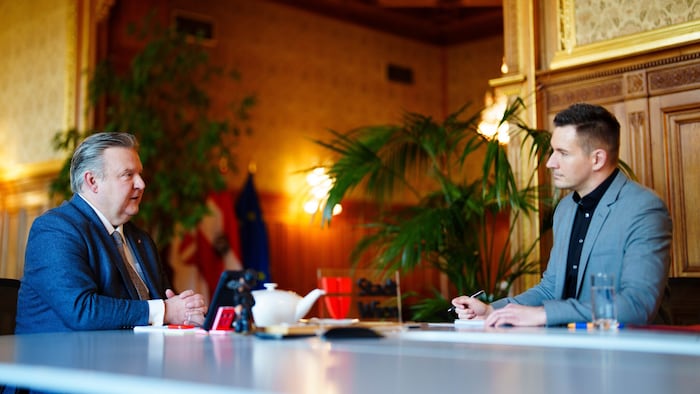
Vienna's mayor Michael Ludwig (SPÖ) in a major interview – on the health crisis, inflation, succession debates, and plans for the federal presidency. On the subject of immigration, he says to the church: "The fact that there is a higher percentage of Muslim students is also due to the fact that there are fewer Catholic students."
 Kronen Zeitung als bevorzugte Google-Quelle hinzufügen
 Krone: Mr. Mayor, on December 1, you recited the Bible story of the storm on the Sea of Galilee at the "Night of Silence" in St. Stephen's Cathedral in Vienna. Jesus gets into a boat with his disciples. A storm comes up and the boat fills with water. Jesus commands the storm to be still, and it is stilled. You see this as guidance for politics. What have you learned from Jesus?
Michael Ludwig: It is an impressive passage in the Bible and relevant to me and politics because it shows that in difficult times, you have to be able to lead a team. Jesus certainly sets the direction.
The Bible passages about the role of Jesus have one thing in common. Matthew chapter 8, verse 24: "So that the boat was covered with waves. But he was asleep." Mark 4:38: "And he was in the stern of the boat, asleep on a pillow." Luke 8:23: "And while they were sailing, he fell asleep." Without wanting to be blasphemous, I also see a comparison with politics here: first sleeping through the great danger and then, when it is almost too late, wanting to take on the forces of nature.
No. I don't see it that way. When he was awakened by the disciples, he was immediately able to deal with the situation.
There will be no pension cuts with the SPÖ. Party leader Andreas Babler promised this in a letter to the Austrian people before the National Council election. After that, pensions were cut. As it says in the Old Testament: "Lying lips are an abomination to the Lord."
There was inflation compensation for 70 percent of pensioners. Not for those with higher pensions. That was certainly regrettable, but it was not a cut, just no inflation adjustment.
The e-card has become more expensive, and health insurance contributions have been increased. All of these are pension cuts.
During negotiations, it was originally assumed that there would be real cuts. The fact that, at the same time as the inflation adjustment, many pensioners have also experienced corresponding price increases is something that the Social Democrats have set out to combat.
What about you? The following quote is from your keynote speech in March last year: "The Wiener Linien annual ticket will continue to be available for 365 euros, or one euro per day!" Six months later, you announced a massive increase in ticket prices. Is that a sin you need to confess?
No, because that was the case for the period from 2024 to 2025, and it has remained so. Everyone was aware that the price could not remain the same forever. There had been no increase for more than twelve years.
Let's move on to the topic of health. Currently, many guest patients from other federal states are being turned away in Vienna. At the same time, you often talk about "social cohesion and respectful coexistence." Is turning away sick people a social democratic idea?
All acute cases will continue to be treated, regardless of where they come from. We have additional expenses for guest patients in the order of 610 million euros and expect this figure to rise to 700 million next year. I have therefore made a proposal to create regional health areas. A total of four in Austria.
What would these regions look like?
Currently, healthcare is financed from various sources: the federal government, the states, and social security. These healthcare regions should be organized in such a way that funds are paid in from all these areas and everything is financed from a common pot. In addition to hospitals and ambulances, this primarily includes private practices.
Until that happens, the problem will continue to exist. My mother paid taxes in Vienna for 46 years. As a pensioner, she moved to Lower Austria. Under the guest patient regulation, she can be referred from a Vienna hospital. A refugee from Syria, who recently arrived in the country and has not paid into the system, receives full benefits at the same clinic. Is that fair?
Yes, if other federal states took in more Syrian refugees, they would be distributed more fairly. Vienna would certainly support this distribution, which would have to be carried out by the federal government.
Let's talk about inflation. With Babler's rent cap, a family paying €700 in rent in the unregulated sector would pay just €3.50 less with inflation at four percent.
More is always better. But in a federal government, you also have to find compromises that are feasible and at the same time ensure that investment in new housing construction continues in the future.
3.50 euros. That's not a saving.
At least it's not an increase. The Black-Green federal government failed to intervene to cap inflation in difficult times. These are now measures that ensure that there will at least be no increase in inflation. In fact, they have already succeeded in reducing inflation.
From 4 percent in November to 3.8 percent in December.
Let's look at inflation in recent years. This has caused lasting problems, especially with energy, but also with food and many other everyday items.

In terms of the amounts paid out in minimum income support, we are exactly in the Austrian mid-range per household.
Über die Sozialhilfe
When you buy eggs at the supermarket, which ones do you buy? Barn eggs, organic eggs, free-range eggs?
It varies. I shop in supermarkets, but also at Viennese markets. It depends on what's on offer.
How much do the eggs you buy cost?
I haven't bought eggs lately.
Let's take ten barn eggs, which cost up to €3.69 today. Five years ago, they cost €1.39. We are talking about a 165 percent price increase for a staple food. What urgent measures must the federal government take to get inflation under control?
It must tighten every screw where possible and where politics has any options at all. The current federal government is trying to do that. I believe it is succeeding to a certain extent. On the subject of food, for example, there are announcements to work together with producers and sellers.
Now there are growing calls within the SPÖ to reintroduce cold progression, i.e., creeping tax increases. Do you agree?
It is not part of the federal government's program. The partners would have to renegotiate this. You can be for or against it. But what is not acceptable is that no counter-financing has been put in place. The province of Vienna will lose one billion euros in this legislative period as a result of this measure alone.

High non-wage labor costs, Austria as the country with the highest taxes, Vienna accessing salaries via the housing subsidy, property tax set to rise, discussions about bracket creep. When will we finally reach the point where enough is enough?
With all these international comparisons, you always have to look at what services are being provided. And when we talked about healthcare earlier, it's worth mentioning that it works better in Austria than in most European countries.
9,000 euros in social benefits for a large Syrian family. How can Vienna still afford to be so generous?
In terms of the amounts paid out in minimum income support, we are exactly in the Austrian midfield when calculated per household. It is true that we have always paid special attention to children, regardless of where they come from. Children are of great importance for the future of our society. That is why I have proposed that minimum income should be handled by the AMS in future, that there should be a basic child allowance and a residence requirement.
For ten years, we have been indulging in the luxury of personnel discussions within the SPÖ.
Über Kern oder Nicht-Kern
41.2 percent of students in public schools in Vienna are of the Islamic faith and form the largest group. According to current figures, 50.9 percent of school beginners speak German so poorly that they cannot follow lessons. What do you think the federal capital will look like in 20 years?
To prevent this from continuing, there are a number of measures that can be taken, such as restricting family immigration. The fact that there is a higher percentage of Muslim students is also due to the fact that there are fewer Catholic students. The question is therefore to what extent churches are successful in appealing to members.
So you think the church needs to make more of an effort?
That is generally the claim of institutions such as churches. I am in complete agreement with Cardinal Schönborn, and I also have high hopes for his successor, who will certainly continue this tradition in a positive way.
But doesn't the high birth rate among immigrants play a greater role in this issue?
I am delighted about every child born in our city. Vienna used to be the federal state with the oldest population, but now we are the youngest.
Of course, we still have to talk about the SPÖ. It's not going to happen with Andreas Babler, is it?
For ten years, we have been indulging in the luxury of discussing personnel issues within the SPÖ. I am not participating in that. I consider content to be more relevant.
Does SPÖ leader Andreas Babler have your full confidence?
I will vote for him at the next federal party conference. As will many of the delegates.
You met with Christian Kern last week. How did it go?
I am on excellent terms with all the federal party leaders of the last few decades and meet with them regularly.
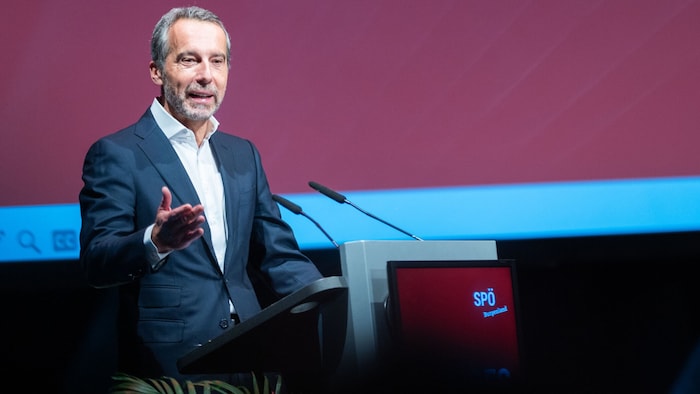
Would you give Christian Kern a second chance as party leader?
That's not a question. After all, he has pointed out in many interviews that he no longer sees his place in politics, but in the private sector.
What about your plans? Do you want to become federal president one day, as is rumored?
No. I enjoy being mayor of Vienna and governor of the state, and I will not take on any other political role after this one.
Would you make a sworn statement?
That's not necessary. When I say no, it means no.
Will you run for re-election in Vienna in 2030?
That depends on the support of the Viennese population. But I am very fit; I recently had a medical examination that confirms this. If the support is there, then definitely.
We talked about the Bible at the beginning of the interview. I am an atheist. In a world where there is something as horrific as a children's hospice, I cannot believe in God. How do you explain his existence to me and others who think the same way?
There are many different ways to practice religion, and I would therefore never claim to hold the only position that leads to salvation. But faith is different from knowledge. And both are very closely linked to hope.
This article has been automatically translated,
read the original article here.











Willkommen in unserer Community! Eingehende Beiträge werden geprüft und anschließend veröffentlicht. Bitte achten Sie auf Einhaltung unserer Netiquette und AGB. Für ausführliche Diskussionen steht Ihnen ebenso das krone.at-Forum zur Verfügung. Hier können Sie das Community-Team via unserer Melde- und Abhilfestelle kontaktieren.
User-Beiträge geben nicht notwendigerweise die Meinung des Betreibers/der Redaktion bzw. von Krone Multimedia (KMM) wieder. In diesem Sinne distanziert sich die Redaktion/der Betreiber von den Inhalten in diesem Diskussionsforum. KMM behält sich insbesondere vor, gegen geltendes Recht verstoßende, den guten Sitten oder der Netiquette widersprechende bzw. dem Ansehen von KMM zuwiderlaufende Beiträge zu löschen, diesbezüglichen Schadenersatz gegenüber dem betreffenden User geltend zu machen, die Nutzer-Daten zu Zwecken der Rechtsverfolgung zu verwenden und strafrechtlich relevante Beiträge zur Anzeige zu bringen (siehe auch AGB). Hier können Sie das Community-Team via unserer Melde- und Abhilfestelle kontaktieren.