Injured every year
“Hands off!” Doctors warn against firecracker madness


It's going to be loud in Austria over the next few nights: it's peak season for fireworks. This not only puts a strain on people, animals and the environment - it also causes serious injuries every year, warn doctors: "Hands off, otherwise they'll be gone!"
 Kronen Zeitung als bevorzugte Google-Quelle hinzufügen
 When darkness falls over the country in the late afternoon, it is already hard to miss: a rocket here, a firecracker there. They are still being set off sporadically, but soon we can expect a deafening mix of noise and sparks.
"The intense time usually starts on Christmas Day. The evening walk with my dog turns into a gauntlet," says Michaela Friedrich, ENT doctor at Graz University Hospital. On New Year's Eve, year after year - despite the ban in the Styrian capital - a firecracker frenzy ensues. "My therapy companion dog 'Frieda' is terrified of firecrackers, New Year's Eve is a nightmare for her."
"Firecracker season" from November to the end of January
After the most recent New Year, Friedrich had had enough: she started a petition "for an effective ban on rockets and firecrackers" in Graz. The doctor thus inspired the city government to launch the new campaign "Böller? Without us!" campaign, which was launched at the beginning of December - just a few days after two twelve-year-old boys were injured while handling a firework.

Not an atypical time, as Lars-Peter Kamolz, Head of Surgery at the Graz LKH University Hospital, explains: "The firecracker injuries start in November and continue until the end of January." Most of them are complex hand injuries that require several hours of surgery. The face, eyes and ears are also frequently affected. "We draw a comparison with war injuries," says Kamolz.
"Sometimes irreversible damage"
According to Friedrich, most patients in the ENT department who have suffered a blast trauma come in on January 1 and 2. However, there is an increased incidence until Epiphany. "Some of the damage is irreversible," says the senior physician. She and Kamolz confirm this: It is primarily young men who get injured.

I warn against illegally imported firecrackers in particular. Firecrackers that have not exploded should never be picked up again.
Chirurg Lars-Peter Kamolz
As well as people, birds, domestic animals, farm animals and wild animals also suffer from firecrackers, as reported. A serious incident occurred last year at Lustbühel in Graz, where firecrackers were set off next to a cowshed and a terrified calf injured itself as it fled. Particulate matter pollution is also multiplying.
"Hands off, otherwise the fingers are gone!"
Friedrich appeals: "Avoiding firecrackers makes New Year's Eve safer, more peaceful and much more pleasant for people and animals." And Kamolz adds: "Even if it sounds banal, the following saying fits: Hands off, otherwise your fingers will be gone!"
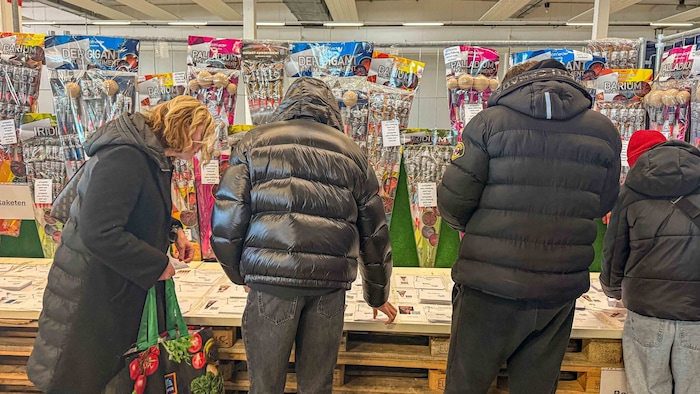
However, the appeals are likely to remain largely fruitless this year. On Saturday, for example, crowds stormed a fireworks store in Feldkirchen and car trunks were filled with rockets and firework batteries.
As soon as a new year has just begun, tens of thousands of Styrians are already breaking the rules. The reason: they set off fireworks without permission.
These are divided into four categories (F1 to F4). Only the first category, F1, is completely harmless and may be used by anyone over the age of twelve. This includes sparklers and flares, firecrackers and table fireworks.
Restrictions begin with category F2 (which includes less dangerous products such as volcanoes and flares). These may generally be used by anyone over the age of 16 - but not in the local area. The mayors can grant exceptions, but experience has shown that most refrain from doing so.
Complete ban for animal and retirement homes
The significantly more dangerous categories F3 and F4 require an official permit and a pyrotechnics pass, so they are reserved for professionals. There is a complete ban on pyrotechnics in the vicinity of hospitals, children's and old people's homes, churches and animal shelters.
The police do carry out checks, but of course only selectively. Those who are caught face severe fines.
This article has been automatically translated,
read the original article here.











Willkommen in unserer Community! Eingehende Beiträge werden geprüft und anschließend veröffentlicht. Bitte achten Sie auf Einhaltung unserer Netiquette und AGB. Für ausführliche Diskussionen steht Ihnen ebenso das krone.at-Forum zur Verfügung. Hier können Sie das Community-Team via unserer Melde- und Abhilfestelle kontaktieren.
User-Beiträge geben nicht notwendigerweise die Meinung des Betreibers/der Redaktion bzw. von Krone Multimedia (KMM) wieder. In diesem Sinne distanziert sich die Redaktion/der Betreiber von den Inhalten in diesem Diskussionsforum. KMM behält sich insbesondere vor, gegen geltendes Recht verstoßende, den guten Sitten oder der Netiquette widersprechende bzw. dem Ansehen von KMM zuwiderlaufende Beiträge zu löschen, diesbezüglichen Schadenersatz gegenüber dem betreffenden User geltend zu machen, die Nutzer-Daten zu Zwecken der Rechtsverfolgung zu verwenden und strafrechtlich relevante Beiträge zur Anzeige zu bringen (siehe auch AGB). Hier können Sie das Community-Team via unserer Melde- und Abhilfestelle kontaktieren.