"Trend reversal achieved"
Inflation finally returns to normal levels
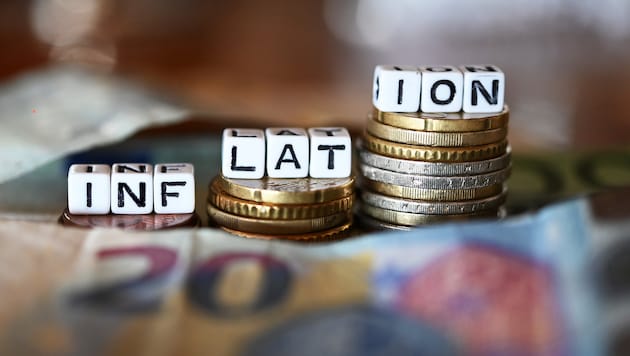

Inflation finally returned to a largely normal level in January, at two percent. The main reason for this is that energy costs are no longer the main price driver. The decisive factors for the lower inflation rate compared to the previous year were the end of the so-called base effect for electricity and price declines for energy in general. The federal government was pleased, with Chancellor Stocker speaking of a "trend reversal" that had been achieved.
 Kronen Zeitung als bevorzugte Google-Quelle hinzufügen
 According to a flash estimate by Statistics Austria, the inflation rate for January 2026 will be 2.0 percent—finally falling to a relatively normal level.
Energy cost increase slowed down
According to the analysis, the main reason for this is the stagnation of energy costs. Their increase due to last year's fee hike had been the main price driver so far: "The decisive factor for the lower inflation compared to 2025 was the end of the base effect for electricity and price declines for energy in general (electricity, gas, heating oil, fuels). A comparison of the index levels for December 2025 and January 2026 shows that the price level is expected to fall by 0.7%," according to Statistics Austria.
The 4.9% decline in energy prices alone dampened the inflation rate by 1.2 percentage points compared to the previous month of December 2025. The reasons for this are the end of the base effect of the electricity price brake that expired at the beginning of 2025, the reduction in energy tax in January 2026, and the reduced renewable energy subsidy.
No more "base effect"
Because the basis for comparison of energy prices from January 2025 is significantly higher (the electricity price cap expired at that time) than in January 2026, the current inflation rate is correspondingly lower.
According to Statistics Austria, industrial goods rose only minimally compared to January 2025, with an increase of 0.8 percent. Food, tobacco, and alcohol also rose less sharply than before in January, with an increase of 2.7 percent, and thus had less of an impact on the inflation rate than last year.
Service sector as main price driver
In the current assessment, the service sector is the main price driver – an indication of the need for action on non-wage labor costs, for example: Prices for services continued to drive inflation, rising by 3.8 percent, even though their impact on inflation had decreased compared to previous months. In 2025, inflation rates for services were well above 4 percent, which is why their impact on overall inflation was correspondingly higher than it is currently.
"Austria back on track"
The federal government expressed its satisfaction with the development on Wednesday. Vice-Chancellor Andreas Babler and Finance Minister Markus Marterbauer (both SPÖ) saw "Austria back on track": "It is important that we do not rest on our laurels. Measures such as reducing VAT on basic foodstuffs ensure that we not only lower inflation but also push prices down again," said Babler.
"The inflation rate of two percent now reinforces our course. In areas that directly affect people's lives, such as energy, rent, and food, targeted measures and political pressure have had an effect. This benefits all segments of the population, but especially those who spend a large part of their income on these three areas," Marterbauer explained.

The rent cap, the dampening of electricity prices, and the reduction in electricity taxes are now bringing noticeable relief to the population.
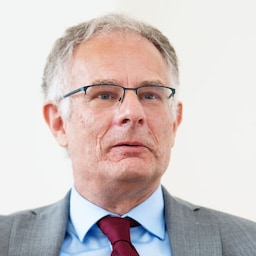
Finanzminister Markus Marterbauer (SPÖ)
Bild: Eva Manhart
"Two percent inflation means one thing above all: more breathing room. For families, for businesses, and for everyone who has had to struggle with rising costs in recent years. I am pleased that our relief on energy prices is now having a measurable effect and is being felt in everyday life," said State Secretary for Energy Elisabeth Zehetner (ÖVP). This means that the inflation target set by Federal Chancellor Christian Stocker has been achieved.
The Secretary General of the People's Party, Nico Marchetti, agreed: "Once again, it is clear that the usual prophets of doom and naysayers are way off the mark. Today's flash estimate is further proof that our Chancellor can be relied upon."
This is the turnaround we need to further consolidate the economic recovery in Austria.
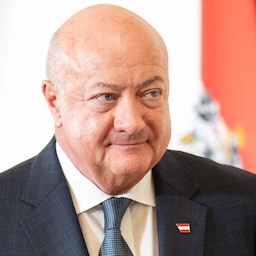
Bundeskanzler Christian Stocker (ÖVP)
Bild: APA/Georg Hochmuth
Stocker himself also saw "the turnaround achieved": "After years of high inflation, which have had a noticeable impact on people's everyday lives and the economic stability of our country, we are now experiencing a real reversal of the trend." This clearly shows that "inflation is not only losing momentum, it has returned to a level that creates reliability and brings noticeable relief to people in their everyday lives."
NEOS leader and Foreign Minister Beate Meinl-Reisinger explained that the current figures are not a foregone conclusion, but the result of consistent decisions: "In recent months, we in the federal government have taken numerous measures, including some unpopular ones, to achieve this goal. These efforts are now having an effect."
SPÖ State Secretary Michaela Schmidt said: "Hardwork pays off: inflation is falling. In January, it was only two percent, and current estimates say it will be 2.2 percent in 2026. This is the success of this federal government and of all the people in Austria who have worked together to achieve it."
This article has been automatically translated,
read the original article here.











Willkommen in unserer Community! Eingehende Beiträge werden geprüft und anschließend veröffentlicht. Bitte achten Sie auf Einhaltung unserer Netiquette und AGB. Für ausführliche Diskussionen steht Ihnen ebenso das krone.at-Forum zur Verfügung. Hier können Sie das Community-Team via unserer Melde- und Abhilfestelle kontaktieren.
User-Beiträge geben nicht notwendigerweise die Meinung des Betreibers/der Redaktion bzw. von Krone Multimedia (KMM) wieder. In diesem Sinne distanziert sich die Redaktion/der Betreiber von den Inhalten in diesem Diskussionsforum. KMM behält sich insbesondere vor, gegen geltendes Recht verstoßende, den guten Sitten oder der Netiquette widersprechende bzw. dem Ansehen von KMM zuwiderlaufende Beiträge zu löschen, diesbezüglichen Schadenersatz gegenüber dem betreffenden User geltend zu machen, die Nutzer-Daten zu Zwecken der Rechtsverfolgung zu verwenden und strafrechtlich relevante Beiträge zur Anzeige zu bringen (siehe auch AGB). Hier können Sie das Community-Team via unserer Melde- und Abhilfestelle kontaktieren.