Temperatures too high
Global sea ice has melted to a record low
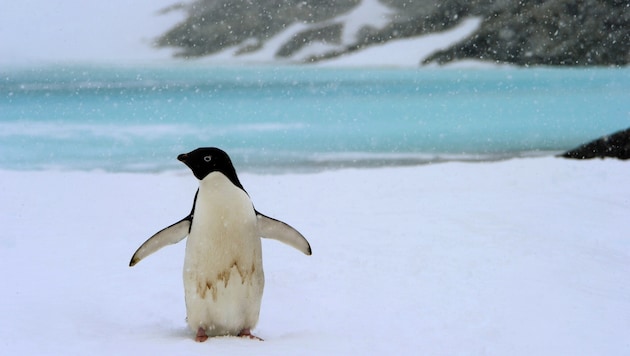

At the beginning of February, the extent of sea ice fell to its lowest global level since records began in 1979.
 Kronen Zeitung als bevorzugte Google-Quelle hinzufügen
 According to the climate change service of the EU Copernicus program, the area remained below the previous daily negative record of February 2023 for the rest of the month. It was also the third month in a row that brought the lowest values for the respective month.
- According to the report, the extent of sea ice in the Arctic was at its lowest level for a February and eight percent below the long-term average.
- In the Antarctic , the sea ice area shrank to the fourth-lowest February value and was 26 percent below the average. However, this region, where summer is just ending, usually only reaches its absolute annual minimum in March.
- According to the data, February was also the third warmest February in the world - it was 0.63 degrees warmer than the average for the years 1991 to 2020. It was also 1.59 degrees above the estimated average temperature in the period from 1850 to 1900. According to Copernicus data, 19 of the past 20 months were more than 1.5 degrees above this pre-industrial period.
- In Europe , the average temperature over land in February was 0.44 degrees. Although this was 0.40 degrees above the February average from 1991 to 2020, the month was not one of the ten warmest February months in Europe.
Glacier retreat in the Alps too
The recent massive acceleration in glacier retreat in the Alps is often attributed to the extensive ice loss in the lower areas. However, the upper parts of the glaciers are also suffering greatly from the warming.
The thickness of the ice in the upper areas is now decreasing by half a meter to one meter per year - with corresponding effects on the rock.
Of course, the eight glacier ski areas in Austria, which actually maintain significant infrastructure at 3000 meters and above, are the most directly affected.
Many unanswered questions
- Tourism associations are now wondering how long it will be possible to attract visitors to some regions of Austria with an intact remaining glacier.
- Energy suppliers are wondering how much "glacier donation" - i.e. melting ice, especially in the summer season - they can use to generate electricity.
- Last but not least, it is unclear how flora and fauna will colonize the ice-free areas and how and in what quantities the released rock will be transported towards the valley.
This article has been automatically translated,
read the original article here.











Da dieser Artikel älter als 18 Monate ist, ist zum jetzigen Zeitpunkt kein Kommentieren mehr möglich.
Wir laden Sie ein, bei einer aktuelleren themenrelevanten Story mitzudiskutieren: Themenübersicht.
Bei Fragen können Sie sich gern an das Community-Team per Mail an forum@krone.at wenden.