Alarming figures
Every fifth company has to cut jobs
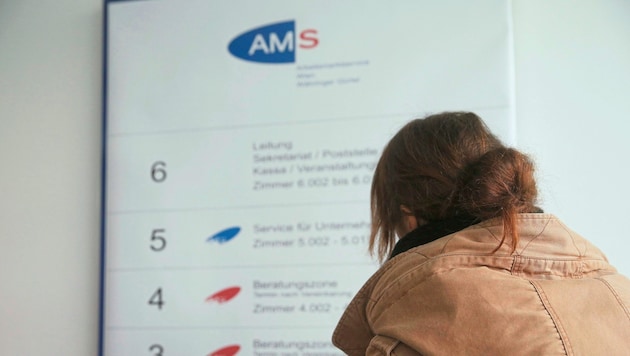

The economy is not gaining momentum - and the consequences for the labor market are devastating: according to a recent survey, around one in five SMEs is planning to cut jobs in the next six months. At the same time, companies are lacking urgently needed, qualified specialists.
 Kronen Zeitung als bevorzugte Google-Quelle hinzufügen
 According to the latest survey of 500 domestic SMEs with 30 to 2,000 employees conducted by consulting firm EY, the outlook for the job market remains bleak: 18% of companies say they will have to cut jobs in the next six months. This proportion was only higher at the beginning of 2009, at the height of the global financial and economic crisis.
One of the weakest developments in recent years
All in all, the companies surveyed are planning to reduce their workforce by 3.5 percent in the next six months. This also represents one of the weakest developments in recent years.
The outlook is particularly poor in Carinthia, where 23% of companies plan to cut jobs. In Lower Austria, Upper Austria and Salzburg the figure is 21 percent, in Burgenland 19 percent and in Styria 17 percent. The situation is relatively better in Vienna and Vorarlberg, where "only" 14% of companies are planning to cut jobs.
Companies in Vienna are the most optimistic
Nevertheless, 23% of companies across Austria are also planning to take on new staff in the next six months. Here too, companies in Vienna are the most optimistic, followed by Styrian and Tyrolean companies. Bringing up the rear is Burgenland, where only 14% of companies expect to increase their workforce.
Paradoxically, companies are also suffering from a massive shortage of qualified specialists: Two thirds of companies continue to view the shortage of skilled workers as the number one risk to their own growth. 71 percent find it difficult to find suitable employees. And a third of Austrian companies are already losing sales due to a lack of employees. Every second medium-sized company has unfilled vacancies.
Skills shortage most worrying in Carinthia and Burgenland
According to the study, companies in Carinthia and Burgenland have the greatest problems recruiting skilled workers. In Vorarlberg, companies find it comparatively easier to find new and suitable staff.

Too few applicants want to work full-time
The companies surveyed identified the lack of willingness among applicants and employees to work full-time as the most important reason for the shortage of skilled workers in Austrian companies (61%).
The second most important reason from the companies' perspective is demographic change and the ageing population (39%). According to companies, the lack of training and qualifications among applicants is also a cause of the skills shortage (36%).
Demand for political support
84% of companies assume that the shortage of skilled workers will continue to worsen. This is why the call for political support remains loud. "Politicians must take action and, above all, set the long-term course," emphasizes Erich Lehner, Partner and SME expert at EY Austria.
Lehner: "Education initiatives, more efficient recognition procedures and targeted support for further training programs are key factors. We now need a clear commitment to sustainable solutions in order to strengthen SMEs and counteract the shortage of skilled workers. If we do not react quickly here, we risk losing touch with the international competition and missing out on long-term economic opportunities."
This article has been automatically translated,
read the original article here.











Da dieser Artikel älter als 18 Monate ist, ist zum jetzigen Zeitpunkt kein Kommentieren mehr möglich.
Wir laden Sie ein, bei einer aktuelleren themenrelevanten Story mitzudiskutieren: Themenübersicht.
Bei Fragen können Sie sich gern an das Community-Team per Mail an forum@krone.at wenden.