Expert explains
Why we like to eat doughnuts and wear masks

From the "donkey pope" to the angry court cook: Styrian customs expert Karl Veitschegger explains why we make fools of ourselves at carnival time and why we love doughnuts.
 Kronen Zeitung als bevorzugte Google-Quelle hinzufügen
 There is an amusing legend surrounding the carnival doughnut: The court cook Cäcilie Krapf is said to have been so annoyed with her husband during an argument that she threw a lump of yeast dough at him. However, it didn't land on her husband, but instead hissed into a pot of hot fat - and thus the doughnut was born.
Customs expert Karl Veitschegger smiles about this, but knows the real reason why the doughnut became the culinary ambassador of the carnival season. "Lent used to be taken very seriously," explains the Styrian. "This meant that no animal products were eaten, no parties were celebrated and no weddings were held."
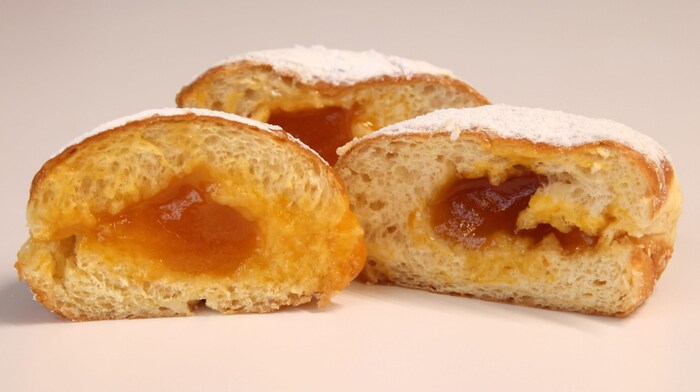
That's why everything was packed into the pre-Lent period! "Many weddings took place in February, when the farmers' work was also increasingly at rest. Many festivals, like the balls today. And because animal products had to be used up, doughnuts made from eggs and lots of lard were 'invented'." This also provided plenty of energy for the strenuous winter woodwork.
Worship of the god Saturn
But why the masks? "This may have its roots in the Roman Saturnalia. As part of the worship of the god Saturn, roles were swapped during the winter, with slaves becoming masters and rich ladies becoming servants. For a day, you became someone completely different and could speak your mind. Kings also had the jester who spoke the truth."

The need to slip into the role of someone else for a short time is thousands of years old. And it is still unbroken in carnival.
Brauchtumsexperte Karl Veitschegger
Of course - unpleasant truths can come with a rude awakening, "so people liked to make themselves unrecognizable with a mask". This type of disguise was also practised in monasteries: "The little monk then became the jester abbot or 'donkey pope', who was allowed to say anything." The word masquerade has its origins in Arabic: "Maskhara means mockery, ridicule".
Many Styrians love carnival. It's also a time out from everyday life.
This article has been automatically translated,
read the original article here.










Da dieser Artikel älter als 18 Monate ist, ist zum jetzigen Zeitpunkt kein Kommentieren mehr möglich.
Wir laden Sie ein, bei einer aktuelleren themenrelevanten Story mitzudiskutieren: Themenübersicht.
Bei Fragen können Sie sich gern an das Community-Team per Mail an forum@krone.at wenden.