On a collision course?
“Webb” telescope to explore danger of asteroid
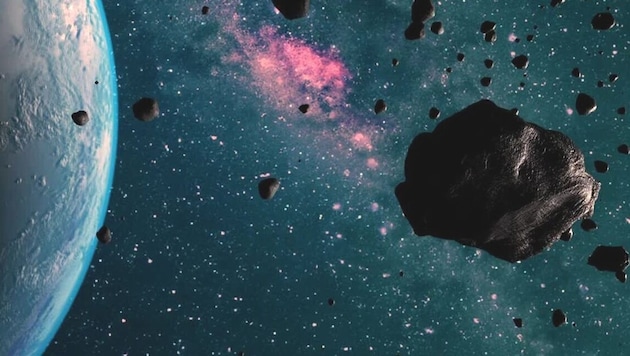

Astronomers discovered the asteroid 2024 YR4 at the end of December. Because the originally calculated probability of a collision with our Earth recently had to be raised from 1.2 to 2.3 percent, the cosmic chunk is now being examined more closely with the "James Webb" space telescope.
 Kronen Zeitung als bevorzugte Google-Quelle hinzufügen
 The asteroid 2024 VR4, which was found on December 27 using a telescope from the asteroid warning system (ATLAS) in Río Hurtado (Chile). It is between 40 and 100 meters in size and, according to the European Space Agency (ESA), is on a collision course with Earth, where it could hit on 22 December 2032.
Currently moving away from Earth
The celestial body is currently around 43 million kilometers away from us. In the coming months, it will move away from Earth and will then no longer be visible for the time being. The asteroid 2024 VR4 cannot be observed again until 2028 - when the risk of an impact on our planet will be reassessed.
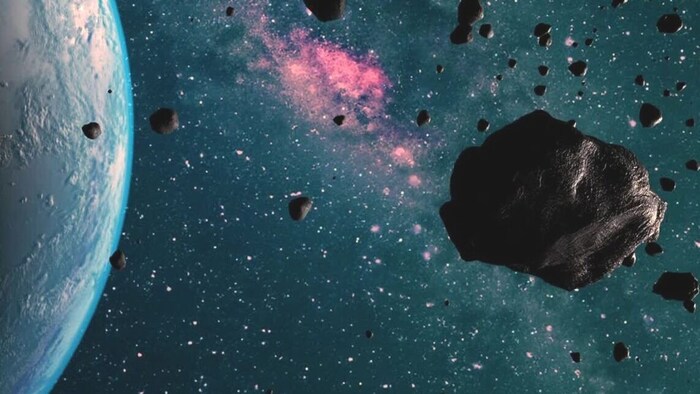
The ESA currently ranks 2024 VR4 as the number one asteroid threat. According to their data, an impact of an object of this size only occurs on Earth every few thousand years. Under unfavorable circumstances, such an impact could cause significant regional destruction, according to the researchers.
Severe regional damage in the event of an impact
However, according to further observations, the collision probability of a distant asteroid often drops to zero. Should YR4 actually hit the Earth in 2024, it could explode in the atmosphere and cause damage with a pressure wave and heat, they say. A possible impact could cause a crater with a diameter of more than one kilometer and would result in severe regional damage, according to experts.
2024 YR4 is not a so-called "planet killer" that could wipe out life on Earth, reassures the head of asteroid defense at ESA, Richard Moissl. "There is no cause for alarm," says the scientist. "We assume that it will be a close or even very close flyby."
Telescope 1.5 million kilometers from Earth
The James Webb Space Telescope (JWST, pictured below), which was also built with Austrian participation, was launched into space in December 2021 after decades of preparations and some delay. It is now more than one and a half million kilometers away from Earth.
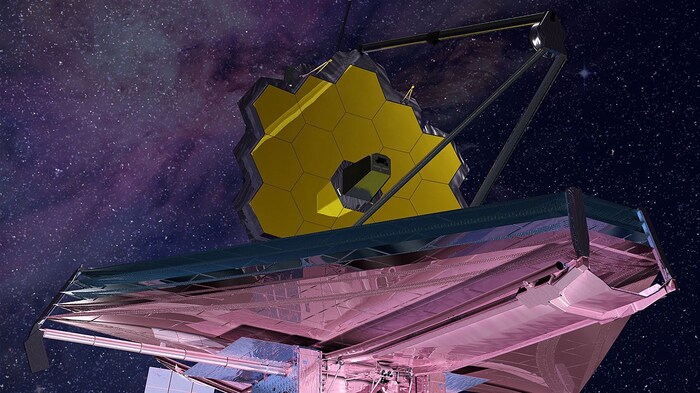
The JWST explores the early days of the cosmos, just a few hundred million years after the Big Bang around 13.8 billion years ago. Astronomers hope that the data sent into space by the observatory will allow them to draw conclusions about the formation of the first stars and galaxies. The telescope also searches the sky for exoplanets.
This article has been automatically translated,
read the original article here.











Da dieser Artikel älter als 18 Monate ist, ist zum jetzigen Zeitpunkt kein Kommentieren mehr möglich.
Wir laden Sie ein, bei einer aktuelleren themenrelevanten Story mitzudiskutieren: Themenübersicht.
Bei Fragen können Sie sich gern an das Community-Team per Mail an forum@krone.at wenden.