She won't let it go
Heartbreaking! Orca mom mourns dead calf
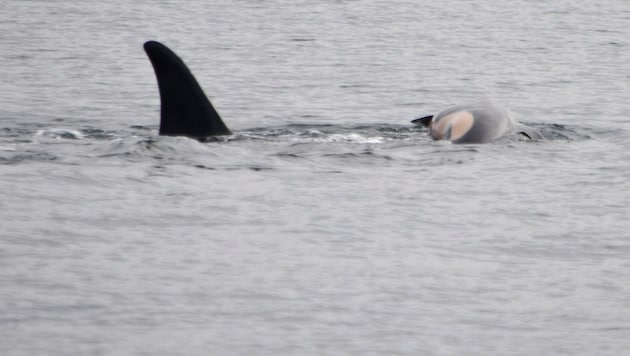

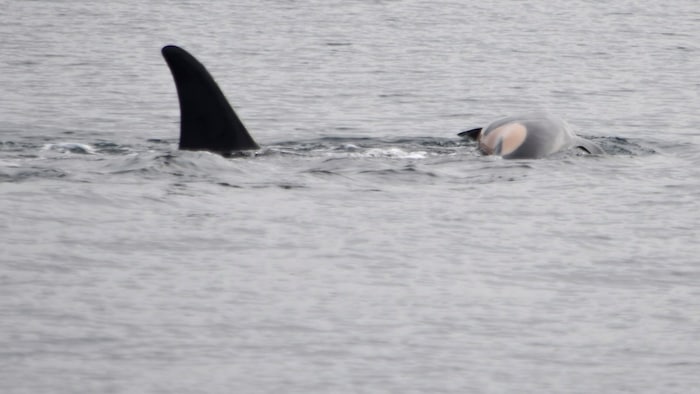
The images shared by the US National Oceanic and Atmospheric Administration (NOAA) on social media are heartbreaking: They show a female orca carrying her dead calf in front of her.
 Kronen Zeitung als bevorzugte Google-Quelle hinzufügen
 The mother killer whale J35, also known as Tahlequah, is part of a very small and endangered population in Puget Sound, a strait near Seattle in the US state of Washington. This is not the first time that J35 has been unable to part with a dead juvenile.
Deep emotional and social structures
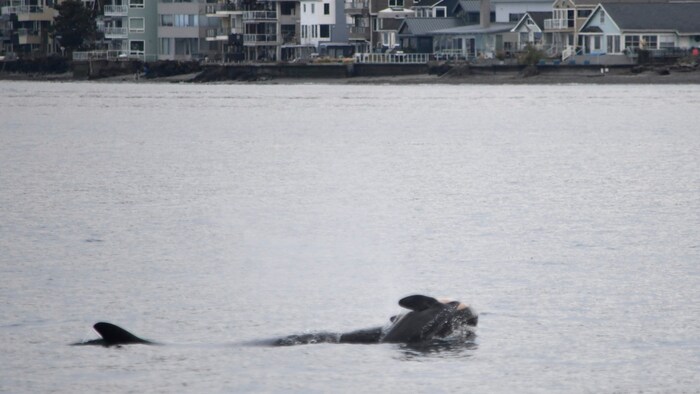
On January 1, a NOAA research group observed the orca mother carrying her dead calf in front of her, according to the agency's Instagram video - a behavior also known from other social animals such as primates and elephants. "The loss of J35 reminds us of the deep emotional and social structures of these incredible animals," the video continues.
Already lost a calf once
The death of the calf is devastating news given the fact that the killer whale population in Puget Sound is down to 73 animals. In addition, Tahlequah had already made headlines in 2018 when she carried her dead calf with her for 17 days.
Accordingly, the loss of J61 is particularly tragic, "not only because it was a female that could have potentially led her own matriline one day, but also given the history of her mother J35, who has now lost two of four documented calves - both of which were female," the NOAA team wrote on Instagram. Tahlequah has two other offspring, including a three-year-old calf, J57 (named Phoenix), and a 14-year-old, J47 (known as Notch), both of whom are male.
Respect for mother orca's grief
When asked by an Instagram user what J61 may have died from, the agency responded in general terms that the population of orcas (Orcinus orca) in the northeastern Pacific Ocean is struggling to survive against a variety of threats: "Research has identified three main threats to their survival: noise and disturbance from vessel traffic, health and pollutants, and prey availability. These factors are mutually reinforcing." In addition, the shrinking population leads to more inbreeding, which can almost halve the animals' life expectancy.
A necropsy - similar to an autopsy in humans - could provide information about what caused the death of the young animal. This is unlikely given J35's attachment to her dead calf and its decomposition, according to another NOAA article: "We respect her need to mourn the death of her calf and will continue to monitor her situation as circumstances allow."
This article has been automatically translated,
read the original article here.











Da dieser Artikel älter als 18 Monate ist, ist zum jetzigen Zeitpunkt kein Kommentieren mehr möglich.
Wir laden Sie ein, bei einer aktuelleren themenrelevanten Story mitzudiskutieren: Themenübersicht.
Bei Fragen können Sie sich gern an das Community-Team per Mail an forum@krone.at wenden.