Figures from Vienna
Arabic is spoken in German support classes
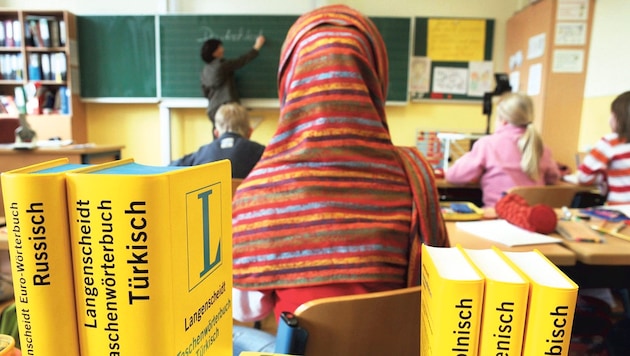

The composition of Vienna's school classes reflects the global pressure of migration, and developments in recent years have made German support classes a focal point of educational policy discussions.
 Kronen Zeitung als bevorzugte Google-Quelle hinzufügen
 As early as the middle of last year, the "Krone" newspaper predicted a dramatic shift in the first languages spoken in Vienna's schools - and it was right. Arabic, Turkish and the languages of the former Yugoslavia are now more prevalent than ever in everyday school life. What may be a gain for cultural diversity is becoming an ever greater challenge for the school system.
Family reunification in the classroom
The figures speak for themselves: of the around 19,700 children and young people who have been classified as "exceptional" - because their German language skills are not sufficient for regular lessons - a third speak Arabic as their first language. Among school starters, the proportion is 26 percent. The reason for this is family reunification, which resulted in around 300 new Syrian children arriving at Vienna's schools every month for a year and a half. These figures have only calmed down again in recent months. This is the result of a recent evaluation by the Department of Education.
Many of these children have spent years in Turkish refugee camps, often without any school experience. In order to meet these special needs, Vienna created so-called orientation classes in the spring. There, the children learn the basics of the German language within two months - supported by teachers who speak both German as a second language and the children's mother tongue. At the same time, the parents receive an introduction to the Austrian school system.
Ukrainian pupils: a different dynamic
In comparison, the number of children with Ukrainian as their first language is surprisingly low. Although around 2,000 people from Ukraine come to Austria every month, there are only 2,800 pupils with a Ukrainian background in Vienna's schools, a third of whom need German language support. According to the Education Directorate, there has been no significant increase.
The diversity of languages
There is great linguistic diversity in Vienna's German support classes. In addition to Arabic and Ukrainian, Turkish (13 percent), Serbian (7 percent), Romanian (5 percent) and Albanian (3 percent) are the most common first languages. This diversity is also reflected in the courses offered by schools: around 200 educational institutions offer lessons in a total of 24 languages, reaching around 18,000 pupils.
Challenges in the system
The fact that 45 percent of children starting school in Vienna are classified as exceptional is particularly explosive. Many of these children were born in Austria and attended kindergarten for an average of two years. It is striking that German language support is apparently neglected, especially in Turkish families. For them, being classified as exceptional means that they are not graded in certain subjects for a maximum of two years and receive up to 20 hours of German support lessons.
This article has been automatically translated,
read the original article here.











Da dieser Artikel älter als 18 Monate ist, ist zum jetzigen Zeitpunkt kein Kommentieren mehr möglich.
Wir laden Sie ein, bei einer aktuelleren themenrelevanten Story mitzudiskutieren: Themenübersicht.
Bei Fragen können Sie sich gern an das Community-Team per Mail an forum@krone.at wenden.