Municipal elections 2025
Majority voting system is unique in Austria

The Vorarlberg municipal elections on March 16 have completely different electoral modes. In municipalities without nominations, majority voting is used - this is not the case in any other Austrian province.
 Kronen Zeitung als bevorzugte Google-Quelle hinzufügen
The influence of the established parties is rather limited in the municipal and mayoral elections, with the ÖVP, FPÖ, Greens, SPÖ and Neos playing no role at all in some small municipalities. A special feature this year is that there are not even electoral lists in 13 municipalities and voters have to register their preferred candidates themselves.
But what exactly can the people of Vorarlberg vote on? Firstly, the composition of the municipal councils in all 96 municipalities will be decided on March 16. Parties and lists have submitted election proposals in 83 of the 96 municipalities. There is not always a wide choice: in 39 municipalities, only one list will be on the ballot paper. These are often civic associations in more rural municipalities, which - combined with the name of the place - often simply call themselves a "list". In the Großes Walsertal, for example, there is the "Fontanella list".
In the larger towns - this time in 44 - there are several lists running, seven in the town of Hohenems and six in each of the other three municipalities. This is where the parties come into play. Depending on the number of inhabitants, a municipal parliament consists of a minimum of nine and a maximum of 36 municipal representatives.
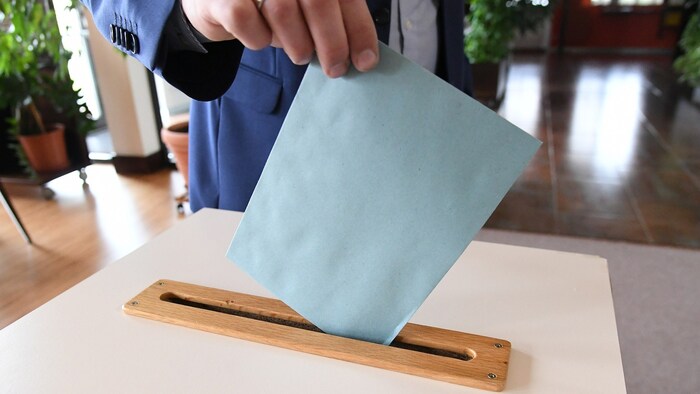
But how do the municipalities without an election proposal get their politicians? In those municipalities, the so-called majority vote is used, which is unique in Austria. Voters can enter twice as many names on the blank ballot paper as there are seats to be allocated. The citizens with the most votes cast in this way ultimately become members of the municipal council. In 1984, the majority voting system was annulled by the Constitutional Court as unconstitutional. However, following an amendment to the Federal Constitutional Law in 1994, majority voting was reinstated in the provincial law in 1998 and has been used again since the 2000 municipal elections.
Party affiliation
96 mayors govern in Vorarlberg. 48 of them belong to the ÖVP, five to the FPÖ, four to the SPÖ and two to the Greens. 25 are considered "close to the ÖVP".
The mayors of Vorarlberg are either elected directly by the citizens - this option has been available since 2000 - or by the newly appointed municipal council. A direct election takes place if at least one nomination has been submitted by the deadline. This year, this was the case in 62 municipalities. In 21 of these, there is only one mayoral candidate. However, this candidate is only considered elected if more than half of the valid votes cast in the written and secret ballot ("yes/no") are "yes". There has never been a rejection of a candidate in Vorarlberg.
If several candidates run against each other, the winner is the one with an absolute majority. If no one achieves this in the first ballot, there is a run-off election two weeks later (March 30). Six mayoral candidates are trying their luck in six municipalities this year, and the maximum number of run-off elections so far is also six.
No official state result
As the Vorarlberg municipal elections are 96 independent elections, no state results are reported. This also has to do with the fact that quite a few lists have problems with classification. Some citizens' lists see themselves as close to the ÖVP, while others reject any connection to a party. Not all 96 mayors can be assigned to the provincial parliamentary parties. According to their party membership, 48 mayors currently belong to the ÖVP, five to the FPÖ, four to the SPÖ and two to the Greens. While 25 other mayors are considered to be "close to the ÖVP", the remaining twelve are "not specified".
This article has been automatically translated,
read the original article here.










Da dieser Artikel älter als 18 Monate ist, ist zum jetzigen Zeitpunkt kein Kommentieren mehr möglich.
Wir laden Sie ein, bei einer aktuelleren themenrelevanten Story mitzudiskutieren: Themenübersicht.
Bei Fragen können Sie sich gern an das Community-Team per Mail an forum@krone.at wenden.