Stinking time bomb
Sperm whale could “explode” off Sylt
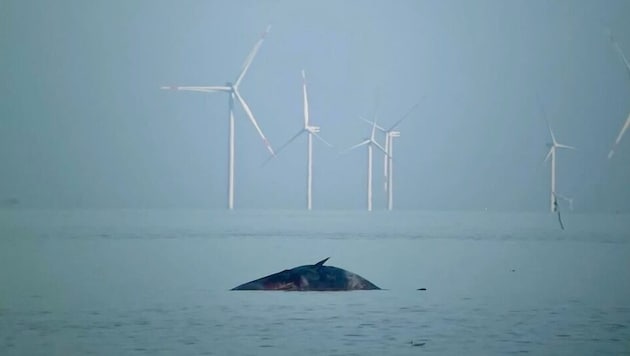

A dead sperm whale is causing trouble off the German island of Sylt: the carcass of the young animal is lying on the beach off the port of Hörnum and could explode at any moment. Authorities warn against approaching the dead animal and of the risk of infection.
 Kronen Zeitung als bevorzugte Google-Quelle hinzufügen
 It is said to be a male animal about 16 meters long, according to local media reports. The carcass was first spotted on Friday evening, but an operation could only be carried out the next day due to the darkness.
Coastguards and mussel fishermen finally dragged the sperm whale close to the port of Hörnum. The young animal is said to have been dead for some time.
The organization reported the incident off Hörnum on Facebook:
It is unclear exactly what caused the sperm whale to die. Experts are to clarify the cause of death on Monday, Katharina Weinberg from the Wadden Sea Protection Station told the news agency dpa. Only then can the carcass be removed.
Carcass poses a risk of infection
Until then, the dead, foul-smelling animal poses a risk to passers-by. "Due to the decomposition gases, it is lying high in the water and has apparently already burst open on its back," says the sanctuary. "Under the pressure of the gases, it could also explode in other places." Approaching by boat is also not recommended - carcasses could pose a risk of infection.
Adult specimens grow up to 20 meters long and can weigh more than 50 tons - making them one of the largest toothed whales in the world. Unfortunately, they can easily become stranded in the shallow North Sea. In 2016, 30 sperm whales died in accidents, as reported by the organization. Twelve of them died in the German Wadden Sea.
Sperm whales have problems with echo sounders in shallow water
The animals face problems in shallow waters. "Sperm whales have major problems with their echo sounder, which is designed for deep water, in the Wadden Sea with swell. Ships, strange noises - this is not their habitat. They can no longer find their way out," Rainer Schulz from the Wadden Sea Protection Station told Bild.
This article has been automatically translated,
read the original article here.











Da dieser Artikel älter als 18 Monate ist, ist zum jetzigen Zeitpunkt kein Kommentieren mehr möglich.
Wir laden Sie ein, bei einer aktuelleren themenrelevanten Story mitzudiskutieren: Themenübersicht.
Bei Fragen können Sie sich gern an das Community-Team per Mail an forum@krone.at wenden.